









Pentagon reinforces naval presence in Latin America and the Caribbean
The U.S. Department of Defense has announced the deployment of more than 4,000 additional Marines and sailors to the waters surrounding Latin America and the Caribbean. The move, framed as part of an intensified counter-narcotics campaign, is widely seen as a demonstration of force aimed at deterring regional criminal networks.
In brief
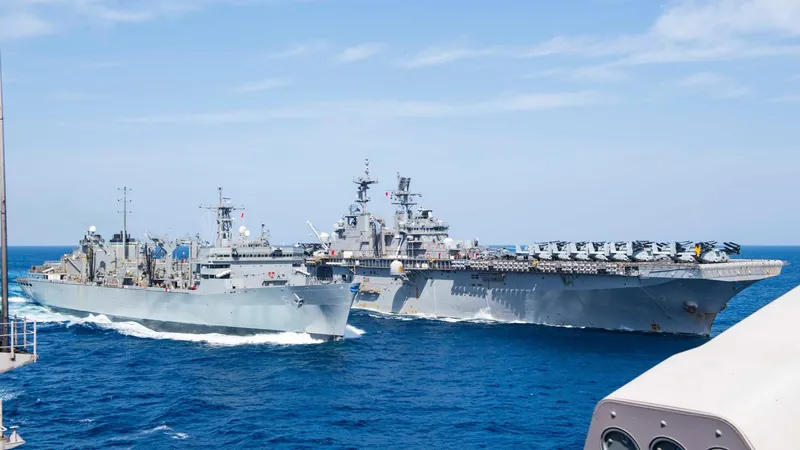
More than 4,000 US marines and sailors will deploy to the waters of Latin America and the Caribbean as part of a campaign against drug cartels. The Pentagon is sending to the region an amphibious ready group with the USS Iwo Jima and the 22nd Marine Expeditionary Unit, a nuclear-powered submarine, a P-8 Poseidon reconnaissance aircraft, several destroyers and a guided-missile cruiser. Sources cited by CNN speak of a dramatic show of force without any intention of immediate use. Some Pentagon officials question the usefulness of the Marine Corps for combating smuggling.
USS Iwo Jima / fot. U.S. Navy
The deployment includes an Amphibious Ready Group led by USS Iwo Jima with the 22nd Marine Expeditionary Unit, as well as a nuclear-powered submarine, a P-8 Poseidon maritime patrol aircraft, several destroyers and a guided-missile cruiser assigned to U.S. Southern Command. According to defense sources cited by CNN, the operation is designed to provide the White House with a broad range of maritime capabilities while signaling resolve, rather than indicating imminent kinetic action.
Pentagon officials have acknowledged concerns regarding the suitability of Marine units for counter-smuggling operations. Nevertheless, the scale of the buildup underlines Washington’s intent to ensure strategic control over regional sea lanes, safeguard access to the Panama Canal, and reinforce maritime security across the Western Hemisphere.
For the global shipping and naval sectors, this deployment highlights the continuing convergence of counter-narcotics operations, maritime security, and strategic freedom of navigation in one of the world’s most critical transit regions.
Source: Gazeta Morska / PAP · Compiled by: Kamil Kusier
Related articles
 Safety and rescue Polish SAR’s new rescue vessel Mistral launched at Kewatec in Finland
 Safety and rescue Icelandic Coast Guard and police delegation visits Polish Border Guard’s Maritime Division
 Safety and rescue Polish Navy helicopter evacuates man from Baltic platform 100 km off Władysławowo
 Navy and defence SNMG2 joins Allied warships in PASSEX as Italy's Mare Aperto 2026 gets under way
 Safety and rescue From lightships to solar power: 160 years of the Grundkallen light station
 Education 254 people, manikins and life rafts: Maritime University of Szczecin joins national CPR record attempt
Comments (0)
The discussion is moderated by the editors: a comment appears after review. Your e-mail address is not published.
Nobody has commented on this article yet.