









Night SAR operation in the Baltic Sea highlights effective MEDEVAC coordination
A night-time maritime rescue operation in the Baltic Sea demonstrated once again the operational readiness of Polish SAR services and the importance of seamless coordination between surface rescue units and naval aviation assets during medical evacuation missions.
In brief
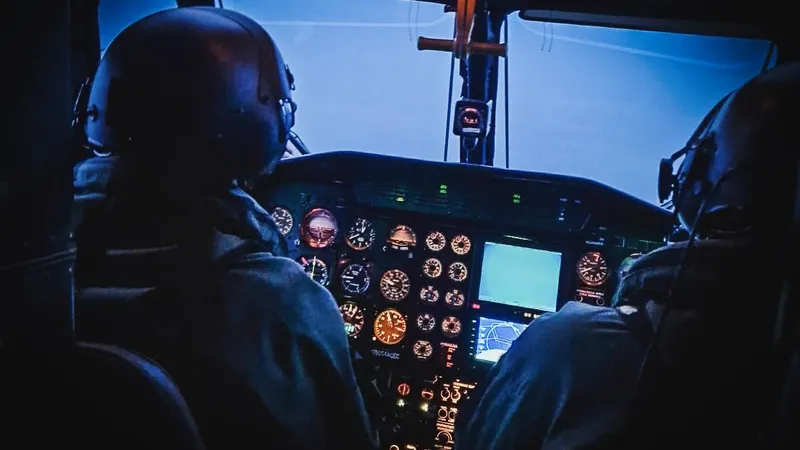
Maritime rescuers and the crew of a W-3WARM helicopter evacuated a man with a serious head injury from the Baltic Sea during a night operation lasting over three hours. The alert was received on Monday, 18 May 2026, at 03:14, and first aid was provided by rescuers from the SAR vessel Bryza from Władysławowo. The helicopter of the Gdynia Naval Aviation Brigade picked up the casualty from the sea and transported him to a medical handover point on land. The operation was the 12th medical assistance mission by naval aviators over the Baltic Sea in 2026.
Emergency response launched at 03:14
The incident took place on Monday, 18 May 2026, at 03:14 local time. According to information released by Senior Chief Petty Officer Piotr Skalski, a man suffered a serious head injury at sea and required immediate medical assistance.
Night operations remain among the most demanding missions in maritime rescue, combining reduced visibility, changing sea conditions, and the need for precise coordination between multiple rescue assets.
SAR vessel Bryza provided first response
The first responders on scene were rescuers aboard SAR vessel Bryza from Władysławowo. The crew secured the injured man, treated the head wound, and prepared him for aerial evacuation.
This initial stabilization phase is critical in offshore medical emergencies, particularly when helicopter transfer is required.
W-3WARM helicopter conducted aerial evacuation
A W-3WARM rescue helicopter from the Polish Naval Aviation Brigade was deployed to carry out the medevac phase of the operation.
The helicopter crew successfully hoisted the injured man from the sea and transported him to shore, where he was handed over to a waiting medical team.
Maritime MEDEVAC missions require highly trained aircrews, advanced hoist capabilities, and strong interoperability between naval and civilian rescue structures.
Operational figures underline SAR readiness
The operation marked the 12th medical assistance mission in the Baltic Sea conducted by Polish naval aviators in 2026.
Operational figures shared in the report indicate:
- 838 rescue missions completed in total,
- 457 people assisted and brought to safety.
These figures underline the long-term operational experience of Polish maritime rescue aviation and its growing role in offshore emergency response.
Maritime safety depends on integrated rescue systems
The operation once again demonstrated that successful maritime rescue depends on rapid decision-making and close cooperation between surface and aerial assets.
The coordinated work of SAR vessel Bryza and the W-3WARM helicopter crew reflects the efficiency of Poland’s maritime rescue system in responding to medical emergencies at sea.
Source: Gazeta Morska · Compiled by: Kamil Kusier
Related articles
 Safety and rescue Polish SAR’s new rescue vessel Mistral launched at Kewatec in Finland
 Safety and rescue Icelandic Coast Guard and police delegation visits Polish Border Guard’s Maritime Division
 Safety and rescue Polish Navy helicopter evacuates man from Baltic platform 100 km off Władysławowo
 Navy and defence SNMG2 joins Allied warships in PASSEX as Italy's Mare Aperto 2026 gets under way
 Safety and rescue From lightships to solar power: 160 years of the Grundkallen light station
 Education 254 people, manikins and life rafts: Maritime University of Szczecin joins national CPR record attempt
Comments (0)
The discussion is moderated by the editors: a comment appears after review. Your e-mail address is not published.
Nobody has commented on this article yet.