









New security regulations in force: photography ban in strategic port areas
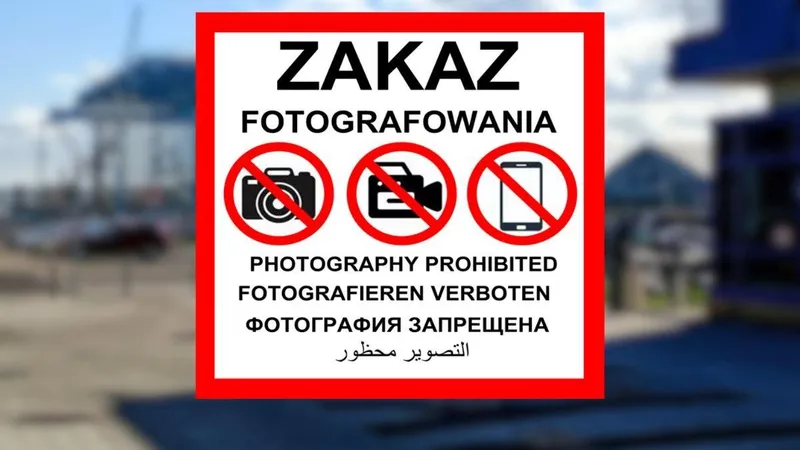
As of April 17, 2025, a new regulation issued by the Polish Ministry of National Defence comes into force, tightening the rules on image recording in areas of strategic importance for national security. The new legal framework applies to key locations such as maritime ports, logistics terminals, and industrial infrastructure critical to the country’s defence and economy. One of the primary examples covered by the regulation is the Port of Gdańsk – a vital hub for international trade and naval logistics.
In brief
A regulation of the Minister of National Defence banning photography and image recording in strategic areas enters into force on 17 April 2025. The ban covers seaports, critical infrastructure facilities, terminals and logistics zones once they are marked with signs on fences, gates and at sensitive points designated on the basis of a risk analysis. Media representatives and documentary makers can obtain permission by submitting an application to the managing entity, in Gdańsk to the Security Management Department of the Port of Gdańsk Authority.
What changes with the new photography ban?
Under the new rules, photography and video recording are strictly prohibited in designated zones once appropriate signage is in place. These signs will be posted in:
- port fences and entry gates,
- areas adjacent to critical infrastructure,
- zones identified as high-risk following a security risk assessment.
Why was the photography ban introduced?
The regulation aims to enhance national infrastructure resilience and align domestic policies with international port security standards. Key objectives include:
- protecting strategic sites against hybrid threats and hostile surveillance,
- preventing industrial espionage and acts of sabotage,
- enhancing cybersecurity measures in port and logistics environments,
- harmonising national security protocols with NATO and EU practices.
Exceptions for media and content creators
The regulation allows for exceptions for media professionals, documentary filmmakers, and educational institutions. In such cases, permission must be requested from the competent authority — for instance, the Security Management Department of the Port of Gdańsk Authority.
Requests must include the following:
- purpose of the project,
- specific locations and dates of filming,
- list of personnel involved,
- details of the commissioning organisation.
Critical infrastructure under enhanced protection
The photography ban is part of a broader strategic effort to safeguard critical maritime and industrial infrastructure in Poland. With rising geopolitical tension and increased hybrid activity in the Baltic region, facilities such as the Port of Gdańsk are now subject to stricter surveillance and access control measures.
These changes reflect the growing importance of seaport resilience not only for commercial continuity but also for national defence and allied logistics operations.
Source: Gazeta Morska · Compiled by: Kamil Kusier
Related articles
 Safety and rescue Polish SAR’s new rescue vessel Mistral launched at Kewatec in Finland
 Safety and rescue Icelandic Coast Guard and police delegation visits Polish Border Guard’s Maritime Division
 Safety and rescue Polish Navy helicopter evacuates man from Baltic platform 100 km off Władysławowo
 Navy and defence SNMG2 joins Allied warships in PASSEX as Italy's Mare Aperto 2026 gets under way
 Safety and rescue From lightships to solar power: 160 years of the Grundkallen light station
 Education 254 people, manikins and life rafts: Maritime University of Szczecin joins national CPR record attempt
Comments (0)
The discussion is moderated by the editors: a comment appears after review. Your e-mail address is not published.
Nobody has commented on this article yet.