









Near Miss on the Motława River: Tourist Vessel Attempts to Cross Closed Floodgates in Gdańsk
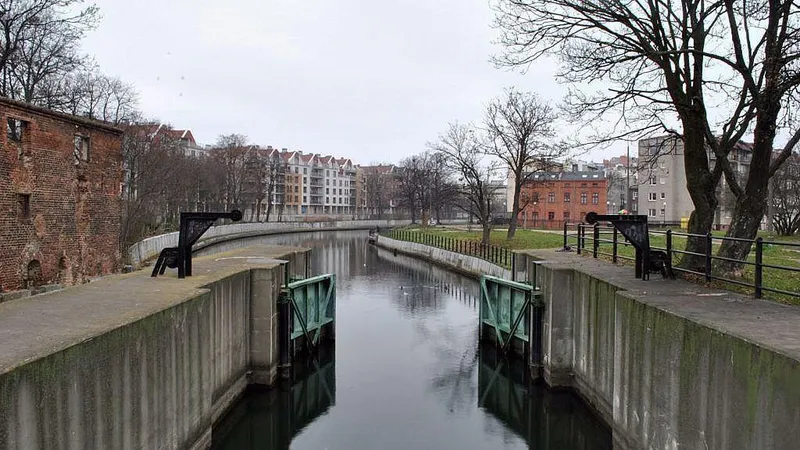
A video released by the Gdańsk Strefa Prestiżu portal has raised serious concerns about safety standards in Gdańsk’s city-centre water tourism sector. The footage shows a passenger vessel, “Galar Gdański 5”, attempting to pass through the closed Kamienna Grodza floodgates – a critical part of the city's flood protection infrastructure – despite visible warnings and the presence of lock operators.
In brief
The passenger vessel Galar Gdański 5 tried to pass through the closed Kamienna Grodza flood gates on the Motława river in Gdańsk, as shown in a recording by the Gdańsk Strefa Prestiżu website. More than a dozen people were on board Galar Gdański 5 without visible life jackets. Sebastian Kluska, director of the Polish Maritime Search and Rescue Service, assessed the manoeuvre as a deliberate act endangering the lives of many people. The editors of Gazeta Morska called on the City of Gdańsk to immediately inspect operators of tourist vessels, recalling the accident on the Kaszubski Canal in October 2022 in which four people died.
Several passengers can be seen on board without visible life jackets. Maritime safety experts describe the incident as a flagrant breach of navigation protocol, which – had the floodgates been activated – could have ended in a serious accident or loss of life.
SAR Director Sebastian Kluska: “This Was Not a Misunderstanding – It Was a Life-Threatening Act”
- The floodgates are not decorative – they are critical infrastructure designed to protect the city from catastrophic flooding, said Sebastian Kluska, Director of the Polish Maritime Search and Rescue Service (MSPiR SAR). - The attempt to force passage wasn’t a misunderstanding. It was a deliberate act that put people’s lives in danger.
Kluska emphasizes that, regardless of the crew’s intent, such actions must be treated with utmost severity.
- Water does not forgive. After analysing this video, I believe this individual should be permanently banned from operating any motorized vessel. We’ve had enough maritime disasters in Poland.
No Safety Equipment, No Safety Culture
The footage shows no sign of life jackets, despite the vessel navigating through a sluiced section adjacent to mechanical flood barriers – an area that always carries the risk of sudden water level shifts.
The Problem Isn’t Just Missing Gear – It’s Missing Awareness
From a coastal governance and maritime tourism perspective, the root of the problem is not just the lack of life vests. It’s the lack of risk awareness. Even short, seemingly calm tourist cruises must be treated as operations that require proper procedures, safety equipment, staff training, and full situational awareness.
Having a vessel and a license is not enough. A culture of responsibility is essential: clear passenger briefings, real-time risk assessments, and a full understanding of the operational and technical limits of infrastructure – including locks, drawbridges, and floodgates.
Kluska: “Urban Water Tourism Is Not a Stroll on the Pier”
- Urban navigation regulations are often treated as a formality, warns the SAR director. - But inland water operations must be overseen and executed with full accountability. Failing to act after incidents like this one is an open invitation to the next disaster.
He adds, “We need to repeat this until it becomes a norm: by protecting ourselves, we also protect others. That should be the starting point.”
2022 Accident Still Unresolved in Practice
In October 2022, four people died in a tourist vessel accident on the Kaszubski Canal in Gdynia. At the time, maritime professionals and local authorities vowed to implement new safety standards. Three years later, the Motława incident suggests that many of those promises remain unfulfilled.
The Daily Mare’s Editorial Appeal: Let This Be a Safe Season
In light of the recent event, we call on:
- The City of Gdańsk and relevant maritime authorities (including the Regional Water Management Board and the Maritime Office) to carry out immediate inspections of all tourist vessels operating in the city centre;
- Operators and vessel owners to review their internal procedures, equipment standards, and passenger briefing protocols without delay;
- Local governments and tourism bodies to initiate water safety education campaigns targeted at both industry workers and the public.
Safety on the water should never be conditional. It must be systemic, enforced, and practiced daily – before a tragedy occurs. And yes, it starts with life jackets – but leadership and accountability must come from the top.
Source: Gazeta Morska · Compiled by: Kamil Kusier
Related articles
 Safety and rescue Polish SAR’s new rescue vessel Mistral launched at Kewatec in Finland
 Safety and rescue Icelandic Coast Guard and police delegation visits Polish Border Guard’s Maritime Division
 Safety and rescue Polish Navy helicopter evacuates man from Baltic platform 100 km off Władysławowo
 Navy and defence SNMG2 joins Allied warships in PASSEX as Italy's Mare Aperto 2026 gets under way
 Safety and rescue From lightships to solar power: 160 years of the Grundkallen light station
 Education 254 people, manikins and life rafts: Maritime University of Szczecin joins national CPR record attempt
Comments (0)
The discussion is moderated by the editors: a comment appears after review. Your e-mail address is not published.
Nobody has commented on this article yet.