









NATO’s persistent naval presence in the Arctic and the northern Atlantic strengthens sea lane security
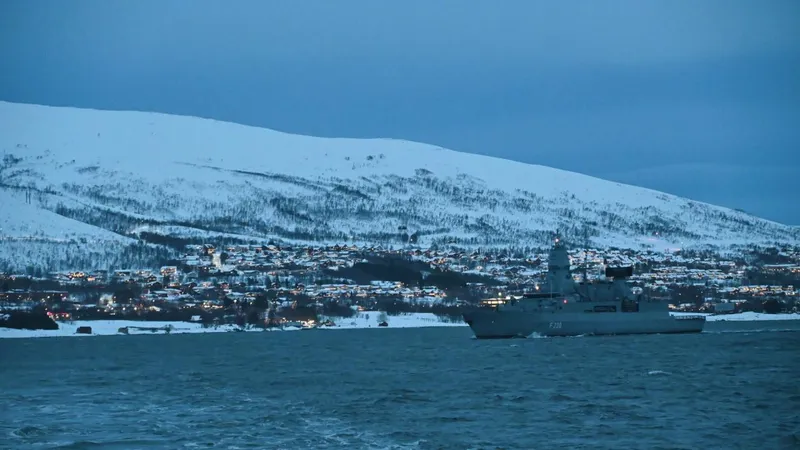
NATO naval forces are maintaining a continuous presence across the Arctic and the northern Atlantic, protecting shipping routes, subsea infrastructure and transatlantic trade corridors in a region of growing strategic and economic importance.
In brief
NATO maintains a round-the-clock rotation of frigates, destroyers, patrol vessels and maritime aviation in the Arctic and the North Atlantic. The area of the Norwegian Sea and the Barents Sea covers the main transport routes between Europe and North America as well as a network of undersea telecommunications and power cables, with intensive activity by Russian submarines from bases on the Kola Peninsula. The navies of Norway, the United States, the United Kingdom, Canada, Germany and France take part in the joint operations.
The Arctic and the northern Atlantic as a strategic maritime hub
The Arctic, the Norwegian Sea, the Barents Sea and the northern Atlantic form one of the world’s most critical maritime corridors. These waters host major shipping routes as well as dense networks of subsea data cables and energy pipelines linking Europe and North America.
The region also sees significant Russian naval activity, including strategic submarine operations from bases on the Kola Peninsula.
From crisis response to continuous maritime presence
Rather than relying on sporadic patrols, NATO maintains a persistent rotational deployment of surface combatants, patrol vessels and maritime aircraft in the Arctic–North Atlantic region. This posture ensures constant situational awareness and the ability to respond rapidly to emerging risks.
Navies from Norway, the United States, the United Kingdom, Canada, Germany and France regularly operate together, maintaining high readiness in one of the world’s most challenging maritime environments.
Protecting trade routes and subsea infrastructure
Arctic and northern Atlantic sea lanes are a backbone of the global economy. Financial data, digital communications, energy flows and transatlantic trade all depend on secure subsea cables and uninterrupted shipping in this region.
NATO’s presence acts as a stabilising force, reducing the risk of disruption, sabotage and escalation in this increasingly vital maritime corridor.
The Arctic as an emerging shipping and energy corridor
As Arctic ice continues to recede, new routes are gradually becoming viable. This further elevates the importance of the Arctic–North Atlantic region for future global shipping, energy logistics and digital connectivity.
Source: Gazeta Morska · Compiled by: Kamil Kusier
Related articles
 Safety and rescue Polish SAR’s new rescue vessel Mistral launched at Kewatec in Finland
 Safety and rescue Icelandic Coast Guard and police delegation visits Polish Border Guard’s Maritime Division
 Safety and rescue Polish Navy helicopter evacuates man from Baltic platform 100 km off Władysławowo
 Navy and defence SNMG2 joins Allied warships in PASSEX as Italy's Mare Aperto 2026 gets under way
 Safety and rescue From lightships to solar power: 160 years of the Grundkallen light station
 Education 254 people, manikins and life rafts: Maritime University of Szczecin joins national CPR record attempt
Comments (0)
The discussion is moderated by the editors: a comment appears after review. Your e-mail address is not published.
Nobody has commented on this article yet.