









NATO showcases uncrewed maritime systems in the Baltic Sea
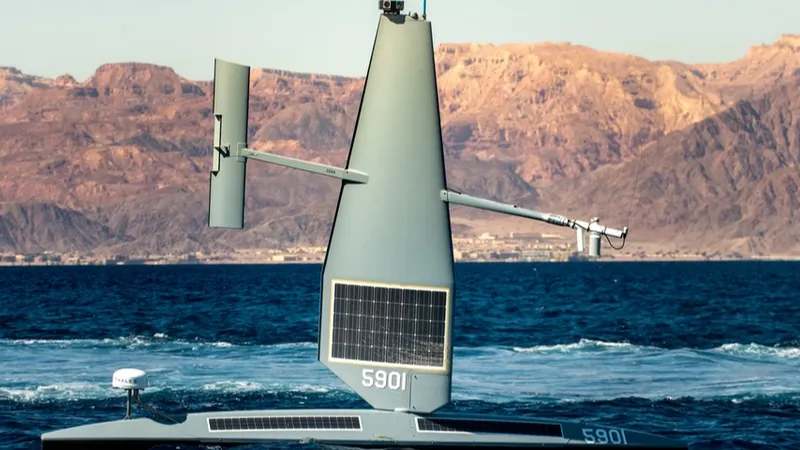
Throughout June, NATO’s Standing Naval Forces are conducting a series of operational demonstrations involving uncrewed maritime systems across the Baltic Sea. The initiative is part of a strategic push to accelerate the integration of autonomous platforms into Allied naval operations and to bolster collective maritime situational awareness and undersea infrastructure protection.
In brief
NATO Standing Naval Forces are conducting demonstrations of the operational capabilities of maritime unmanned systems in the Baltic Sea throughout June. The demonstrations are part of the Task Force X programme, run by Allied Command Transformation, Allied Maritime Command, the NATO Centre for Maritime Research and Experimentation and member states, and prepare for the autumn exercise Dynamic Messenger 2025 in Portugal. Task Force X was created in response to incidents of damage to undersea infrastructure. The research vessel NRV Alliance is taking part in the demonstrations.
These demonstrations serve as a key lead-up to Dynamic Messenger 2025, NATO’s flagship innovation exercise scheduled for this autumn in Portugal, and are conducted under the banner of Task Force X – a high-priority NATO initiative combining rapid technology development with real-world operational deployment.
Led by NATO’s Allied Command Transformation (ACT), Allied Maritime Command (MARCOM), and the Centre for Maritime Research and Experimentation (CMRE), in partnership with Allied nations, the initiative enables participating navies to validate new capabilities in complex maritime environments.
- Our focus is on delivering uncrewed systems to NATO’s Standing Naval Forces with both speed and operational relevance, said Vice Admiral Mike Utley, Commander of Allied Maritime Command. - These trials not only enhance NATO’s ability to operate networked autonomous assets, but also support national innovation pipelines through collective development.
Fast-tracked in response to subsea threats
Task Force X was operationalized at unprecedented speed following recent subsea cable disruptions, reflecting NATO’s determination to counter hybrid threats in the maritime domain. By blending enhanced vigilance activities with autonomous capabilities, the initiative seeks to deliver persistent, cost-effective surveillance across critical sea lanes.
- Task Force X exemplifies NATO’s ability to move from concept to operation in record time, said Admiral Pierre Vandier, NATO’s Supreme Allied Commander Transformation. - By combining scalable commercial technologies with high-end AI-driven systems, we provide layered maritime security while freeing up high-value assets for strategic tasks. Early successes in the Baltic are laying the groundwork for broader Allied adoption.
From concept to capability
Drawing inspiration from the U.S. Navy’s Task Force 66, Task Force X supports continuous surveillance, threat detection and tracking, and interoperability among Allied platforms. Nations contribute their own uncrewed systems, while NATO provides a shared framework for integration, experimentation, and tactical deployment.
Supporting these efforts is NATO’s Research Vessel Alliance, a purpose-built maritime laboratory operated by CMRE. Equipped for scientific and technical experimentation, NRV Alliance is central to validating new uncrewed technologies and concepts at sea.
Maritime innovation with operational impact
The Baltic Sea demonstrations represent a strategic intersection between research, capability development, and mission-ready deployment. They reaffirm NATO’s commitment to staying at the forefront of maritime innovation – leveraging autonomous systems, artificial intelligence, and federated force models to safeguard the undersea domain.
NATO’s Allied Command Transformation and Allied Maritime Command continue to lead the way in bringing next-generation capabilities from lab to fleet – securing maritime infrastructure, enhancing surveillance, and reinforcing Allied naval superiority in an evolving threat landscape.
Source: Gazeta Morska · Compiled by: Kamil Kusier
Related articles
 Navy and defence ORP Gopło will not be preserved intact. Prototype laminate minesweeper passes to Poland's Military Property Agency
 Navy and defence HMS Prince of Wales takes on ammunition in Norway. First resupply outside the UK
 Navy and defence ORP Mewa marks four months with SNMCMG1. Poland's first Kormoran II deployment runs to year-end
 Shipbuilding industry Ex-Enterprise towed to Mobile under $418.5m contract. Test case for Nimitz-class disposal begins
 Navy and defence Norwegian submarine Utstein completes NATO patrol guarding offshore oil and undersea infrastructure
 History Polish Naval Museum in Gdynia opens its doors on Independence Day, 11 November
Comments (0)
The discussion is moderated by the editors: a comment appears after review. Your e-mail address is not published.
Nobody has commented on this article yet.