









MV Hondius: medical incident prompts precautionary isolation measures
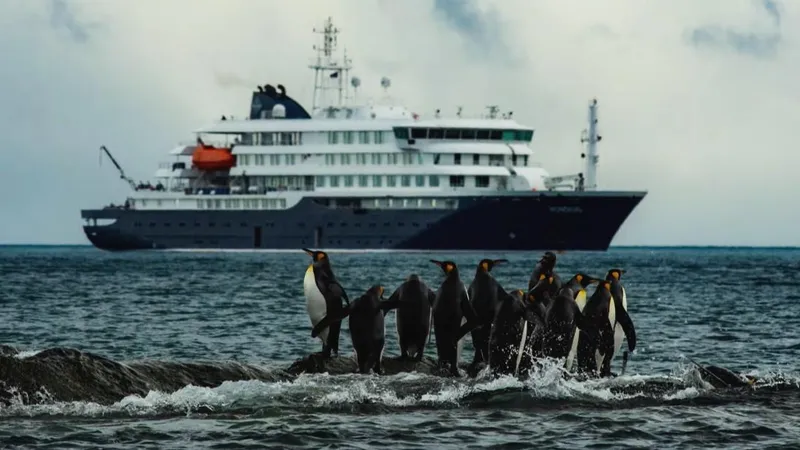
An expedition vessel, MV Hondius, has introduced isolation and enhanced medical monitoring protocols following a health incident onboard. Several passengers and crew members developed acute respiratory symptoms, with hantavirus infection currently under consideration.Onboard response <br> <br>The operator implemented precautionary measures including isolation of symptomatic individuals, onboard medical monitoring, and temporary restrictions on shore access. The vessel remains under review pending further assessment. <br> <br>Hantavirus is a zoonotic pathogen typically associated with exposure to rodent-contaminated environments. In maritime settings, confined spaces and prolonged exposure may increase environmental risk factors. <br> <br>Risk and operational context <br> <br>Health experts note that hantaviruses do not usually transmit efficiently between humans, limiting the likelihood of onboard spread. However, severe cases can progress rapidly and require intensive medical care. <br> <br>The incident highlights operation
In brief
A medical incident occurred on board the expedition vessel MV Hondius, after which the operator introduced isolation of symptomatic persons, medical monitoring and restrictions on going ashore. Some passengers and crew of MV Hondius developed symptoms of acute respiratory illness, and infection with a virus from the hantavirus group is being considered preliminarily. The ship remains under the supervision of health authorities until the situation is clarified. Experts stress that hantavirus does not spread easily between people, although severe cases require a rapid medical response.
Onboard response
The operator implemented precautionary measures including isolation of symptomatic individuals, onboard medical monitoring, and temporary restrictions on shore access. The vessel remains under review pending further assessment.
Hantavirus is a zoonotic pathogen typically associated with exposure to rodent-contaminated environments. In maritime settings, confined spaces and prolonged exposure may increase environmental risk factors.
Risk and operational context
Health experts note that hantaviruses do not usually transmit efficiently between humans, limiting the likelihood of onboard spread. However, severe cases can progress rapidly and require intensive medical care.
The incident highlights operational challenges in expedition shipping, where vessels operate far from advanced medical infrastructure and rely heavily on onboard containment procedures.
Source: Gazeta Morska · Compiled by: Kamil Kusier
Related articles
 Safety and rescue Polish SAR’s new rescue vessel Mistral launched at Kewatec in Finland
 Safety and rescue Icelandic Coast Guard and police delegation visits Polish Border Guard’s Maritime Division
 Safety and rescue Polish Navy helicopter evacuates man from Baltic platform 100 km off Władysławowo
 Navy and defence SNMG2 joins Allied warships in PASSEX as Italy's Mare Aperto 2026 gets under way
 Safety and rescue From lightships to solar power: 160 years of the Grundkallen light station
 Education 254 people, manikins and life rafts: Maritime University of Szczecin joins national CPR record attempt
Comments (0)
The discussion is moderated by the editors: a comment appears after review. Your e-mail address is not published.
Nobody has commented on this article yet.