Karol Nawrocki elected President of Poland: what it means for the maritime sector?
Following the recent presidential elections, Karol Nawrocki – historian, President of the Institute of National Remembrance, and a strong advocate for coastal affairs – has been elected the new President of the Republic of Poland.
politics news02 june 2025 | 19:44 | Source: Gazeta Morska | Prepared by: Kamil Kusier | Print
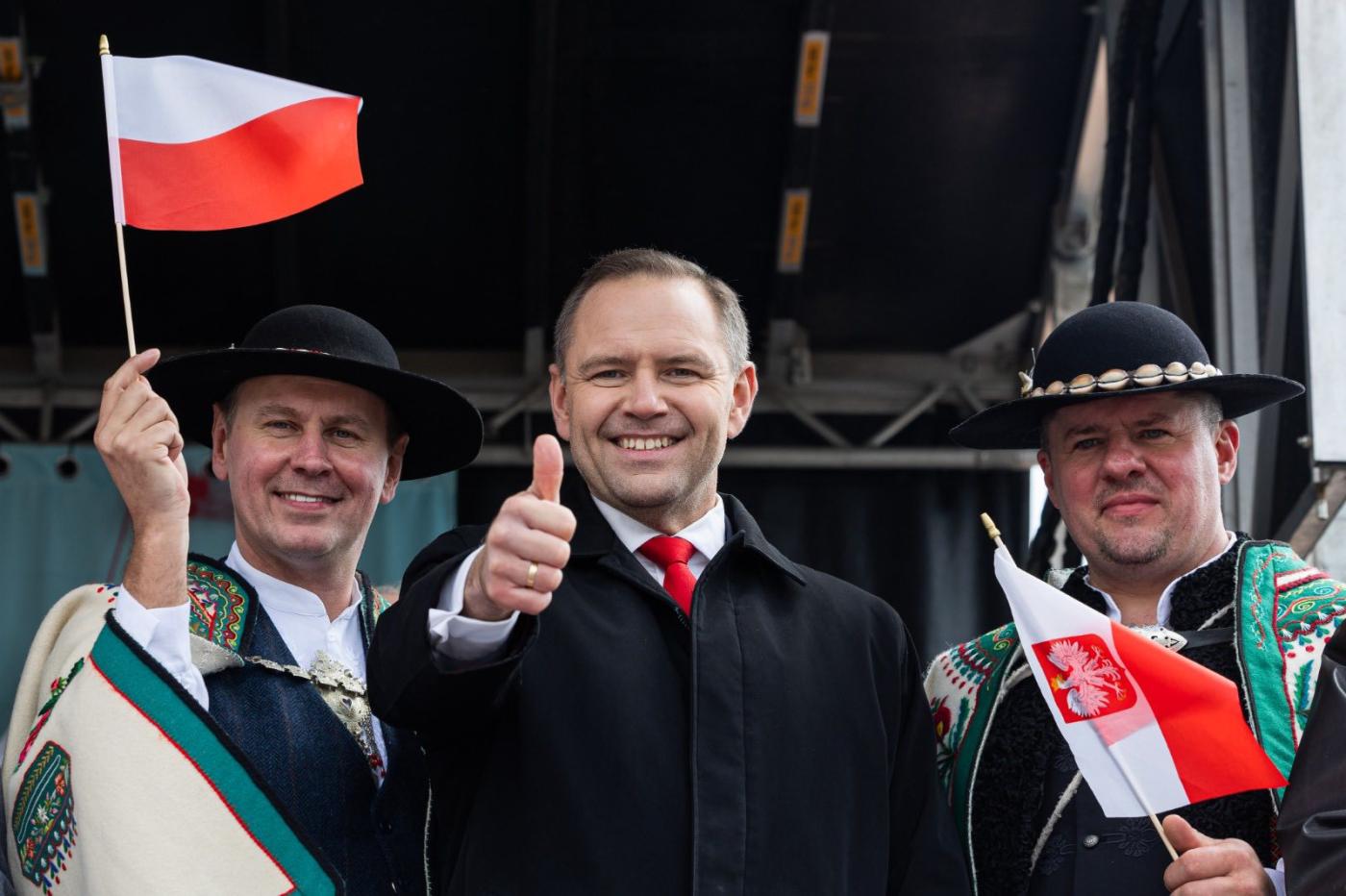
fot. Mikołaj Bujak
Throughout his campaign and in exclusive remarks to Daily Mare, Nawrocki emphasized his commitment to the Polish maritime sector, outlining a vision that includes increased naval investment, port development, better coordination of maritime services, and renewed focus on traditional coastal industries.
Navy: urgent modernization ahead
Nawrocki has labeled the Polish Navy as the most neglected branch of the armed forces in recent decades. While he welcomes projects such as Kormoran (minehunters) and Miecznik (multi-role frigates), he stressed the urgent need to move forward with Orka – the long-delayed submarine program. In his view, continued delays could seriously impair Poland’s undersea capabilities.
He also pointed to the necessity of launching Delfin, a new naval intelligence and reconnaissance vessel program, and praised the domestic shipbuilding industry for its growing competency in delivering complex military projects, often within international consortia.
Maritime Border Guard and SAR: strategic enhancements
The president-elect has pledged increased support for the Maritime Division of the Border Guard, noting evolving hybrid threats, sabotage risks, and illegal migration pressures. The introduction of the SG-301 patrol unit was acknowledged as a step forward, though Nawrocki insists that more resources are needed.
Regarding Search and Rescue (SAR) operations, Nawrocki highlighted poor pay competitiveness and institutional fragmentation. He proposed greater operational synergy between SAR, the Navy, and the Border Guard, potentially through a shared task force or inter-agency command structure.
Ports: a success story with growing demands
Nawrocki praised Poland’s ports as “a national economic success story”, but emphasized that ongoing and planned investments must not lose momentum. He voiced strong support for projects such as:
- The deepwater terminal in Świnoujście,
- The outer port in Gdynia,
- The expansion of Baltic Hub in Gdańsk,
- And critical land access infrastructure, including rail line 201 and the “Red Road” project in Gdynia.
He also stated that, as president, he will “proactively push and hold the government accountable for delays or negligence in port development.”
Maritime and inland shipping: from neglect to action
Maritime and inland shipping, long considered a weak point of Polish logistics, will gain more attention under Nawrocki. He pledged to reverse decades of stagnation through support for inland waterway modernization and by boosting the competitiveness of maritime transport through regulatory and fiscal incentives.
Offshore energy and infrastructure security
The new president expressed strong support for offshore wind development in the Baltic Sea, recognizing its strategic role in Poland’s energy mix and potential for regional port growth. He also sees promise in wave and tidal energy, subject to scientific validation.
On infrastructure security, Nawrocki proposed that state-owned port authorities establish their own professional internal security units instead of relying on third-party services. He called this a matter of strategic autonomy and readiness.
Shipbuilding: time for ownership reform
A recurring theme in Nawrocki’s campaign was the lack of a clear governance model in the shipbuilding sector. With state-owned shipyards reporting to different ministries, agencies, or investment funds, Nawrocki called for “a single maritime authority” to reduce fragmentation and boost efficiency. He hinted at the possible re-establishment of a dedicated maritime ministry.
Fisheries: a cultural and economic priority
In fisheries, Nawrocki championed traditional coastal fishing as both an economic sector and a form of cultural heritage. He called for better protection of small-scale fishers, restrictions on industrial feed fishing, and a fairer quota system based on scientific data and stakeholder dialogue.
He announced that any legislative reforms in fisheries would be developed in close coordination with the National Development Council and industry representatives.
While the Polish presidency is not an executive position in maritime affairs, Nawrocki’s active and strategic stance suggests that he intends to use the office to influence key maritime policies, support infrastructure investments, and ensure national security interests are upheld at sea.
If followed through, his proposals could mark a new chapter for Poland’s maritime industry – one defined by stronger coordination, better funding, and clearer strategic direction.
Buy us a coffee, and we’ll invest in great maritime journalism! Support Gazeta Morska and help us sail forward – click here!
Kamil Kusier
redaktor naczelny
comments
Add the first comment
see also
The most important piece of ice in the world. The political crisis around Greenland and its consequences
Poland launches research vessel project. Maritime University of Szczecin to build next-generation training ship
Port Haller a strategic maritime investment for Poland and the Baltic region
Poland advances satellite radar capabilities with new Eycore-MoD initiative in Kashubia
Naftoport expansion in Gdańsk enters execution phase. Strategic boost to Poland’s energy security
Key leadership changes announced in the Polish Armed Forces
Contract signed for the construction of a new training sailing vessel for Gdynia Maritime University
Poland must arm itself wisely. Between the presidential initiative and the SAFE government program
Poland and Sweden strengthen defence cooperation in the Baltic Sea
When two powers clash, Poland must be ready to act. Military security must be the priority
ADVERTISEMENT
ADVERTISEMENT