









Israeli Navy on high alert. Ready to intercept Sumud flotilla
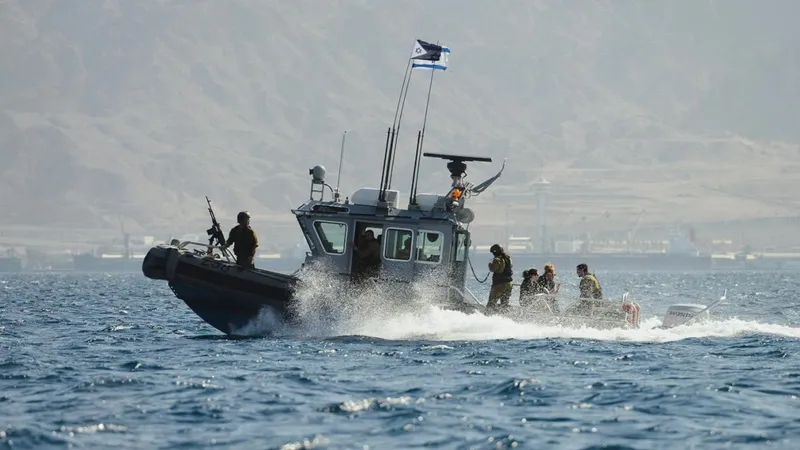
The Israeli navy has raised its operational readiness as an international flotilla, the Global Sumud Flotilla, continues its course toward the Gaza Strip. Rear Admiral Efi Defrin, spokesperson for the Israel Defense Forces (IDF), confirmed during a press briefing that naval forces are prepared to intercept the convoy and enforce Israel’s longstanding maritime blockade.
In brief
The Israeli Navy has raised its operational readiness in response to the Global Sumud Flotilla and announced that it will intercept the convoy before it reaches the Gaza Strip. Israel Defense Forces spokesman General Efi Defrin said the flotilla numbers dozens of boats and the navy is ready to defend Israel's maritime borders. The Global Sumud Flotilla is a civilian initiative comprising about 50 vessels and representatives of more than 40 countries. Israel proposes unloading the aid at an Israeli port and transporting it overland, which the activists do not accept.
- We are tracking the flotilla’s movements. This is not the first time we’ve faced such a challenge, but the current situation is different – this time there are dozens of vessels, Defrin said. “Our navy is ready and fully prepared to defend Israel’s maritime borders.
Defrin stated that Israel possesses conclusive evidence linking the flotilla’s planning and funding to Hamas operatives based in Europe.
A multinational civilian effort
The Global Sumud Flotilla comprises roughly 50 vessels carrying participants from more than 40 countries. Organizers say their mission is to break Israel’s maritime blockade and deliver humanitarian aid to Gaza, where a prolonged humanitarian crisis is worsening due to the nearly two-year war between Israel and Hamas.
Israeli officials have repeatedly stressed they will not permit the flotilla to reach Gaza by sea. Instead, they have offered to offload the cargo at an Israeli port and transport it overland — a proposal rejected by organizers, who argue that accepting it would legitimize the blockade.
Security and navigational risks
The Israeli Ministry of Foreign Affairs has characterized the flotilla’s refusal as evidence of a political agenda rather than a purely humanitarian one. Past attempts to run the blockade have resulted in direct confrontation: the most notable case being the 2010 Gaza Freedom Flotilla, when Israeli commandos boarded one of the vessels in international waters and nine activists were killed in clashes.
The current flotilla has already encountered security incidents. Several of its vessels were reportedly targeted by drones deploying flash-bang munitions in international waters off the Greek coast earlier this week. Earlier this year, the Israeli navy intercepted a yacht carrying international activists, including Swedish climate campaigner Greta Thunberg, and deported its passengers.
Humanitarian context and strategic challenges
Humanitarian organizations report that aid flows into Gaza remain insufficient, with food insecurity and shortages of medical supplies continuing to worsen. For the Israeli navy, the looming confrontation with the Sumud flotilla poses not only an operational challenge but also a diplomatic one — balancing maritime security enforcement with the risk of international fallout.
Source: Gazeta Morska / PAP · Compiled by: Kamil Kusier
Related articles
 Maritime economy Poland’s constitutional crisis is also a maritime story
 Navy and defence Norwegian submarine Utstein completes NATO patrol guarding offshore oil and undersea infrastructure
 Safety and rescue Polish SAR’s new rescue vessel Mistral launched at Kewatec in Finland
 Safety and rescue Icelandic Coast Guard and police delegation visits Polish Border Guard’s Maritime Division
 Safety and rescue Polish Navy helicopter evacuates man from Baltic platform 100 km off Władysławowo
 Navy and defence SNMG2 joins Allied warships in PASSEX as Italy's Mare Aperto 2026 gets under way
Comments (0)
The discussion is moderated by the editors: a comment appears after review. Your e-mail address is not published.
Nobody has commented on this article yet.