









Gdańsk hosts Baltic anti-trafficking forum focused on forced labour risks
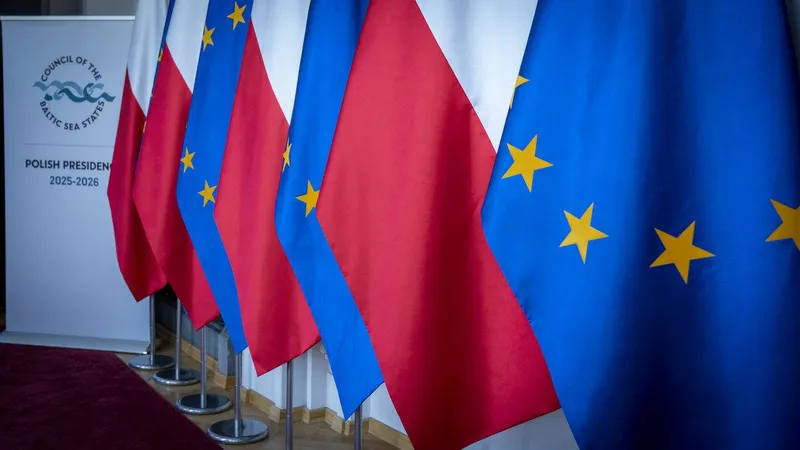
Gdańsk hosted an international meeting of experts from the Task Force against Trafficking in Human Beings operating under the Council of the Baltic Sea States on 20-21 May. The event brought together representatives of border services, law enforcement agencies, prosecutors, public administration and NGOs to discuss growing risks related to forced labour and human trafficking in the Baltic region.
In brief
Gdańsk hosted an international expert meeting of the Task Force against Trafficking in Human Beings of the Council of the Baltic Sea States on 20 to 21 May. The event was co-organised by the Ministry of the Interior and Administration, the Pomeranian Voivodeship Team for Combating Human Trafficking and the Maritime Unit of the Polish Border Guard, with Major Paweł Brzozowski acting as host on behalf of the Maritime Unit. The first day of the meeting was devoted to forced labour in transport, port services and warehousing. Participants recommended closer cooperation between border services, police and administrations of the region's countries.
The conference was organized by the Ministry of the Interior and Administration in cooperation with the Pomeranian Voivodeship Team for Counteracting Human Trafficking and the Polish Border Guard Maritime Unit.
Among the representatives of the Maritime Unit were Maj. Paweł Brzozowski and Cmdr Lt. SG Dr. Robert Mroczek, who also chairs the regional anti-trafficking task force in Pomerania.
Forced labour linked to transport and logistics sectors
The first day of discussions focused on forced labour, identified by participants as one of the most serious contemporary forms of human trafficking. Experts emphasized that the phenomenon increasingly affects sectors connected with maritime economy and logistics, including transport, warehousing, port services and seasonal employment of foreign workers.
Speakers noted that exploitation cases often remain hidden due to the vulnerability of migrant workers, language barriers and fear of deportation or retaliation. Investigators also pointed to difficulties in gathering evidence and properly classifying offences during criminal proceedings.
The conference included presentations based on operational experience and case studies related to forced labour investigations conducted in northern Poland.
Migrant protection and labour market security
Another key topic concerned preventive measures and support systems for foreign workers entering the Polish labour market. Klaudia Iwicka highlighted the importance of information campaigns, legal assistance and institutional cooperation aimed at reducing the risk of labour exploitation.
Participants stressed that increasing labour mobility in the Baltic Sea region requires closer cooperation between border authorities, labour inspection bodies, employers and social organizations.
Baltic states exchange operational experience
During the second day, delegates from member states of the Council of the Baltic Sea States presented national strategies and current initiatives related to combating trafficking in human beings.
Discussions also addressed emerging threats linked to digital recruitment channels, organized criminal networks and the abuse of international labour migration systems. Delegates exchanged best practices concerning victim identification, legal frameworks and cross-border cooperation mechanisms.
Particular attention was given to future priorities under Iceland’s upcoming presidency of the Council.
Maritime region under growing scrutiny
The meeting in Gdańsk confirmed that human trafficking and forced labour remain significant security challenges for the Baltic maritime region. Participants agreed that coordinated international action and stronger institutional cooperation are essential to improve worker protection and limit criminal exploitation within cross-border supply chains and transport networks.
Source: Gazeta Morska · Compiled by: Kamil Kusier
Related articles
 Safety and rescue Polish SAR’s new rescue vessel Mistral launched at Kewatec in Finland
 Safety and rescue Icelandic Coast Guard and police delegation visits Polish Border Guard’s Maritime Division
 Safety and rescue Polish Navy helicopter evacuates man from Baltic platform 100 km off Władysławowo
 Navy and defence SNMG2 joins Allied warships in PASSEX as Italy's Mare Aperto 2026 gets under way
 Safety and rescue From lightships to solar power: 160 years of the Grundkallen light station
 Education 254 people, manikins and life rafts: Maritime University of Szczecin joins national CPR record attempt
Comments (0)
The discussion is moderated by the editors: a comment appears after review. Your e-mail address is not published.
Nobody has commented on this article yet.