









Expanded powers for Poland’s Border Guard: new direct enforcement tools in force
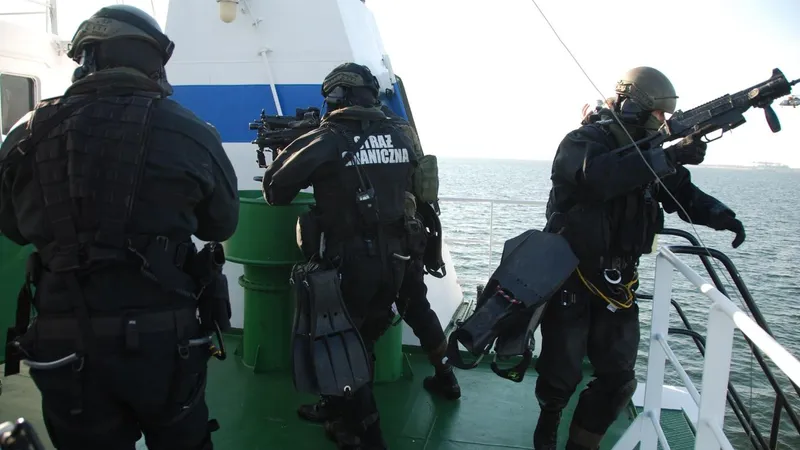
As of August 1st, the Polish Border Guard (Straż Graniczna) has gained new operational capabilities in the use of direct enforcement measures, following the entry into force of a regulation issued by the Minister of the Interior and Administration.
In brief
Polish Border Guard officers have been able to use an expanded catalogue of direct coercive measures since 1 August under a regulation of the Minister of Interior and Administration on the armament of the Border Guard. The new rules allow devices for destroying, immobilising or taking control of unmanned aircraft, water-based incapacitating agents and measures similar to incapacitating nets. Tadeusz Gruchalla, spokesman for the Maritime Border Guard Unit, pointed to greater effectiveness in repelling attempts to force the border and to the safety of officers. The amendment aligns the armament with the act of 26 July 2024.
The revised ordinance broadens the scope of permissible equipment, granting officers the authority to use tools designed to disable or destroy unmanned aerial vehicles (UAVs), as well as to seize control over their flight operations. Additionally, the updated regulations introduce liquid-based incapacitating agents and expand the category of net-based restraining devices to include "other similar means of incapacitation."
According to Tadeusz Gruchalla, spokesperson for the Maritime Division of the Polish Border Guard (MOSG):
- The regulation aims to improve the effectiveness of repelling attempts to forcefully cross the state border amidst continued migratory pressure, as well as to enhance the safety of Border Guard officers in confrontations with aggressive individuals who fail to comply with lawful orders.
These changes mark a significant step in the modernization of the force’s tactical response, particularly in light of the increasing threat posed by UAVs used for surveillance or sabotage operations near strategic national infrastructure, including ports and coastal facilities.
- Expanding the list of direct enforcement tools will enhance the Border Guard’s ability to respond effectively to a wide range of incidents involving attempts to forcibly breach Poland’s state border, Gruchalla adds.
The ordinance aligns the Border Guard’s armament protocols with legislative changes introduced under the Act of July 26, 2024, which amends several laws to streamline the operational readiness of Poland’s Armed Forces, Police, and Border Guard in the event of national security threats. It also reflects updates to the Aviation Law, particularly regarding UAV regulations.
With the Polish coastline and maritime economy increasingly becoming a focus for hybrid threats, strengthening airspace and border security remains a critical priority for national defense policy.
Source: Gazeta Morska · Compiled by: Kamil Kusier
Related articles
 Safety and rescue Polish SAR’s new rescue vessel Mistral launched at Kewatec in Finland
 Safety and rescue Icelandic Coast Guard and police delegation visits Polish Border Guard’s Maritime Division
 Safety and rescue Polish Navy helicopter evacuates man from Baltic platform 100 km off Władysławowo
 Navy and defence SNMG2 joins Allied warships in PASSEX as Italy's Mare Aperto 2026 gets under way
 Safety and rescue From lightships to solar power: 160 years of the Grundkallen light station
 Education 254 people, manikins and life rafts: Maritime University of Szczecin joins national CPR record attempt
Comments (0)
The discussion is moderated by the editors: a comment appears after review. Your e-mail address is not published.
Nobody has commented on this article yet.