









Emergency number 985 returns to SAR as MRCC takes over 24/7 water rescue coordination
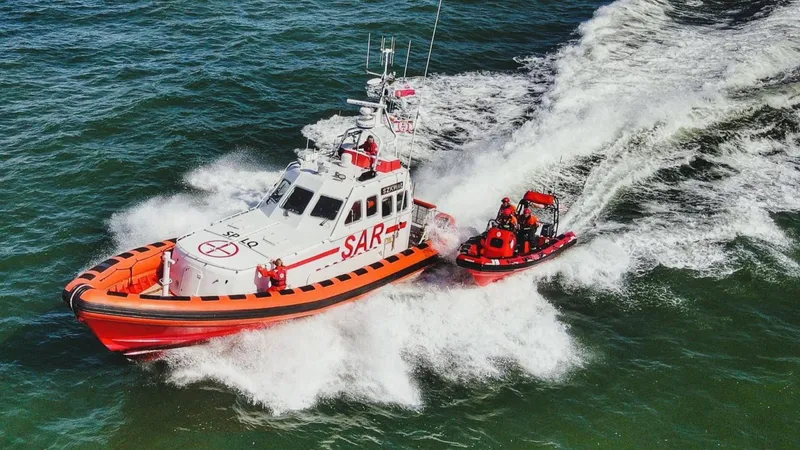
Emergency number 985 is returning to Poland’s Maritime Search and Rescue system, with Maritime Rescue Coordination Centres set to resume round-the-clock operational handling. The move is expected to streamline emergency response procedures, strengthen specialist coordination and restore a more direct reporting pathway for incidents at sea and inland waters.
In brief
The 985 emergency number is returning to the Maritime Search and Rescue Service (MSPiR SAR) and will be handled around the clock by inspectors of the Maritime Rescue Coordination Centre. MSPiR SAR director Sebastian Kluska noted that the change restores clear operational responsibility and direct handling of alerts by the rescue system. Continuous watch on VHF channel 16, the primary maritime distress channel, is maintained in parallel. The 2026 season may be the first in years with a more orderly model of raising the alarm on the water.
In emergency response systems, operational clarity is not an administrative luxury - it is a critical component of effectiveness. When distress situations unfold on the water, fragmented reporting structures and unclear operational routing can translate into lost minutes, delayed asset deployment and reduced situational awareness.
Against this backdrop, the decision to return emergency number 985 directly to the SAR framework is being viewed as a significant structural adjustment within Poland’s maritime safety ecosystem. Historically associated with water rescue services, the 985 hotline will once again be managed directly by specialist SAR personnel operating within Maritime Rescue Coordination Centres (MRCC) on a 24/7 basis.
- The objective is to restore a clear operational model based on direct emergency intake and specialist response management, says Sebastian Kluska, Director of MSPiR SAR.
Shorter reporting chain, faster operational response
For maritime stakeholders, the reform is primarily operational in nature. By routing incoming emergency calls directly to MRCC personnel, the system reduces procedural layers between the initial distress report and operational decision-making.
This allows trained SAR operators to assess incidents immediately, initiate response protocols and coordinate available rescue assets without unnecessary intermediary stages. In maritime emergency management, reducing communication friction is often as important as resource availability itself.
- Emergency systems must remain intuitive for users and efficient for operators. Simplified reporting pathways directly improve response capability, Sebastian Kluska notes.
The change is expected to benefit both professional maritime operators and recreational users navigating Polish waters.
MRCC resumes round-the-clock command role
A core component of the reform is the reinstatement of full-time operational handling by Maritime Rescue Coordination Centres. This effectively restores direct emergency management to specialist units designed specifically for maritime incident coordination.
For shipowners, marina operators, fishing communities and leisure boating sectors, the development signals greater predictability in emergency procedures and operational accountability.
Industry observers note that specialist-led emergency intake is particularly relevant during peak seasonal traffic, when incident volumes traditionally increase across coastal and inland waters.
VHF Channel 16 remains under continuous monitoring
Alongside the hotline transition, authorities have confirmed continuous monitoring of VHF Channel 16, the international maritime distress and calling frequency. For the maritime community, this remains a critical component of operational safety architecture.
While mobile communications have become increasingly common, radio remains the primary emergency communication tool in many offshore and nearshore scenarios.
- VHF Channel 16 remains a cornerstone of maritime emergency communication. Telephone and radio systems should function as complementary layers within a unified safety framework, Sebastian Kluska adds.
Continuous monitoring is particularly important in areas with limited GSM reliability or incidents requiring multi-party communication.
Strategic return to specialist-led maritime safety
Beyond operational adjustments, the return of 985 to SAR is also being interpreted as a broader institutional shift toward specialist-led emergency governance.
Rather than dispersing responsibilities across multiple administrative layers, the revised model re-centres operational responsibility within dedicated maritime rescue structures.
For the wider maritime sector, the move represents a return to a more coherent emergency response architecture focused on speed, clarity and sector-specific expertise.
If implemented as announced, the updated framework could mark one of the most significant improvements to Poland’s water emergency reporting structure in recent years.
Source: Gazeta Morska · Compiled by: Kamil Kusier
Related articles
 Safety and rescue Polish SAR’s new rescue vessel Mistral launched at Kewatec in Finland
 Safety and rescue Icelandic Coast Guard and police delegation visits Polish Border Guard’s Maritime Division
 Safety and rescue Polish Navy helicopter evacuates man from Baltic platform 100 km off Władysławowo
 Navy and defence SNMG2 joins Allied warships in PASSEX as Italy's Mare Aperto 2026 gets under way
 Safety and rescue From lightships to solar power: 160 years of the Grundkallen light station
 Education 254 people, manikins and life rafts: Maritime University of Szczecin joins national CPR record attempt
Comments (0)
The discussion is moderated by the editors: a comment appears after review. Your e-mail address is not published.
Nobody has commented on this article yet.