









Cross-border SAR operation on the ice of the Gulf of Bothnia
The Maritime Rescue Coordination Centre (MRCC) in Turku received an emergency beacon alert originating from the sea-ice area between Oulu in Finland and Luleå in Sweden. The alert indicated that two individuals might be in distress on the frozen surface of the Gulf of Bothnia.
In brief
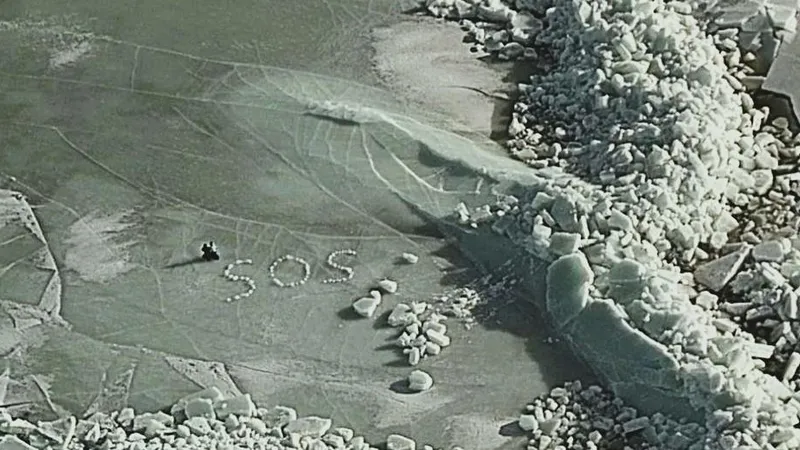
Two people on a multi-day ski expedition across the ice of the Gulf of Bothnia were rescued in a joint operation conducted by Finland and Sweden. The Maritime Rescue Coordination Centre in Turku received a signal from an emergency beacon in the ice area between Oulu and Luleå, after which aircraft and rescue services of both countries were dispatched to the scene. The ice cover broke during the night, and the tent and most of the expedition equipment ended up in the water. Locating the pair was made easier by a large SOS sign laid out by the casualties on the surface of the ice.
According to the Finnish Border Guard, the SAR operation was immediately launched despite extremely challenging winter conditions. Aerial assets from both Finland and Sweden were deployed, demonstrating strong cross-border cooperation in the northern Baltic region.
Authorities later confirmed that the two individuals were on a long-distance skiing expedition across the sea ice. They had spent the night in a tent on the ice, but during the night the ice sheet fractured, causing the tent and most of their equipment to fall into the water.
The skiers managed to escape to a more stable section of ice but had almost no gear with them, exposing them to significant risk of hypothermia in sub-zero conditions. In addition, to increase their visibility to rescuers, they laid out a large “SOS” signal on the ice, which could be seen from the air. Such visual distress signals are a critical measure for increasing detectability in remote or hard-to-access areas.
Following the emergency beacon signal, SAR units conducted an extensive aerial search across a vast ice field. The two individuals were eventually located and safely rescued.
This incident highlights the hazards of winter expeditions on sea ice in the northern Baltic. Even though ice thickness in the Gulf of Bothnia can reach several tens of centimetres during winter, ice conditions remain highly dynamic and unpredictable due to wind, currents, and temperature fluctuations.
Rescue authorities emphasize that carrying a personal emergency locator beacon (PLB) and using standard visual signals such as SOS markedly increases survival chances in remote ice-covered maritime environments and allows rapid activation of international SAR procedures.
Source: Gazeta Morska · Compiled by: Kamil Kusier
Related articles
 Safety and rescue Polish SAR’s new rescue vessel Mistral launched at Kewatec in Finland
 Safety and rescue Icelandic Coast Guard and police delegation visits Polish Border Guard’s Maritime Division
 Safety and rescue Polish Navy helicopter evacuates man from Baltic platform 100 km off Władysławowo
 Navy and defence SNMG2 joins Allied warships in PASSEX as Italy's Mare Aperto 2026 gets under way
 Safety and rescue From lightships to solar power: 160 years of the Grundkallen light station
 Education 254 people, manikins and life rafts: Maritime University of Szczecin joins national CPR record attempt
Comments (0)
The discussion is moderated by the editors: a comment appears after review. Your e-mail address is not published.
Nobody has commented on this article yet.