









Containership MSC Elsa 3 sinks off Indian coast. Crew rescued, pollution risk under assessment
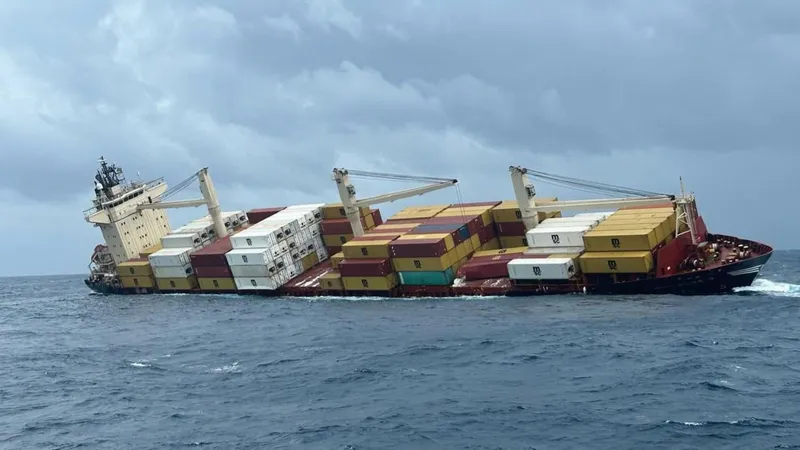
The Liberia-flagged containership MSC Elsa 3 has sunk in the Arabian Sea, approximately 38 nautical miles southwest of the Indian port of Kochi. The vessel experienced a prolonged loss of stability before capsizing and ultimately sinking. All 24 crew members were safely rescued in a coordinated response by the Indian Coast Guard and Navy.
In brief
The Liberian-flagged container ship MSC Elsa 3 sank in the Arabian Sea around 38 nautical miles southwest of the Indian port of Kochi. All 24 crew members were rescued in a coordinated operation by the Indian Coast Guard and the Indian Navy. MSC Elsa 3 was carrying around 640 containers, including 13 with hazardous cargo, and 450 tonnes of fuel, and Indian authorities are taking measures to prevent contamination. An investigation into the loss of stability is being conducted by the shipowner and Indian maritime services in cooperation with the International Maritime Organization.
Initial reports indicate the vessel was carrying approximately 640 containers, including 13 classified as hazardous cargo, as well as around 450 tonnes of fuel oil. Indian authorities have launched immediate containment operations to prevent environmental contamination, deploying aerial surveillance and marine response units to monitor and secure the affected area.
A sign of broader trends in maritime risk
The sinking of MSC Elsa 3 underscores a growing concern in the global maritime industry: the increasing vulnerability of large container vessels to critical incidents. As ships grow in size and global shipping intensifies, so too does the operational risk—particularly in regions prone to severe weather and heavy traffic. Maritime safety experts have repeatedly highlighted the need for stricter oversight of vessel stability protocols and the transport of dangerous goods.
While total losses of this scale remain statistically rare, they often result in significant ecological and economic consequences, from fuel spills to disruption in global supply chains. Investigations into the cause of the stability failure are now underway, involving both the vessel’s operator and international maritime authorities, including the International Maritime Organization (IMO).
Further updates are expected as salvage assessments and environmental monitoring continue in the coming days.
Source: Gazeta Morska · Compiled by: Kamil Kusier
Related articles
 Safety and rescue Polish SAR’s new rescue vessel Mistral launched at Kewatec in Finland
 Safety and rescue Icelandic Coast Guard and police delegation visits Polish Border Guard’s Maritime Division
 Safety and rescue Polish Navy helicopter evacuates man from Baltic platform 100 km off Władysławowo
 Navy and defence SNMG2 joins Allied warships in PASSEX as Italy's Mare Aperto 2026 gets under way
 Safety and rescue From lightships to solar power: 160 years of the Grundkallen light station
 Education 254 people, manikins and life rafts: Maritime University of Szczecin joins national CPR record attempt
Comments (0)
The discussion is moderated by the editors: a comment appears after review. Your e-mail address is not published.
Nobody has commented on this article yet.