Blessed Fr. Cmdr. Lt. Władysław Miegoń: the priest who stayed with his sailors to the end
He was one of those chaplains who never abandoned his people. Father Władysław Miegoń, chaplain of the Polish Navy in the interwar years, stayed with the defenders of Hel until the very last day of the 1939 campaign — and then shared their fate. He died in the Dachau concentration camp in 1942. Today, he is a Blessed of the Catholic Church and the patron of chaplains of the Polish Navy.
history other marine lifestyle navy pomerania west pomerania01 november 2025 | 13:37 | Source: Gazeta Morska | Prepared by: Kamil Kusier | Print
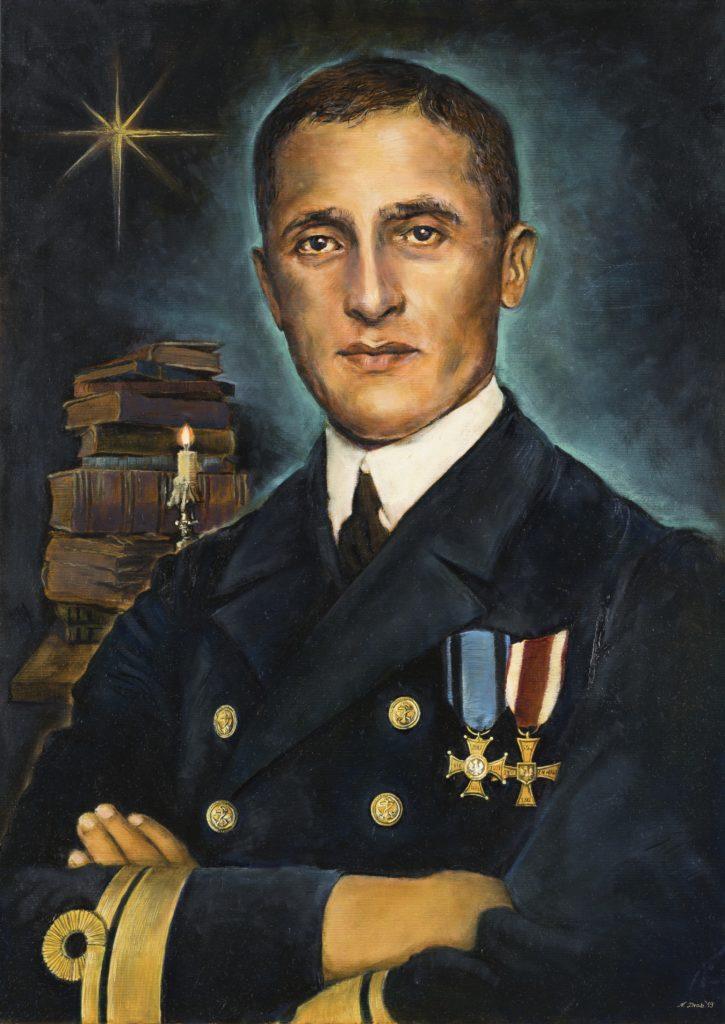
bł. ks. kmdr ppor. Władysław Miegoń
From the heart of Sandomierz to the Polish sea
Władysław Miegoń was born on September 30, 1892, in Samborzec, near Sandomierz. Ordained in 1915, he began his priestly ministry in the Diocese of Sandomierz. After Poland regained independence, he joined the newly reformed Polish Army and soon became a chaplain in the Navy.
In the 1930s, he became the first parish priest of Our Lady Queen of Poland Church in Gdynia — a parish that quickly became a spiritual home for Polish sailors. Fr. Miegoń was known not only for his deep faith but also for his closeness to the men he served. He could speak with everyone — from admirals to the youngest deckhands — with warmth, respect, and genuine care.
Faithful to the end
When war broke out in September 1939, Fr. Miegoń was stationed on the Hel Peninsula. As bombs fell and shells exploded, he remained with the troops — hearing confessions in bunkers, saying Mass in makeshift chapels, comforting the wounded and the terrified.
After Hel’s surrender, he was offered evacuation. He refused. Instead, he chose to stay with his sailors and was taken with them into German captivity.
He was first imprisoned in Stutthof, later in Sachsenhausen, and finally in Dachau — the largest Nazi concentration camp for clergy. Even in those hellish conditions, he continued his ministry in secret: sharing the Eucharist, offering words of hope, dividing his meager bread ration with others.
On October 15, 1942, weakened by starvation and brutal treatment, he died a martyr’s death. In 1999, Pope John Paul II beatified him among the 108 martyrs of World War II.
Today, a memorial plaque in Gdynia honors his life and sacrifice. For Poland’s military chaplains, he remains a symbol of faithfulness, courage, and pastoral devotion in the darkest times.
He was not alone — other uniformed saints
The story of Blessed Władysław Miegoń is part of a larger chapter in Polish history — one where the uniform and the cassock, service and faith, often stood side by side in times of war and occupation. Among the Polish blesseds and saints are many who wore uniforms or served those who did — soldiers, scouts, police officers, border guards, and chaplains.
Among them:
- Blessed Fr. Stefan Wincenty Frelichowski – scout leader, military chaplain, and fellow prisoner of Dachau and Sachsenhausen, who died in 1945 caring for the sick; today he is the patron saint of Polish scouts.
- Blessed Fr. Michał Piaszczyński – imprisoned in Sachsenhausen and died of exhaustion in 1940.
- Blessed Fr. Jan Macha – a young Silesian priest executed by the Germans in Katowice in December 1942.
- Blessed Fr. Józef Kowalski – a Salesian priest and chaplain to scouts, murdered in Auschwitz in 1942 for refusing to trample his rosary.
- Blessed Fr. Zygmunt Pisarski – parish priest of Gdeszyn, shot for protecting Jews and underground soldiers.
Faith, service, honor
Their stories remind us that the Polish uniform has always represented more than military duty — it stood for faith, freedom, and solidarity.
Blessed Fr. Władysław Miegoń remains one of the most luminous symbols of that spirit. He was not a hero with a weapon in hand but a man who fought for the dignity and faith of others. His life is a lasting reminder that true service — whether at sea, in the armed forces, or in any uniform — begins with fidelity to one’s conscience and readiness to serve others, even at the cost of one’s life.
Buy us a coffee, and we’ll invest in great maritime journalism! Support Gazeta Morska and help us sail forward – click here!
Kamil Kusier
redaktor naczelny
comments
Add the first comment
see also
March 1: Remembering the “cursed soldiers”. A legacy that also resonates with today’s navy
Gdynia at 100: ceremonial city council session highlights Poland’s maritime strategy
Poland’s wedding to the sea in Puck: President Karol Nawrocki commemorates 106th anniversary
Gdynia at 100: A Strategic port city celebrates its maritime identity
A city designed from the sea. one hundred years of Gdynia as a project ahead of its time
106 years ago Poland “turned to the sea”. Split celebrations, one goal: a strong maritime Poland
IPN Gdańsk highlights maritime cities and port heritage in its 2026 programme
December 1970: remembering the maritime workers of Gdynia
Cadet Day: tradition, heritage and the professional formation of future naval officers
Gdynia marks its centenary. A port city that shaped Poland’s maritime future
ADVERTISEMENT
ADVERTISEMENT