Gdynia at 100: ceremonial city council session highlights Poland’s maritime strategy
As Gdynia marks the 100th anniversary of receiving city rights, the ceremonial session of the Gdynia City Council held on 10 February 2026 became more than a symbolic celebration. Hosted at the Musical Theatre in Gdynia, the event offered a comprehensive reflection on the city’s maritime legacy and its continued role as a strategic pillar of Poland’s port system, naval security and coastal development.
history politics pomerania local governance tricity news10 february 2026 | 20:34 | Source: Gazeta Morska | Prepared by: Kamil Kusier | Print
fot. Kamil Kusier / Gazeta Morska
From a vision to a state-building project
On 10 February 1926, the Council of Ministers formally granted city status to the rural municipality of Gdynia. What followed was one of the most ambitious infrastructure projects of interwar Europe: the construction of a modern seaport and a city designed to serve an independent state’s access to global trade routes.
During the anniversary session, President of the Republic of Poland Karol Nawrocki recalled that Gdynia was once "only a dream". The vision of engineer Tadeusz Wenda, later elevated to a national strategy by Eugeniusz Kwiatkowski, transformed a coastal village into a maritime gateway of the reborn Polish state. The success of this undertaking, he stressed, depended on thousands of people who built the city from the ground up.
A ceremonial session with national and maritime leadership
The session was chaired by Tadeusz Szemiot, speaker of the Gdynia City Council, with Mayor Aleksandra Kosiorek as co-host. The audience included representatives of the national government, parliament, armed forces, maritime industry, academia and local authorities.
Among the guests were President Karol Nawrocki, Marshal of the Senate Małgorzata Kidawa-Błońska and Minister of Education Barbara Nowacka. The presence of descendants of Tadeusz Wenda and Eugeniusz Kwiatkowski underlined the continuity of the ideas that shaped both the port and the city.
Gdynia and baltic maritime security
In his address, President Nawrocki placed strong emphasis on Gdynia’s role in maritime security. He noted that Poland’s naval shipyard, naval infrastructure and the Port of Gdynia are integral to the security architecture of the Baltic Sea, which in recent years has effectively become an internal sea of NATO.
- Without Gdynia, security in this basin cannot be built, the president stated, pointing to the city’s importance for the Polish Navy, allied operations and regional stability. He also highlighted the port’s steady growth and record-breaking cargo volumes, as well as Gdynia’s position as a key academic and cultural hub in northern Europe.
Ports, access infrastructure and long-term development
A central theme of the presidential speech was the future of port infrastructure. Nawrocki reiterated that he does not intend to remain a passive observer of Gdynia’s development. Four months earlier, he submitted the legislative initiative “Yes! for Polish ports” to the Polish parliament.
The proposed act includes solutions for the construction of the Port of Gdynia’s outer port and the completion of the Red Road (Droga Czerwona), a critical access route connecting the port with the national transport network. The president expressed hope that the legislation would be adopted in time for the city’s 101st anniversary.
Gdynia as a model of cooperation and foresight
Marshal of the Senate Małgorzata Kidawa-Błońska framed Gdynia as a symbol of forward-looking statecraft. Quoting President Stanisław Wojciechowski of the Second Polish Republic, she described the city as Poland’s "safe window to the world". The construction of Gdynia, she argued, was not merely an urban or port project, but a long-term strategy of thinking about the country’s future.
She reminded the audience that the Polish Senate unanimously declared 2026 the Year of the City of Gdynia and presented the city authorities with the Senate Medal in recognition of Gdynia’s contribution to national development.
Local government and responsibility for the next century
Mayor Aleksandra Kosiorek stressed that the centenary celebrations are above all a tribute to the people who built and continue to shape the city. Development, she noted, is never automatic; it emerges from cooperation, courage in decision-making and responsibility for the common good.
City Council Speaker Tadeusz Szemiot added that Gdynia’s history combines vision and determination with political and economic rationality. Entering its second century, the city faces an obligation to pursue sustainable growth and to maintain its strong position within Poland’s maritime and regional structures.
Eugeniusz Kwiatkowski medals and the pillars of gdynia
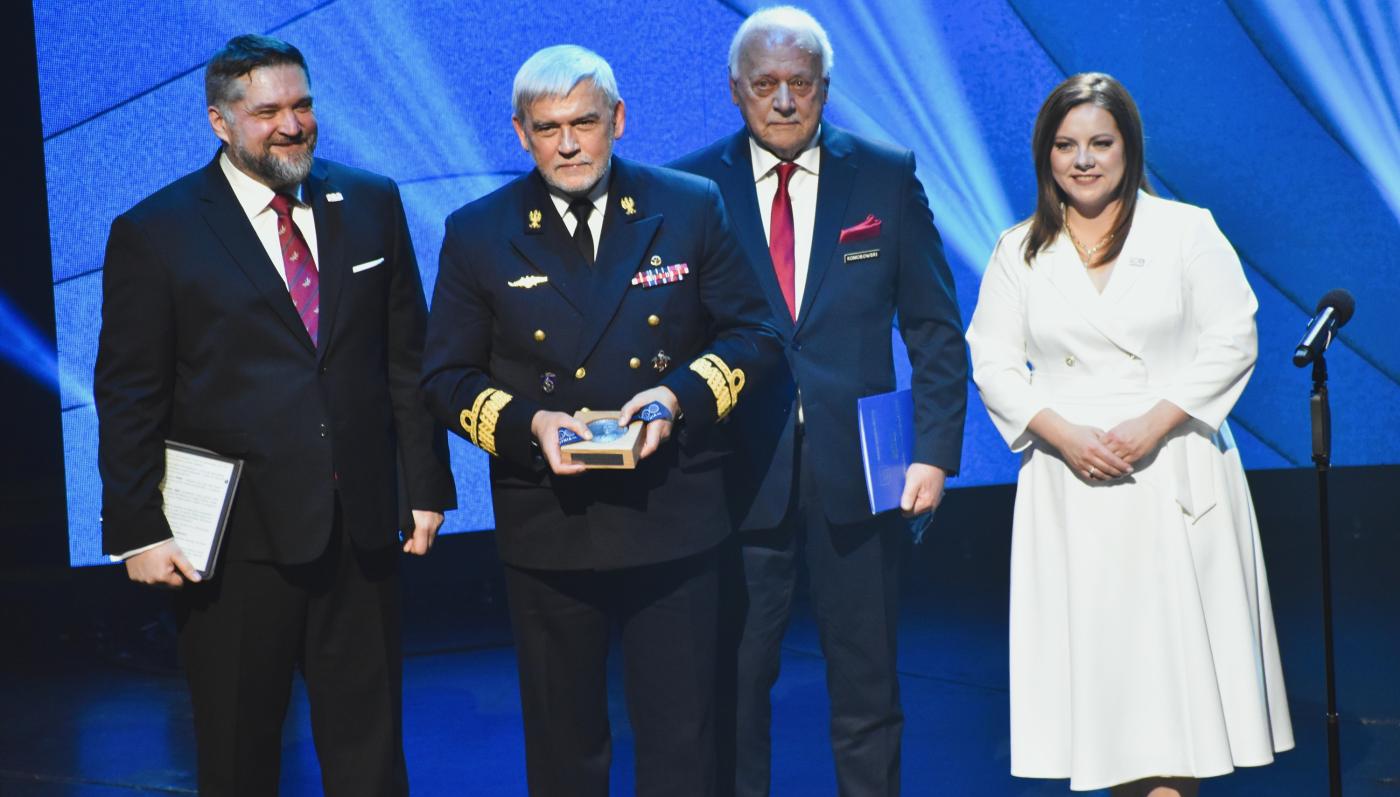
As part of the session, the Eugeniusz Kwiatkowski Medals were awarded for outstanding contributions to the city. This year’s recipients reflected three core pillars of Gdynia’s identity: maritime economy, security and culture.
The honours went to the Polish Naval Academy in Gdynia, the Gdynia Cotton Association and the Polish Filmmakers Association, a co-founder of the Polish Film Festival held annually in the city.
A century completed, a maritime mission continued
The ceremonial session of the Gdynia City Council demonstrated that, one hundred years after gaining city rights, Gdynia remains a living project rooted in maritime ambition and national responsibility. The anniversary served not only as a summary of the past century, but also as a statement of intent for the decades to come — reinforcing Gdynia’s role in Poland’s port system, naval security and broader maritime strategy.
Buy us a coffee, and we’ll invest in great maritime journalism! Support Gazeta Morska and help us sail forward – click here!
Kamil Kusier
redaktor naczelny
comments
Add the first comment
see also
137 years since the Apia cyclone in Samoa: a lesson for modern shipping
Polish Navy retires prototype minesweeper ORP Gopło after 44 years of service
Commander Maciej Janiak award. Honouring those who build maritime Poland
55 Years of the 3rd Ship Flotilla. A pillar of the Polish Navy
March 1: Remembering the “cursed soldiers”. A legacy that also resonates with today’s navy
Poland’s wedding to the sea in Puck: President Karol Nawrocki commemorates 106th anniversary
Gdynia at 100: A Strategic port city celebrates its maritime identity
A city designed from the sea. one hundred years of Gdynia as a project ahead of its time
106 years ago Poland “turned to the sea”. Split celebrations, one goal: a strong maritime Poland
IPN Gdańsk highlights maritime cities and port heritage in its 2026 programme
ADVERTISEMENT
ADVERTISEMENT