









Baltic and North Atlantic seen as likely flashpoints in NATO-Russia tensions
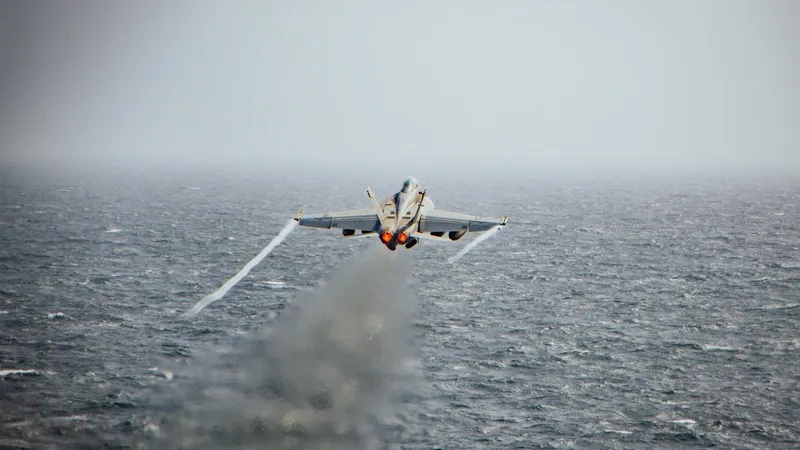
Military analyst Professor Michael Clarke has warned that the most probable location for a direct confrontation between NATO and Russia would be the Baltic Sea or the north Atlantic. Speaking to Sky News, Clarke noted that the course of events suggests both sides are “on a road towards confrontation,” even if that does not mean war is inevitable.
In brief
The waters of the Baltic Sea and the North Atlantic are the most likely place for a direct confrontation between NATO and Russia, British analyst Professor Michael Clarke assessed in an interview with Sky News. As possible flashpoints Michael Clarke pointed to the cutting of undersea telecommunications cables, incidents involving submarines and the interception of a tanker illegally carrying Russian oil or gas. According to the analyst the greatest threat concerns Lithuania, Latvia, Estonia, Poland, Finland and Denmark, and in an Atlantic incident the Royal Navy could find itself on the front line.
Maritime triggers for escalation
Clarke pointed to several scenarios that could spark an incident at sea, including:
- sabotage of subsea communication cables,
- submarine encounters,
- the interception of a tanker carrying Russian oil or gas in breach of sanctions.
He cited a precedent set by Finland, which already detained a vessel under suspicion of violating sanctions. In his view, it is increasingly likely that NATO navies could seize tankers, leaving them moored in European ports for years while legal disputes over ownership unfold.
Rising pressure in the Baltic
Following repeated airspace violations — most recently Russian drones crossing into Polish territory — Clarke said NATO allies may commit to strengthening air defence systems and adopting a firmer political stance toward Moscow.
He identified Lithuania, Latvia, Estonia, Poland, Finland and Denmark as the countries most at risk, given their strategic role in securing maritime routes and regional stability.
Royal Navy on the front line
In the event of a confrontation in the north Atlantic, Clarke suggested that the Royal Navy would be among the first to respond, particularly in cases involving critical infrastructure or illicit energy shipments.
— I think we are quite close to such a situation, Clarke concluded.
Source: Gazeta Morska / PAP · Compiled by: Marta Zabłocka
Related articles
 Safety and rescue Polish SAR’s new rescue vessel Mistral launched at Kewatec in Finland
 Safety and rescue Icelandic Coast Guard and police delegation visits Polish Border Guard’s Maritime Division
 Safety and rescue Polish Navy helicopter evacuates man from Baltic platform 100 km off Władysławowo
 Navy and defence SNMG2 joins Allied warships in PASSEX as Italy's Mare Aperto 2026 gets under way
 Safety and rescue From lightships to solar power: 160 years of the Grundkallen light station
 Education 254 people, manikins and life rafts: Maritime University of Szczecin joins national CPR record attempt
Comments (0)
The discussion is moderated by the editors: a comment appears after review. Your e-mail address is not published.
Nobody has commented on this article yet.