









Another Baltic incident: Russian Il-20 intercepted and escorted by Polish fighters
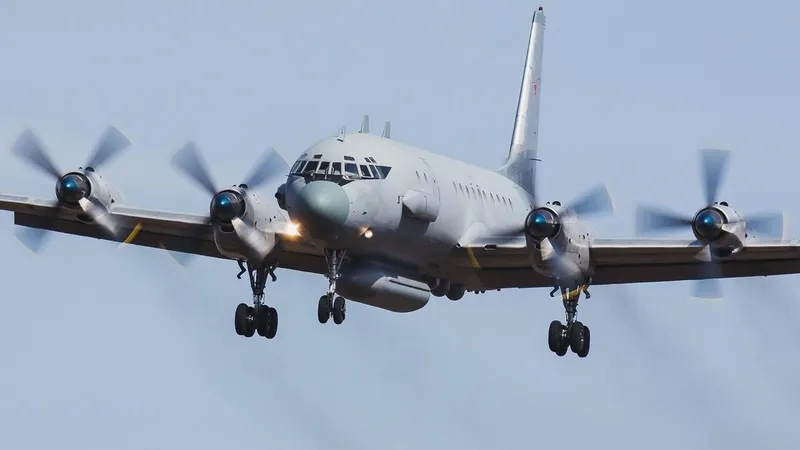
Polish Air Force MiG-29s were once again scrambled over the Baltic Sea to intercept a Russian Il-20 reconnaissance aircraft flying in international airspace without radio contact or active transponder signals. Defense Minister Władysław Kosiniak-Kamysz confirmed the incident, calling it another example of Russia’s growing aerial activity in the region.
In brief
Polish MiG-29 fighters have again intercepted a Russian Il-20 reconnaissance aircraft over the Baltic Sea, as confirmed by Minister of National Defence Władysław Kosiniak-Kamysz at a press conference in Kartuzy. The Russian aircraft was operating in international airspace without contact with air traffic control and did not violate Polish airspace, and the operation was conducted under the Baltic Air Policing mission. Flights of Su-27, Su-24 and Tu-134 aircraft, often with transponders switched off, have also been recorded over the Baltic. According to NATO data, the number of such incidents rose by more than ten percent in 2024.
Routine NATO response under Baltic Air Policing
Speaking at a press conference in Kartuzy, Minister Władysław Kosiniak-Kamysz said:
- Today, MiG-29s intercepted a Russian reconnaissance aircraft over the Baltic Sea — just as they did yesterday.
He stressed that the Russian aircraft did not violate Polish airspace, and the interception was conducted in full accordance with NATO procedures. The operation formed part of the Baltic Air Policing mission, through which Poland and allied nations monitor and secure northern European airspace.
Increased Russian air activity over the Baltic
Recent weeks have seen a noticeable uptick in Russian military aviation activity over the Baltic Sea. Alongside Il-20 reconnaissance planes, NATO radars have tracked Su-27, Su-24, and Tu-134 aircraft flying without flight plans or active transponders. According to NATO statistics, such incidents increased by more than ten percent in 2024 compared to the previous year.
Defense analysts view these missions as controlled provocations — deliberate tests of NATO’s readiness, response times, and defensive coordination in a tense strategic environment.
The Il-20 – Russia’s flying intelligence platform
The Russian Il-20 (NATO reporting name: Coot-A) is a signals intelligence and electronic surveillance aircraft derived from the Il-18 transport platform.
Equipped with extensive SIGINT and ELINT systems, it can intercept, analyze, and locate radar and communication signals from both naval and land-based sources.
Il-20s frequently operate in the Baltic region, often accompanied by Su-27 fighter escorts, conducting reconnaissance near NATO borders.
Provocations as a strategic tool
Since Russia’s full-scale invasion of Ukraine in 2022, the Baltic Sea has become a key arena for low-intensity confrontation between Moscow and NATO.
Typical Russian provocations include:
- flights with transponders switched off,
- aggressive maneuvers near allied borders,
- simulated attack runs on NATO vessels, and
- electronic interference with radar and GPS signals.
These actions serve both psychological and intelligence purposes, aimed at testing NATO vigilance while projecting an image of persistent Russian presence in the region.
Poland’s central role in NATO air defense
Poland plays a pivotal role in NATO’s air defense network.
Polish MiG-29 and F-16 fighters conduct Quick Reaction Alert (QRA) missions in rotation with aircraft from Germany, Spain, the Czech Republic, and Italy.
Their primary task is to identify, intercept, and, if necessary, escort any aircraft approaching NATO-controlled airspace without proper coordination.
The growing number of such intercepts highlights both the efficiency of NATO’s integrated air defense system and the increasing boldness of Russian aerial behavior.
The Baltic Sea after NATO expansion
The accession of Finland and Sweden to NATO has reshaped the strategic balance in Northern Europe. The Baltic Sea is now effectively a “NATO lake,” severely restricting the operational freedom of Russia’s Baltic Fleet. For Moscow, maintaining visible military presence — through air and maritime operations — is a way to signal defiance and preserve the image of regional influence.
Controlled tension – a delicate balance
Thursday’s interception of the Il-20 illustrates the ongoing pattern of “controlled tension” defining NATO-Russia relations in the Baltic region.
While such incidents are managed professionally and rarely escalate, they increase the risk of miscalculation or dangerous encounters in crowded airspace.
Sustaining high readiness levels, interoperability, and intelligence sharing within NATO remains essential to maintaining stability — and preventing routine intercepts from turning into crises.
Source: Gazeta Morska · Compiled by: Kamil Kusier
Related articles
 Maritime economy Poland’s constitutional crisis is also a maritime story
 Navy and defence Norwegian submarine Utstein completes NATO patrol guarding offshore oil and undersea infrastructure
 Safety and rescue Polish SAR’s new rescue vessel Mistral launched at Kewatec in Finland
 Safety and rescue Icelandic Coast Guard and police delegation visits Polish Border Guard’s Maritime Division
 Safety and rescue Polish Navy helicopter evacuates man from Baltic platform 100 km off Władysławowo
 Navy and defence SNMG2 joins Allied warships in PASSEX as Italy's Mare Aperto 2026 gets under way
Comments (0)
The discussion is moderated by the editors: a comment appears after review. Your e-mail address is not published.
Nobody has commented on this article yet.