137 years since the Apia cyclone in Samoa: a lesson for modern shipping
In March 1889, the port of Apia on the Samoa Islands became the scene of one of the most dramatic maritime disasters of the 19th century. A tropical cyclone struck the harbor, destroying or severely damaging six of the seven warships anchored there, belonging to Germany, the United States, and the United Kingdom. More than 140 sailors from the warships’ crews perished, with at least 200 additional casualties among smaller vessels. Exact civilian losses and the full scale of port infrastructure damage remain unknown.
history navy worldwide news15 march 2026 | 16:38 | Source: Gazeta Morska | Prepared by: Kamil Kusier | Print

fot. wikimedia
Apia port at the center of international rivalry
In the late 19th century, Samoa had become a focal point of great-power competition in the Pacific. Germany sought to protect its plantations and commercial investments, the United States pursued a strategic port and naval presence, and the United Kingdom aimed to maintain political and economic influence.
At the time, Apia port served as a strategic hub where warships were stationed not for combat but as a symbol of state presence and influence. Their deployment was intended to safeguard citizens, commercial interests, and support local political allies.
The cyclone disaster and scale of the damage
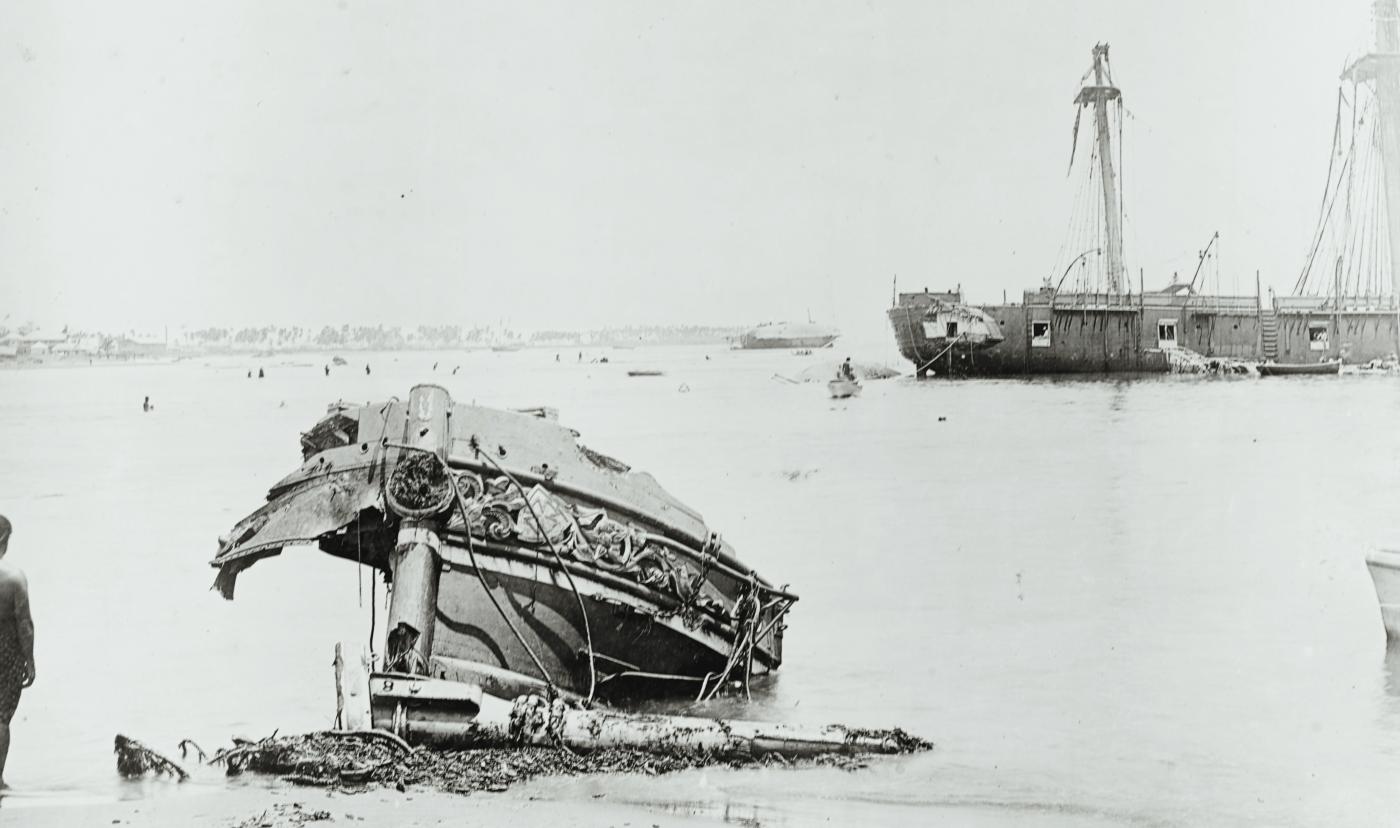
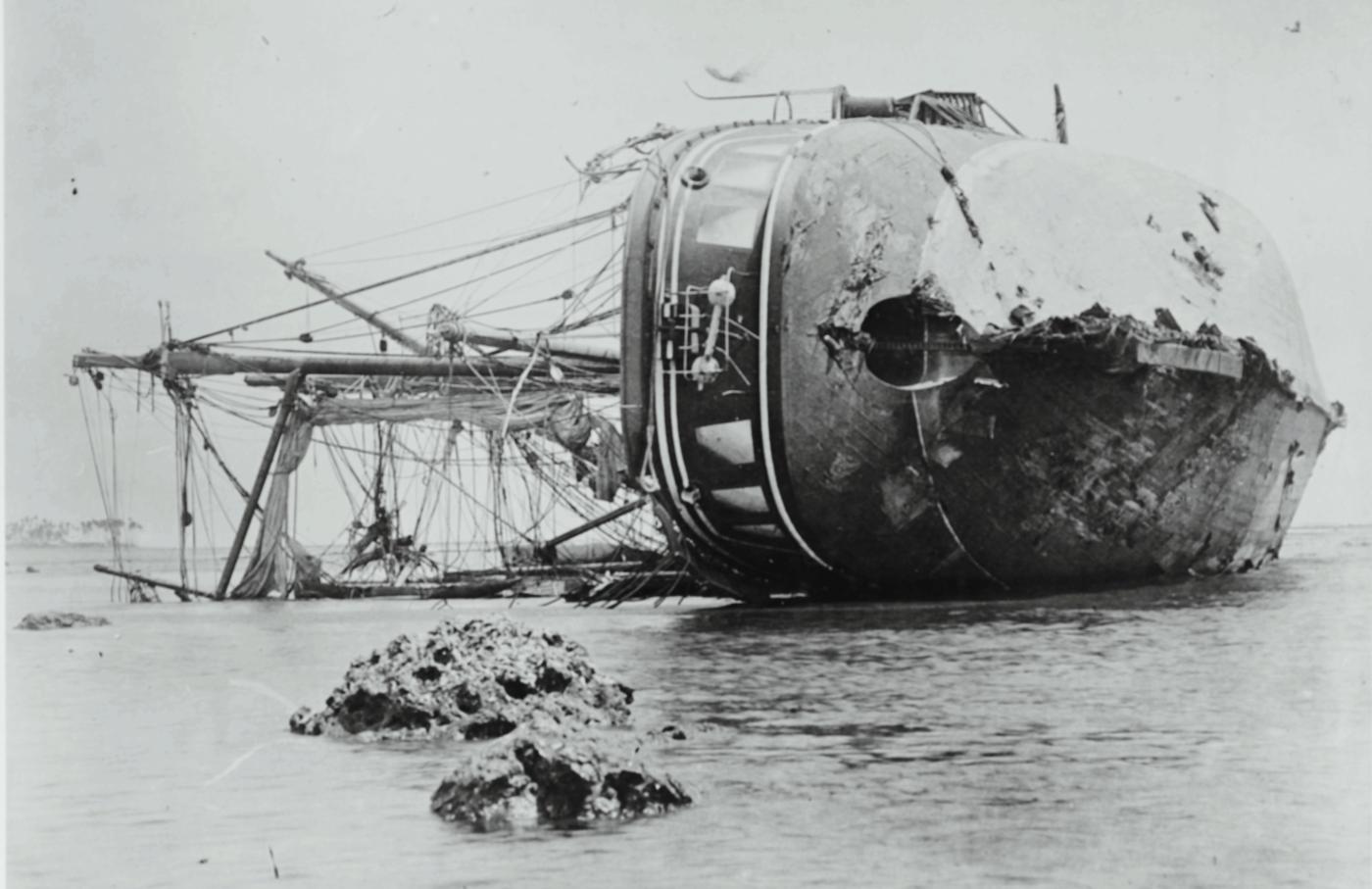
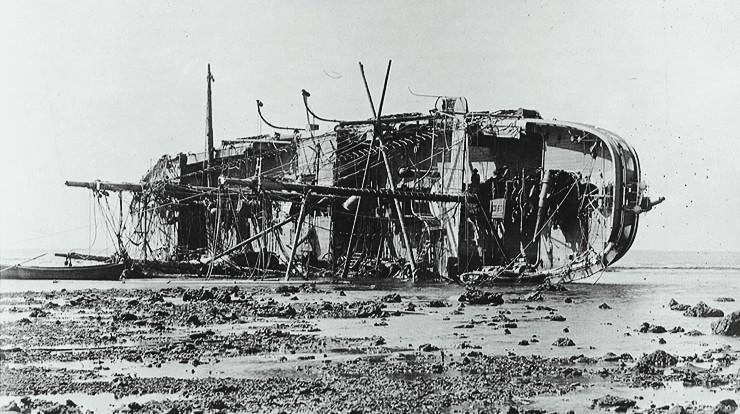
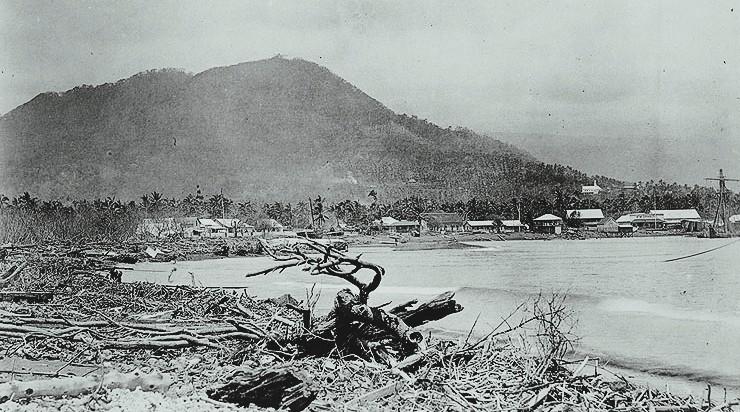
The cyclone that hit Apia on March 15–16, 1889, struck with tremendous force. Most of the warships in the harbor were severely damaged, with four of the six destroyed units completely lost. At least six smaller merchant and transport vessels were sunk or washed ashore, resulting in heavy crew casualties. The port’s quays were extensively damaged, with warehouses and port equipment also suffering.
Specific cases illustrate the severity of the storm: the German SMS Eber was driven ashore, its hull stuck in sand and mud. American ships, including the USS Trenton and USS Vandalia, were forced into situations where maintaining position caused collisions and further damage. Smaller vessels were almost entirely defenseless against the force of the cyclone.
Lessons for modern shipping
The Apia cyclone highlights the importance of proper anchoring and mooring arrangements. Poorly positioned vessels can collide or founder under extreme wind and wave conditions, regardless of ship size or class.
Effective meteorological monitoring is also crucial. Even today, with satellite forecasting and warning systems, ports and fleets must be prepared for sudden, severe weather events, whose intensity can overwhelm local defenses.
Equally important is the design of port infrastructure to withstand extreme conditions. Reinforced quays, resilient warehouses, and secured equipment reduce material losses and help ports recover faster after storms.
The 1889 Apia cyclone remains a valuable lesson for today’s port operators and maritime planners, showing that nature’s power cannot be ignored, and careful preparation can make the difference in safeguarding lives and vessels.
It was also one of the starting points for changes in port design and vessel management in tropical regions. Lessons learned from the disaster contributed to stricter safety standards, improved anchoring procedures, and better planning of port infrastructure in cyclone-prone areas, influencing the development of modern maritime logistics.
Buy us a coffee, and we’ll invest in great maritime journalism! Support Gazeta Morska and help us sail forward – click here!
Kamil Kusier
redaktor naczelny
gallery
comments
Add the first comment
see also
Polish Navy retires prototype minesweeper ORP Gopło after 44 years of service
Commander Maciej Janiak award. Honouring those who build maritime Poland
55 Years of the 3rd Ship Flotilla. A pillar of the Polish Navy
March 1: Remembering the “cursed soldiers”. A legacy that also resonates with today’s navy
Gdynia at 100: ceremonial city council session highlights Poland’s maritime strategy
Poland’s wedding to the sea in Puck: President Karol Nawrocki commemorates 106th anniversary
Gdynia at 100: A Strategic port city celebrates its maritime identity
A city designed from the sea. one hundred years of Gdynia as a project ahead of its time
106 years ago Poland “turned to the sea”. Split celebrations, one goal: a strong maritime Poland
IPN Gdańsk highlights maritime cities and port heritage in its 2026 programme
ADVERTISEMENT
ADVERTISEMENT