









Why Poland needs submarines?
At first glance, posing such a question by the sea or among naval-minded audiences might seem almost heretical. Yet in Poland’s broader public discourse this doubt surfaces regularly, which makes it necessary to explain why submarines—one of the most specialised categories of naval armament—remain indispensable.
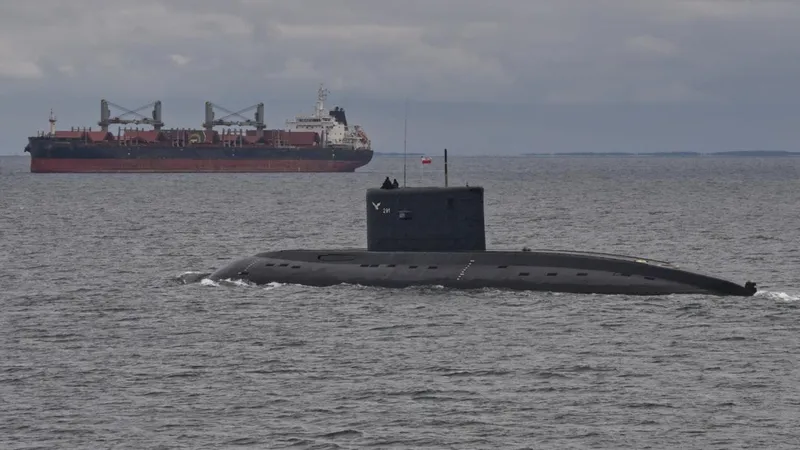
In brief
Submarines remain indispensable for the Polish Navy because their mere presence forces any adversary to maintain large, highly developed anti-submarine warfare capabilities. The Baltic, though shallow, suits non-nuclear boats whose hydrological and acoustic conditions allow full use of inherent stealth, and no unmanned underwater vehicle or surface force can replicate the mission spectrum of a manned submarine. Poland's Strategic Maritime Security Concept requires frigates, submarines, coastal missile units, mine countermeasure vessels, air support and NATO reinforcement for local sea control.
The arguments fall into two groups: direct reasons for possessing submarines at all, and indirect reasons linked to the Polish Navy’s ability to establish local sea control in the Baltic.
Direct arguments: the unique value of submarines
- 1. Submarines introduce overwhelming asymmetry.
Any operational submarine—even one now serving largely training roles, like ORP Orzeł—forces an adversary to maintain a large, highly developed anti-submarine warfare (ASW) capability. Their mere presence drastically increases the cost of contesting the maritime domain.
- 2. In the Baltic, submarines are a genuine game-changer.
Despite being relatively shallow, the Baltic is exceptionally well suited for non-nuclear submarines. Its hydrological and acoustic characteristics allow modern boats to exploit their inherent stealth to the fullest.
- 3. No system can replace a submarine.
Neither unmanned underwater vehicles nor surface forces can replicate the full mission spectrum of a manned submarine.
Indirect arguments: submarines as a pillar of Baltic sea control
Poland’s Strategic Maritime Security Concept states explicitly that the Polish Navy must be able to achieve local sea control in the Baltic. This requires a balanced force consisting of frigates, submarines, coastal missile units, mine countermeasure vessels, air support, and NATO reinforcement.
Alliance perspective
NATO is, at its core, a coalition of maritime powers that understand the strategic value of sea control. Delivering credible naval capability is not only appreciated but often preferred.
The modern submarine: a renewed revolution
Submarines revolutionised naval warfare twice: during World War I and again with the advent of nuclear propulsion. The emergence of air-independent propulsion (AIP) has now transformed the role of non-nuclear submarines, giving them weeks of endurance below the surface.
Poland’s submarine force must be modernised not as a luxury but as a strategic necessity. Submarines give the Polish Navy capabilities that no other asset can provide and are essential for securing maritime lifelines and fulfilling alliance commitments.
Source: Gazeta Morska · Compiled by: Jarosław Wolski
Related articles
 Safety and rescue Dublin Civil Defence volunteers helped Kraków victims. Polish SAR director Sebastian Kluska once served with them
 Navy and defence HMS Prince of Wales takes on ammunition in Norway. First resupply outside the UK
 Maritime economy Poland’s constitutional crisis is also a maritime story
 Navy and defence Norwegian submarine Utstein completes NATO patrol guarding offshore oil and undersea infrastructure
 Safety and rescue Polish SAR’s new rescue vessel Mistral launched at Kewatec in Finland
 Safety and rescue Icelandic Coast Guard and police delegation visits Polish Border Guard’s Maritime Division
Comments (0)
The discussion is moderated by the editors: a comment appears after review. Your e-mail address is not published.
Nobody has commented on this article yet.