









Strengthening a strategic partnership: deputy minister Paweł Bejda meets South Korean defence delegation
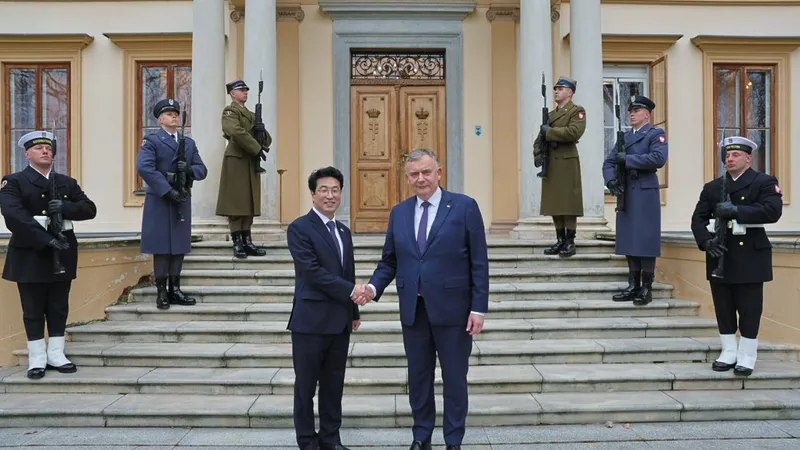
On 14 November, Poland’s deputy minister of national defence Paweł Bejda held a working meeting with a delegation from the Ministry of National Defense of the Republic of Korea, led by Chong-Dae Won, vice minister for military resource management. The talks reflect the deepening Polish–Korean cooperation across the defence sector, which has accelerated significantly in recent years and now plays a growing role in shaping regional security.
In brief
Deputy Defence Minister Paweł Bejda met a delegation of the Ministry of National Defense of the Republic of Korea led by Chong-Dae Won, deputy minister for military resource management. Talks covered regional stability, adapting armed forces to land, air and maritime threats, and further defence industry cooperation. Poland is the largest European buyer of South Korean military equipment. In the Orka submarine programme for the Polish Navy, Hanwha Ocean and HD Hyundai Heavy Industries compete with TKMS, Saab, Naval Group, Navantia and Fincantieri, with the winner due to be named in late November.
Both delegations discussed key issues related to strategic stability, emerging threats and the evolving requirements of modern armed forces in all operational domains. The sides emphasised that the Polish–Korean partnership enhances interoperability, strengthens deterrence, and supports long-term capability development in a rapidly changing security environment.
South Korea – a key technological partner for Poland
Cooperation between Poland and South Korea has expanded from political dialogue into a wide-ranging industrial and technological relationship. Poland is currently the largest European customer for South Korean defence systems, benefiting from technology transfer, local industrial participation and comprehensive training programmes.
South Korean defence companies—renowned for advanced missile technologies, armoured platforms, command-and-control systems and naval engineering—are increasingly active in domains relevant to Poland’s maritime modernisation. As a major Indo-Pacific naval power with one of the world’s most capable shipbuilding industries, South Korea offers Poland not only modern platforms but also long-term industrial synergies.
For Poland, a Baltic nation investing heavily in strengthening its maritime posture, Korean experience in designing and constructing sophisticated naval platforms—including conventional submarines—has become an asset of growing strategic relevance.
Future directions for defence cooperation
Both sides underlined that the current level of cooperation lays a strong foundation for expanding joint initiatives in advanced technologies, digitalisation of the battlespace and the development of next-generation military capabilities. Prospective cooperation pathways also include joint R&D, industrial participation frameworks and deeper engagement in maritime and naval projects.
Orka submarine programme – bidders and strategic outlook
Although the Orka submarine programme remains formally in its analytical–conceptual phase, the engagement of leading global shipbuilders has given the project considerable momentum. According to the latest information, Poland is expected to announce the selected contractor by the end of November, marking a decisive step in the long-awaited recapitalisation of the submarine component of the Polish Navy.
In the competition—alongside the strong South Korean contenders Hanwha Ocean and HD Hyundai Heavy Industries—are several major European shipyards with extensive experience in conventional submarine construction, including:
- TKMS (Germany) with the Type 212CD design,
- Saab (Sweden) offering the A26 Blekinge-class,
- Naval Group (France) with the Scorpène family,
- Navantia (Spain) with the S-80 Plus design,
- Fincantieri (Italy), leveraging proven Italian expertise in conventional submarine engineering.
The forthcoming decision will not only determine the future structure of Poland’s submarine force but could also significantly influence the development of the national shipbuilding and defence industry—through technology transfer, local production opportunities and long-term maintenance and lifecycle support.
Source: Gazeta Morska · Compiled by: Kamil Kusier
Related articles
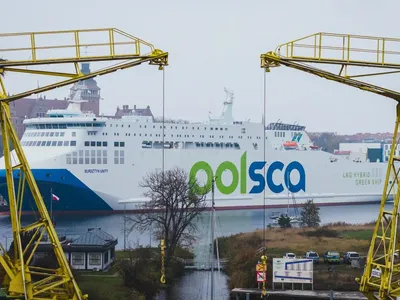 Shipbuilding industry Poland christens ro-pax ferry Bursztyn Unity in Szczecin on Independence Day. Ystad service starts 18 November
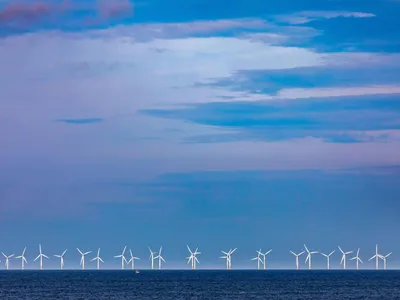 Energy and offshore Orlen Neptun deploys V-LiDAR buoys at Baltic West ahead of Poland's 2027 offshore wind auction
 Energy and offshore Equinor takes over Bałtyk 2 and 3 O&M base in Łeba. Port to serve 1.44 GW of offshore wind for 30 years
 Navy and defence Port Gdański Eksploatacja secures NATO NCAGE code. Gdańsk port company lines up for defence tenders
 Shipbuilding industry Ex-Enterprise towed to Mobile under $418.5m contract. Test case for Nimitz-class disposal begins
 Energy and offshore Energa renames Gdańsk gas plant company as foundations for 6,000-tonne turbine and boiler are laid
Comments (0)
The discussion is moderated by the editors: a comment appears after review. Your e-mail address is not published.
Nobody has commented on this article yet.