Van Oord orders next-generation subsea rock installation vessels
Van Oord, a global leader in subsea rock installation (SRI), has announced a major fleet expansion with the order of two next-generation SRI vessels. This strategic investment responds to rising global demand for offshore energy infrastructure and further consolidates Van Oord’s market position. The first vessel is scheduled for delivery in 2028, with a second following within 12 months.
business power engineering maritime economy investments worldwide offshore news22 july 2025 | 10:40 | Source: Gazeta Morska | Prepared by: Kamil Kusier | Print
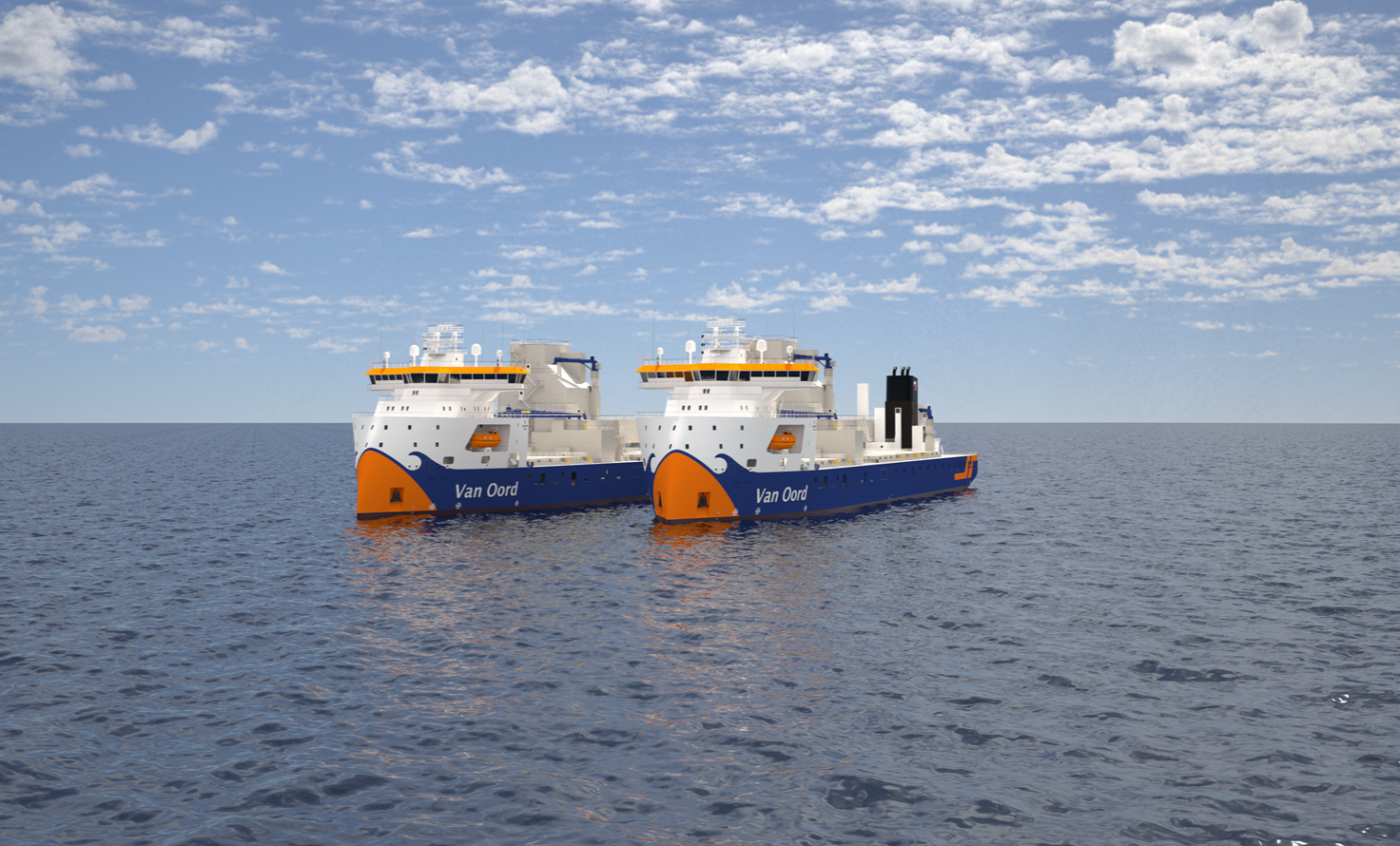
fot. Van Oord
Enhancing offshore seabed protection
Subsea rock installation plays a critical role in stabilising and protecting subsea assets such as cables, pipelines, and foundations for offshore wind farms. Van Oord, a pioneer in SRI since the 1970s, brings decades of experience and innovation to the field. The new vessels are designed to build on the capabilities of the company’s existing flexible fallpipe fleet, introducing a new standard for performance, sustainability, and automation.
High capacity, low environmental impact
The upcoming vessels will feature a substantial loading capacity of 35,000 tonnes and will be equipped with DP-2 dynamic positioning systems to ensure precise operations even in challenging sea conditions. Their ability to carry large volumes of rock over long distances will reduce the number of round trips required, lowering both fuel consumption and the carbon footprint per installed tonne of rock.
- Van Oord is at the forefront of the energy transition. Through innovation and long-term investment, we contribute to energy security and independence. In a time when safeguarding critical subsea infrastructure is paramount, these vessels reflect our commitment to safety, sustainability, and operational excellence, said Maurits den Broeder, managing director offshore energy, Van Oord.
Designed for a net-zero future
Sustainability is central to the design of the new vessels. They will be powered by dual-fuel engines capable of running on biofuels and methanol, supported by a DC-grid with significant battery storage. Energy-efficient hull designs and optimized rock handling systems further reduce emissions and operational costs, aligning with Van Oord’s net-zero targets.
Building on proven platforms
Van Oord currently operates three state-of-the-art SRI vessels — Stornes, Nordnes, and Bravenes. The new vessels will be an evolution of this proven platform, enhanced to meet the demands of the next generation of offshore projects. Construction will be undertaken by Yantai CIMC Raffles Offshore in China.
Buy us a coffee, and we’ll invest in great maritime journalism! Support Gazeta Morska and help us sail forward – click here!
Kamil Kusier
redaktor naczelny
comments
Add the first comment
see also
Austal partners with Damen for local construction of LST 100 for Australian Army
The submarine contract of the decade? Canada weighs South Korea against Germany
Bechtel signs contract with Doraco for Poland’s first nuclear power plant
When two powers clash, Poland must be ready to act. Military security must be the priority
MON, Arka Gdynia and AMW sign letter of intent supporting "Green Industrial District - Kashubia" project
Mine countermeasure vessel Jaskółka begins sea acceptance trials
PEJ relocates headquarters to Pomerania. A strategic step in Poland’s nuclear power development
Radmor hosts delegation from the Republic of Turkey. Advancing maritime security cooperation
3D-printed catamaran: robotic manufacturing sets course for the future of small craft
Navantia and Fincantieri deepen cooperation on the european patrol corvette programme
ADVERTISEMENT
ADVERTISEMENT