3D-printed catamaran: robotic manufacturing sets course for the future of small craft
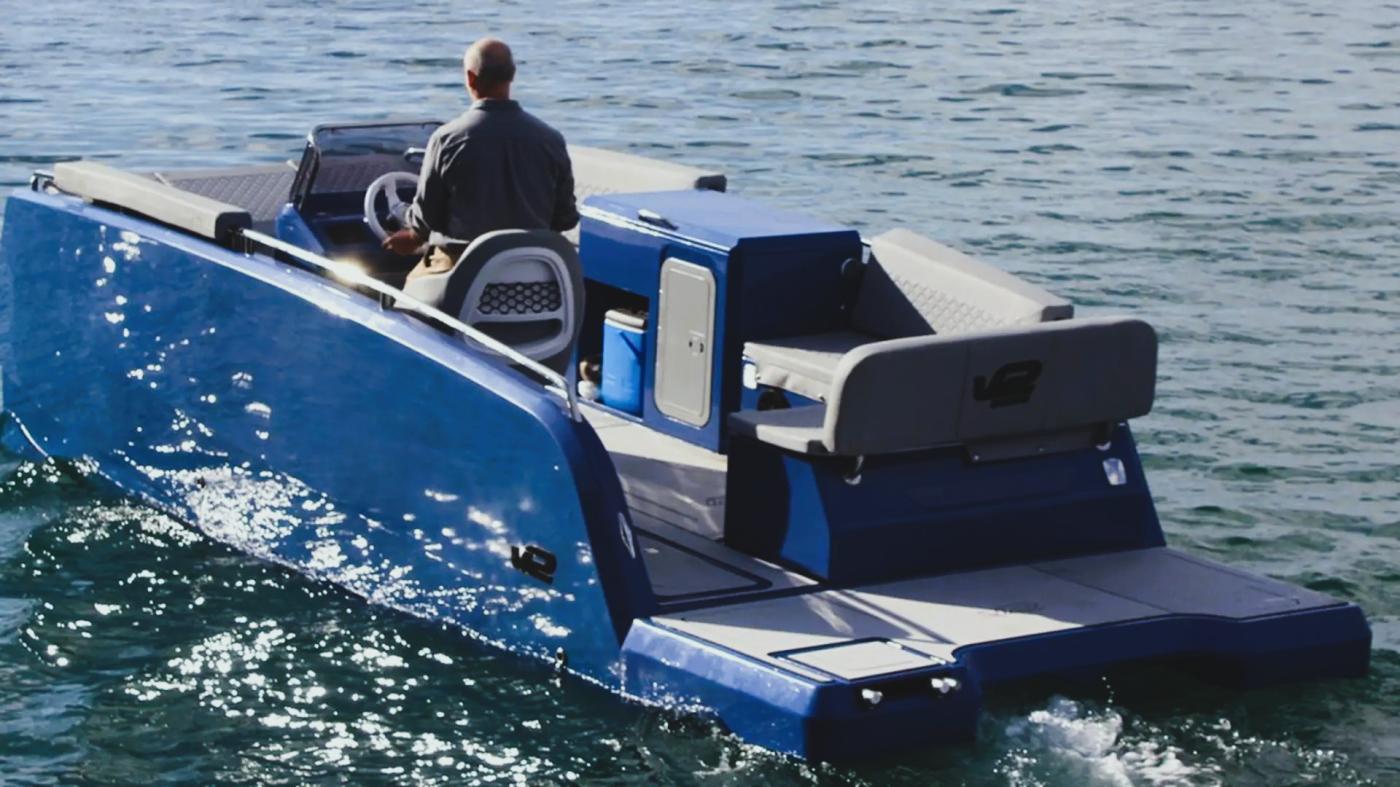
The latest milestone in marine additive manufacturing is a full-scale, six-meter catamaran, entirely 3D printed as a single, monolithic structure. The project represents a collaboration between the Spain-based V2 Group and the Italian Caracol AM, pioneers in large-format 3D printing for industrial applications.
business maritime economy investments yachting industry shipbuilding industry equipment and technology newsToday | 15:21 | Source: Gazeta Morska | Prepared by: Kamil Kusier | Print
fot. materiały prasowe
Unlike traditional boatbuilding, which relies on molds, hand-laid fiberglass, and labor-intensive layering, this catamaran’s hull was printed in one continuous operation, cutting down assembly steps and eliminating potential weak points. The printing process took approximately 160 hours, demonstrating that additive manufacturing can produce fully functional, open-water vessels at scale.
Monolithic hulls: strength through automation
Traditional composite boat construction requires multiple components joined together, often creating structural weak points. The 3D-printed hull, built layer by layer using robotic extrusion systems, integrates structural reinforcements directly into the geometry, reducing part counts and simplifying assembly.
The monolithic approach not only enhances structural integrity but also enables designers to embed reinforcements exactly where needed. By avoiding manual lamination and molds, the process is both more flexible and faster to implement.
Digital design, no molds required
One of the most significant advantages of large-format 3D printing in marine applications is design agility. Changes to the hull or deck layout can be implemented directly in the digital model, without the expense and lead time of producing new molds. For small- to medium-sized craft manufacturers, this can shorten design-to-production cycles from months to weeks.
Robotic production in action
The catamaran was printed using an industrial robotic arm, programmed to deposit composite material according to precise digital paths. Engineers monitor the process and manage parameters, while the robot handles the bulk of construction, building the hull layer by layer.
This method exemplifies robotic additive manufacturing, combining digital design, automation, and material science to deliver a fully functional vessel. It also reduces human error and ensures repeatable results—key factors for industrial adoption.
Preparing for serial production
Although the six-meter catamaran is currently a demonstrator, the project addresses full-scale production feasibility. The teams analyzed:
- material performance and structural strength
- buoyancy and hydrodynamics
- printing speed and efficiency
- post-processing workflows
The goal was to validate whether 3D printing could support repeatable, industrial-scale production of small to mid-sized marine vessels.
Sustainability and efficiency
Additive manufacturing reduces waste compared to conventional composites, since material is deposited only where required. Combined with robotic automation, the process can lower energy use, shorten production timelines, and simplify supply chains—making it an attractive option for eco-conscious and cost-sensitive shipyards.
The future of small craft manufacturing
While large commercial ships will remain largely traditional for the foreseeable future, small and medium-sized craft are an ideal proving ground for 3D printing. Fully automated, digital-first workflows could reshape recreational, workboat, and unmanned vessel production, delivering both flexibility and cost-efficiency.
The V2 Group–Caracol AM catamaran demonstrates that digital design and robotic manufacturing are ready to enter open water, and signals a potential shift toward industrial additive production for marine applications.
Buy us a coffee, and we’ll invest in great maritime journalism! Support Gazeta Morska and help us sail forward – click here!
Kamil Kusier
redaktor naczelny
comments
Add the first comment
see also
Radmor hosts delegation from the Republic of Turkey. Advancing maritime security cooperation
Navantia and Fincantieri deepen cooperation on the european patrol corvette programme
Galeon Yachts and Meyer Shank Racing: merging luxury yachts with motorsport expertise
Unmanned systems and naval firepower modules. WB Group showcases integrated capabilities at Enforce Tac 2026
Swedish ports record lowest ship calls in 18 years. Implications for the maritime sector
February in Szczecin’s shiprepair sector. Ice, overhauls and North Sea expansion
Advanced ROV trials conducted at CTO to validate subsea technologies for offshore applications
University of Gdańsk and PGZ Naval Shipyard join forces for innovation and security
Stadt Naval to deliver electric propulsion system for Polish rescue vessel Ratownik
Gdańsk port’s Basen Górniczy to gain modern port infrastructure
ADVERTISEMENT
ADVERTISEMENT