Transatlantic reset: Donald Trump and Ursula von der Leyen launch a new trade game as billions flow to the U.S.
On July 27, in Turnberry, Scotland, a landmark trade deal was struck that could drastically reshape the relationship between the United States and the European Union. The meeting between Donald Trump and Ursula von der Leyen concluded with the announcement of a breakthrough that not only averted a looming tariff war but also cemented the U.S. as the primary beneficiary of the new transatlantic order. Few were surprised.
business power engineering maritime economy commerce worldwide politics news28 july 2025 | 21:24 | Source: Gazeta Morska | Prepared by: Kamil Kusier | Print
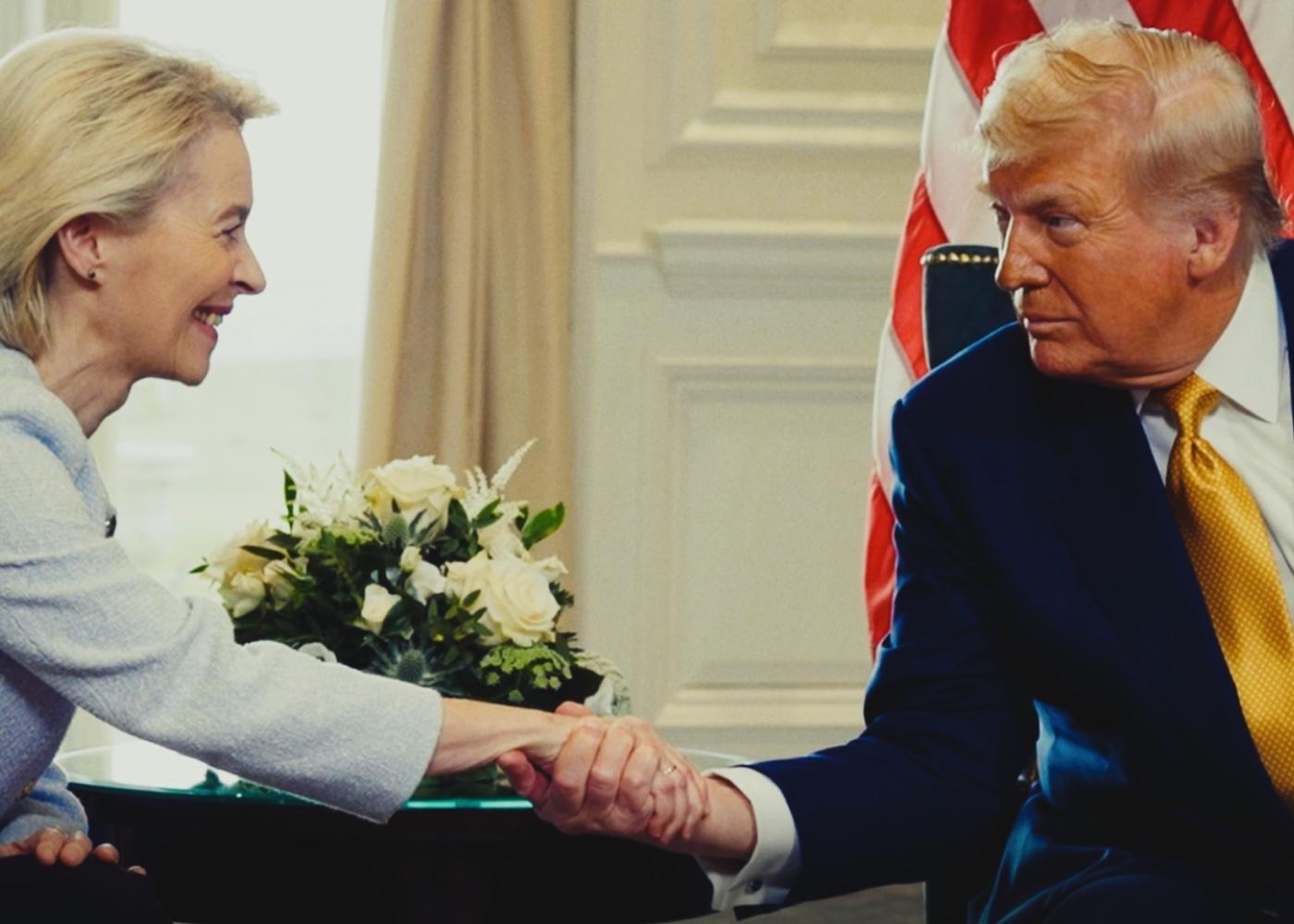
fot. White House
The agreement is asymmetrical. It delivers enormous benefits to the U.S. economy while forcing the EU into deep concessions. The maritime and shipbuilding industries now face a new set of challenges – and real risks.
America seizes the initiative
Under the terms announced, the European Union has committed to purchasing $750 billion worth of American energy resources – primarily LNG and crude oil. An additional $600 billion will be directed toward U.S.-made military equipment and advanced technologies.
This marks an unprecedented transfer of capital into the American energy and defense sectors. President Donald Trump described the deal as – the biggest trade agreement in history.
For the United States, it’s a return to global trade leadership – not via multilateral consensus, but by setting the terms unilaterally.
Europe yields to avoid confrontation
Although Ursula von der Leyen maintained a diplomatic tone, she admitted that the EU’s main goal was to prevent escalation.
– The EU and the U.S. share one of the most important trade relationships in the world. Europe is ready to act swiftly and decisively – said the European Commission President.
The cost of avoiding a tariff war was high. In exchange for lowering U.S. tariffs on European exports to 15% (instead of the previously threatened 30%), Brussels accepted terms that strongly favor American industry and resource exports. The agreement found backing among several European states that viewed it as a natural evolution of transatlantic cooperation – this time bypassing Germany and France as traditional frontrunners.
Maritime logistics may benefit – but unevenly
In the short term, the shipping and port sectors could profit. A forecasted surge in transatlantic cargo – particularly in sectors covered by “zero-for-zero” provisions (aerospace components, chemicals, agricultural products) – is expected to drive increased container traffic and demand for cargo-handling capacity.
Ports in Rotterdam, Hamburg, and Gdańsk are already assessing growth scenarios. But infrastructure has its limits. Without rapid investment in intermodal logistics, automation, and customs processing, rising throughput could turn into operational gridlock.
A blow to shipbuilding and metallurgy
Not all sectors emerged unscathed. Steel and aluminum remain subject to a punitive 50% tariff. For Europe’s steel industry – and especially for shipyards producing vessels, offshore platforms, and wind energy infrastructure – this presents a serious blow to competitiveness.
The absence of agreement on pharmaceuticals and the vague definition of “strategic technologies” leaves the door open to future U.S. demands. Europe has lost ground in terms of negotiation leverage.
Poland’s maritime sector: an opportunity if readiness is real
For Poland, the deal offers real opportunity – but only with rapid mobilization. Ports in Gdańsk, Gdynia, and Świnoujście must immediately prepare for increased trade volumes. Priority development areas include:
- Expansion of rail and road links to terminals.
- Acceleration of digital customs clearance and sanitary-veterinary inspections.
- Enhancement of intermodal terminal capacity.
The Polish shipbuilding and metal industries, however, will face tougher competition – both in pricing and regulatory terms.
Strategic European pivot under U.S. dominance
This is not a deal between equals. It’s a geopolitical reset in which Washington reclaims dominance, while Brussels trades economic stability for concessions. And in the end, events played out exactly as expected.
The maritime sector – as the frontline of this new order – must adapt rapidly. The Atlantic is once again the core axis of global trade. The only question is: who will build the fleet for this new chapter, and who will be left ashore, holding a rod with no bait?
see also
Buy us a coffee, and we’ll invest in great maritime journalism! Support Gazeta Morska and help us sail forward – click here!
Kamil Kusier
redaktor naczelny
comments
Add the first comment
see also
Navantia and Fincantieri deepen cooperation on the european patrol corvette programme
Galeon Yachts and Meyer Shank Racing: merging luxury yachts with motorsport expertise
Unmanned systems and naval firepower modules. WB Group showcases integrated capabilities at Enforce Tac 2026
Swedish ports record lowest ship calls in 18 years. Implications for the maritime sector
February in Szczecin’s shiprepair sector. Ice, overhauls and North Sea expansion
Advanced ROV trials conducted at CTO to validate subsea technologies for offshore applications
University of Gdańsk and PGZ Naval Shipyard join forces for innovation and security
Stadt Naval to deliver electric propulsion system for Polish rescue vessel Ratownik
Gdańsk port’s Basen Górniczy to gain modern port infrastructure
First month of Jantar Unity operations. Polsca ferry paves the way for Batory program units
ADVERTISEMENT
ADVERTISEMENT