Poland’s new power moves unsettle the region. Will Germany block Polish investments?
Economic and energy sovereignty is no longer just an empty phrase — especially when real investments and real money appear on the horizon. A container terminal in Świnoujście worth 10 billion PLN, the discovery of substantial offshore oil and gas reserves, and the development of inland navigation on the Oder River are the pillars of a new, sovereign Poland, which should become a strategic priority in the country's northwest. Especially now, as this development begins to raise concerns abroad — which only confirms that we are heading in the right direction.
business power engineering maritime economy politics west pomerania commentary news24 july 2025 | 17:14 | Source: Gazeta Morska | Prepared by: Kamil Kusier | Print
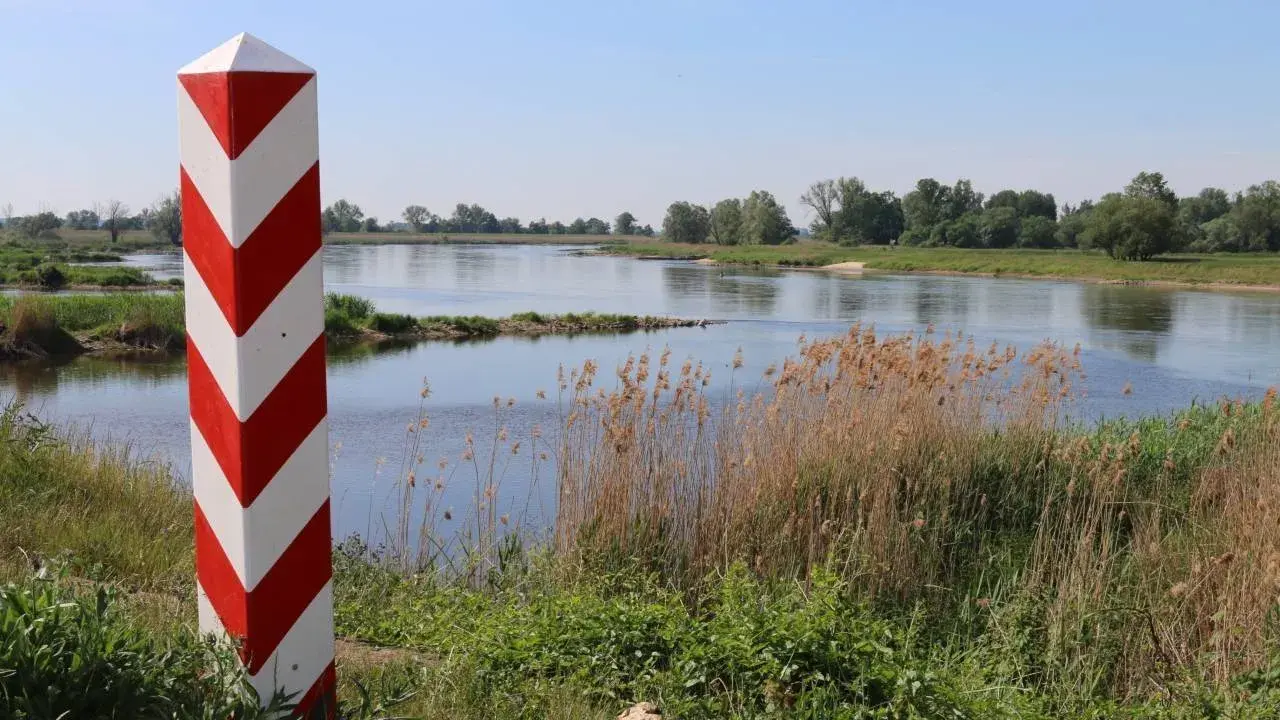
fot. Grzegorz Gołębiowski / Wikipedia Commons
Poland is no longer a periphery
For far too long, Poland has functioned as a back office — logistically, energetically, and politically. For decades, our economy was built on cheap labor, dependency on external energy supplies, and infrastructure constraints that forced us to rely on foreign ports, pipelines, and transshipment hubs.
But things are changing. Fundamentally.
The only question is whether the current government will recognize this turning point — especially since, halfway through its term, there's still no clear indication of that.
Poland is no longer just talking about independence — Poland must start building it. Through concrete decisions, multi-billion-zloty investments, and — as we now know — through its own offshore oil and gas deposits in the Baltic Sea.
A surge in potential: offshore reserves in the Baltic Sea
In July 2025, Central European Petroleum (CEP) announced the discovery of significant oil and natural gas reserves in the Baltic Sea, just six kilometers off the coast of Świnoujście. The find was made through the Wolin East-1 exploration well.
The scale of the discovery is striking. This single well may hold up to 22 million tonnes of crude oil and 5 billion cubic meters of natural gas — and this is likely just the beginning.
According to CEP, the broader Wolin concession area may contain up to 33 million tonnes of oil and 27 billion cubic meters of gas. These are numbers that shift the strategic balance in the entire Baltic region.
And they are numbers that have already sparked concern among our German neighbors — a clear sign for Polish decision-makers that the stakes are real.
What does this mean for Poland?
If the estimates are confirmed, the reserves could generate tens of billions of zlotys over the next two decades — from resource extraction, license fees, tax revenues, and infrastructure development.
To put it in perspective, based on current market prices, oil from the Wolin field alone could be worth over 300 billion PLN. The gas adds several dozen billion more.
Crucially, the deposit lies within Polish territorial waters, near the Świnoujście LNG terminal, allowing for fast and relatively cost-effective integration into the national energy grid.
This is a real chance not only to reduce import dependency, but to position Poland as an energy provider for the region. And that — predictably — is starting to cause discomfort in neighboring countries.
Świnoujście container terminal: another pressure point
In the same area, right next to the LNG terminal and the newly discovered oil and gas deposits, construction was set to begin on a strategic container terminal. Or rather — it was supposed to.
This investment, estimated at 10 billion PLN, is scheduled for completion by 2028.
The terminal is projected to handle up to 2 million TEU annually, positioning Poland as a leading logistics hub for Central and Eastern Europe. Currently, most of this container traffic is handled by German ports, especially Hamburg and Bremerhaven.
It’s no coincidence, then, that German environmental organizations and foundations — often closely tied to port interests — have come out strongly against the project.
Environmental concerns are legitimate, but they are increasingly being used as a convenient pretext to block strategic infrastructure that threatens the status quo. The motivations behind this opposition are clear — and not particularly altruistic.
The Oder River: a waterway regaining strategic value
The third piece of the puzzle is the Oder River (Odra). Long overlooked, it is once again becoming a topic of geopolitical friction.
Poland plans — or rather, planned — to transform the Oder into an international inland transport corridor, connecting Silesian industry with Baltic ports in Szczecin, Świnoujście, and Police.
This project carries enormous economic and strategic value — enabling inland freight transport, reducing pressure on roads and railways, and aligning with the EU’s climate and transport goals.
But here too, German regional authorities have voiced opposition, citing alleged environmental threats — even though Germany continues to expand its own inland waterways, such as the Rhine and Elbe, without facing similar scrutiny from Brussels.
Will Poland take the lead? A test for the Polish government
Oil and gas reserves, a strategic container terminal, and the revival of the Oder — these are not isolated efforts. Together, they form a comprehensive vision for a sovereign, competitive Poland, no longer playing a supporting role but becoming a key player in European and global logistics, energy, and security.
It’s no surprise, then, that this shift is met with resistance. When Poland starts to assert itself, European solidarity is often replaced with obstruction, lobbying, and legal pressure — all aimed at maintaining the old hierarchies.
This is now a critical test for the Polish government. What’s at stake isn’t just today’s politics — it’s the country’s long-term economic independence.
There’s no turning back
Poland is rising — and it has no reason to apologize for defending its interests. On the contrary.
When our container terminal outperforms German ports, when our own resources reduce the need for Russian or Norwegian imports, when the Oder becomes a viable alternative to Germany’s inland routes — it means we’re doing something right.
And if that makes some of our neighbors uneasy — even better. Because progress that makes no one uncomfortable is usually not progress at all.
So let’s end with the slogan from the last presidential campaign:
“All of Poland forward.” This time — for real, and for Poland.
see also
Buy us a coffee, and we’ll invest in great maritime journalism! Support Gazeta Morska and help us sail forward – click here!
Kamil Kusier
redaktor naczelny
comments
Add the first comment
see also
Navantia and Fincantieri deepen cooperation on the european patrol corvette programme
Galeon Yachts and Meyer Shank Racing: merging luxury yachts with motorsport expertise
Unmanned systems and naval firepower modules. WB Group showcases integrated capabilities at Enforce Tac 2026
Swedish ports record lowest ship calls in 18 years. Implications for the maritime sector
February in Szczecin’s shiprepair sector. Ice, overhauls and North Sea expansion
Advanced ROV trials conducted at CTO to validate subsea technologies for offshore applications
University of Gdańsk and PGZ Naval Shipyard join forces for innovation and security
Stadt Naval to deliver electric propulsion system for Polish rescue vessel Ratownik
Gdańsk port’s Basen Górniczy to gain modern port infrastructure
First month of Jantar Unity operations. Polsca ferry paves the way for Batory program units
ADVERTISEMENT
ADVERTISEMENT