









The Pacific is far from calm. U.S. Coast Guard seizes half a billion dollars’ worth of narcotics
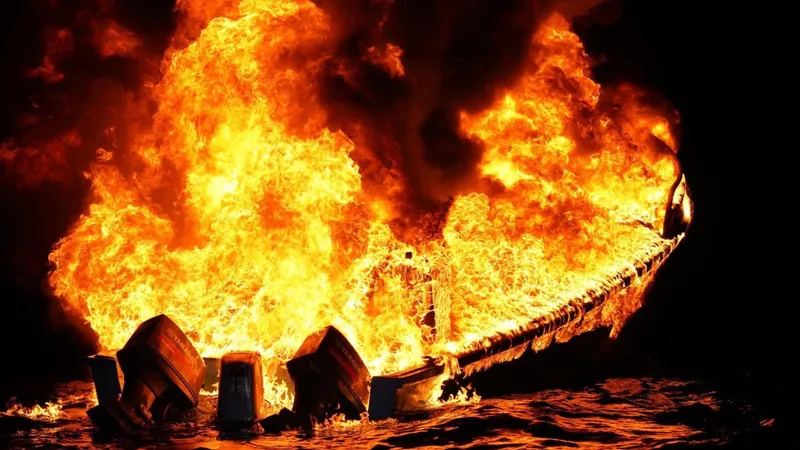
In a major blow to transnational drug trafficking networks, the U.S. Coast Guard cutter CGC James recently completed a large-scale offload operation following a series of successful interdictions in the Eastern Pacific Ocean. The haul: over 44,600 pounds (20.24 metric tons) of cocaine and 3,800 pounds (1.76 metric tons) of marijuana – a shipment with an estimated street value of $509.7 million.
In brief
The U.S. Coast Guard cutter CGC James seized more than 20 tons of cocaine and nearly 2 tons of marijuana worth over 509 million dollars in the waters of the eastern Pacific. The cargo comes from several operations conducted jointly with US federal agencies, including the Coast Guard Investigative Service, the Panama Express Strike Force and the Organized Crime Drug Enforcement Task Forces. Smugglers use fishing vessels, cutters and fast semi-submersible boats on routes from South America to North America.
The operation is part of a broader, coordinated effort involving not just Coast Guard assets but also key federal partners, including the Coast Guard Investigative Service (CGIS), the Panama Express (PANEX) Strike Force, and the Organized Crime Drug Enforcement Task Forces (OCDETF). These agencies are at the frontline of a strategic push to dismantle the supply chains of transnational criminal organizations (TCOs) that rely heavily on maritime routes to move illicit cargo.
Modern maritime drug enforcement is no longer limited to intercepting vessels at sea. It's a complex blend of intelligence gathering, interagency coordination, and international legal frameworks. Semi-submersibles, disguised fishing vessels, and go-fast boats are now standard tools in the traffickers’ arsenal – a trend forcing maritime security operations to evolve rapidly.
- This is not just about removing drugs from circulation – it's about targeting the networks behind them, says one maritime security analyst. - Each interdiction delivers not just narcotics but also actionable intelligence, financial disruption, and legal grounds for dismantling larger criminal structures.
The CGC James offload serves as a sharp reminder of the growing importance of maritime law enforcement in ensuring national and regional security. For the broader maritime industry, it underscores the ongoing need for vigilance, information-sharing, and cross-sector collaboration.
As global trade continues to rely on secure sea lanes, operations like these reaffirm the strategic role of maritime services – both civilian and military – in upholding safety and legal order at sea.
Source: Gazeta Morska · Compiled by: Kamil Kusier
Related articles
 Navy and defence ORP Mewa marks four months with SNMCMG1. Poland's first Kormoran II deployment runs to year-end
 Equipment and technology WB Group takes Polish drones from Tokyo to SOFEX in Jordan in a single week
 Environment 51st Polish Antarctic Expedition arrives at Arctowski Station aboard Ukrainian vessel Noosfera
 Sailing and water sports Poland wins two medals and team title at iQFOiL Youth and Junior European Championships
 Navy and defence Norwegian submarine Utstein completes NATO patrol guarding offshore oil and undersea infrastructure
 Safety and rescue Polish SAR’s new rescue vessel Mistral launched at Kewatec in Finland
Comments (0)
The discussion is moderated by the editors: a comment appears after review. Your e-mail address is not published.
Nobody has commented on this article yet.