









Strait of Hormuz on the Edge. Is the World Facing a Maritime Energy Crisis?
The Strait of Hormuz is one of the most strategically significant maritime chokepoints on the global energy map. Nearly 20% of the world’s crude oil and LNG flows through this narrow stretch between the Persian Gulf and the Gulf of Oman. Following recent strikes on Iranian nuclear facilities, tensions in the region have escalated sharply. In response, the Iranian parliament has called for the closure of the Strait as a retaliatory measure — a move that could shake the foundations of global energy supply.
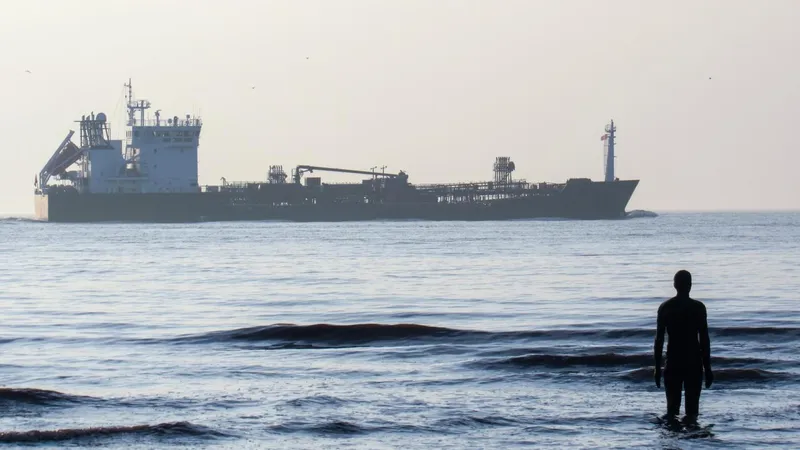
In brief
Iran's parliament called for the closure of the Strait of Hormuz in retaliation for attacks on Iranian nuclear facilities, and the decision still requires approval by the Supreme National Security Council. Nearly twenty percent of the world's crude oil and LNG and more than eighteen million barrels of oil a day pass through the Strait of Hormuz, and the oil price exceeded eighty dollars a barrel. US President Donald Trump called closing the strait economic suicide for Iran, while UN Secretary-General Antonio Guterres appealed for de-escalation. Poland's strategic fuel reserves allow the economy to be sustained for about ninety days.
When Geopolitics Meets Maritime Economics
Although the Iranian parliament’s decision awaits approval by the Supreme National Security Council, the threat of a de facto blockade of the Strait of Hormuz is gaining traction. Over 18 million barrels of oil pass through the strait daily, making it a critical node for Asia-bound imports — especially to China, Japan, and South Korea.
This geopolitical strain is already stirring volatility across commodity markets. Oil prices have surged past $80 per barrel, and rising transportation and insurance costs for maritime vessels could translate into higher fuel and energy prices worldwide.
Global Responses: Tension, Diplomacy, and Realpolitik
Leaders from global powers and international organizations have voiced their concerns, urging restraint while signaling readiness for decisive action.
- U.S. President Donald Trump: "Closing the Strait of Hormuz would be economic suicide for Iran."
- U.S. Secretary of State Marco Rubio: "Such a move would primarily hurt China and India, but would also ripple across European markets."
- U.N. Secretary-General António Guterres: "We urgently call for de-escalation and a return to diplomacy."
- Israeli Prime Minister Benjamin Netanyahu: "Peace through strength is now essential for regional stability."
Meanwhile, Russia and China have condemned the American strike, labeling it "irresponsible" and calling for a return to negotiations. In light of Iran’s threat to block the strait, the U.S. has turned to China as a potential mediator to preserve the status quo in this vital maritime corridor.
Poland and the Global Energy Crosscurrents
Although Poland does not import crude oil through the Strait of Hormuz, the ripple effects of a crisis in the region will certainly be felt along the Baltic Sea. Rising fuel and energy costs could impact industries, shipping, and logistics across Europe — including in Poland.
However, the country stands in a relatively strong position thanks to recent infrastructure investments:
- The Świnoujście LNG terminal ensures diversification of gas imports.
- The Baltic Pipe project enhances energy security by supplying Norwegian gas.
- Strategic fuel reserves can sustain domestic energy needs for about 90 days during supply disruptions.
- Long-term contracts with Norwegian and Western suppliers reduce vulnerability to political volatility in the Gulf.
Still, this doesn’t mean complacency is an option. Prime Minister Donald Tusk and his administration must remain proactive in policy and international dialogue.
The Baltic Voice in a Global Maritime Debate
As uncertainty looms in the Arabian Sea, Poland and the Baltic states have a role to play in the global conversation on maritime security and energy resilience.
Safeguarding sea lanes is not just a regional interest — it is a pillar of global economic stability. The countries along the Baltic should advocate for:
- Strengthening NATO and EU maritime cooperation
- Continued investment in ports and energy infrastructure
- Active foreign policy engagement on global maritime issues
- Participation in international initiatives to secure sea lines of communication (SLOCs)
Strait of Hormuz: Key Facts
- Length: approx. 167 km
- Narrowest point: approx. 39 km
- Daily oil flow: 18–20 million barrels
- LNG exports: ~25% of global shipments
- Key importers: China, Japan, South Korea, India
- Strategic significance: Connects Persian Gulf producers with global markets
The events unfolding around the Strait of Hormuz are a stark reminder of how fragile the architecture of global energy and trade truly is. As a maritime nation with growing influence, Poland must not remain a spectator. The voice from the Baltic — informed, strategic, and firm — must now echo across oceans.
Source: Gazeta Morska · Compiled by: Kamil Kusier
Related articles
 Maritime economy Poland’s constitutional crisis is also a maritime story
 Navy and defence Norwegian submarine Utstein completes NATO patrol guarding offshore oil and undersea infrastructure
 Safety and rescue Polish SAR’s new rescue vessel Mistral launched at Kewatec in Finland
 Safety and rescue Icelandic Coast Guard and police delegation visits Polish Border Guard’s Maritime Division
 Safety and rescue Polish Navy helicopter evacuates man from Baltic platform 100 km off Władysławowo
 Navy and defence SNMG2 joins Allied warships in PASSEX as Italy's Mare Aperto 2026 gets under way
Comments (0)
The discussion is moderated by the editors: a comment appears after review. Your e-mail address is not published.
Nobody has commented on this article yet.