Residents and tourists walked on the ice. Police warn after Motława incident in Gdańsk. How to stay safe
Winter brings opportunities for outdoor fun on frozen bodies of water, but even seemingly solid ice can pose a deadly risk. Gdańsk police have issued safety warnings, highlighting the dangers after a recent incident on the Motława River that serves as a stark reminder of the hazards of thin ice and icy waters.
02 february 2026 | 07:33 | Source: Gazeta Morska | Prepared by: Kamil Kusier | Print
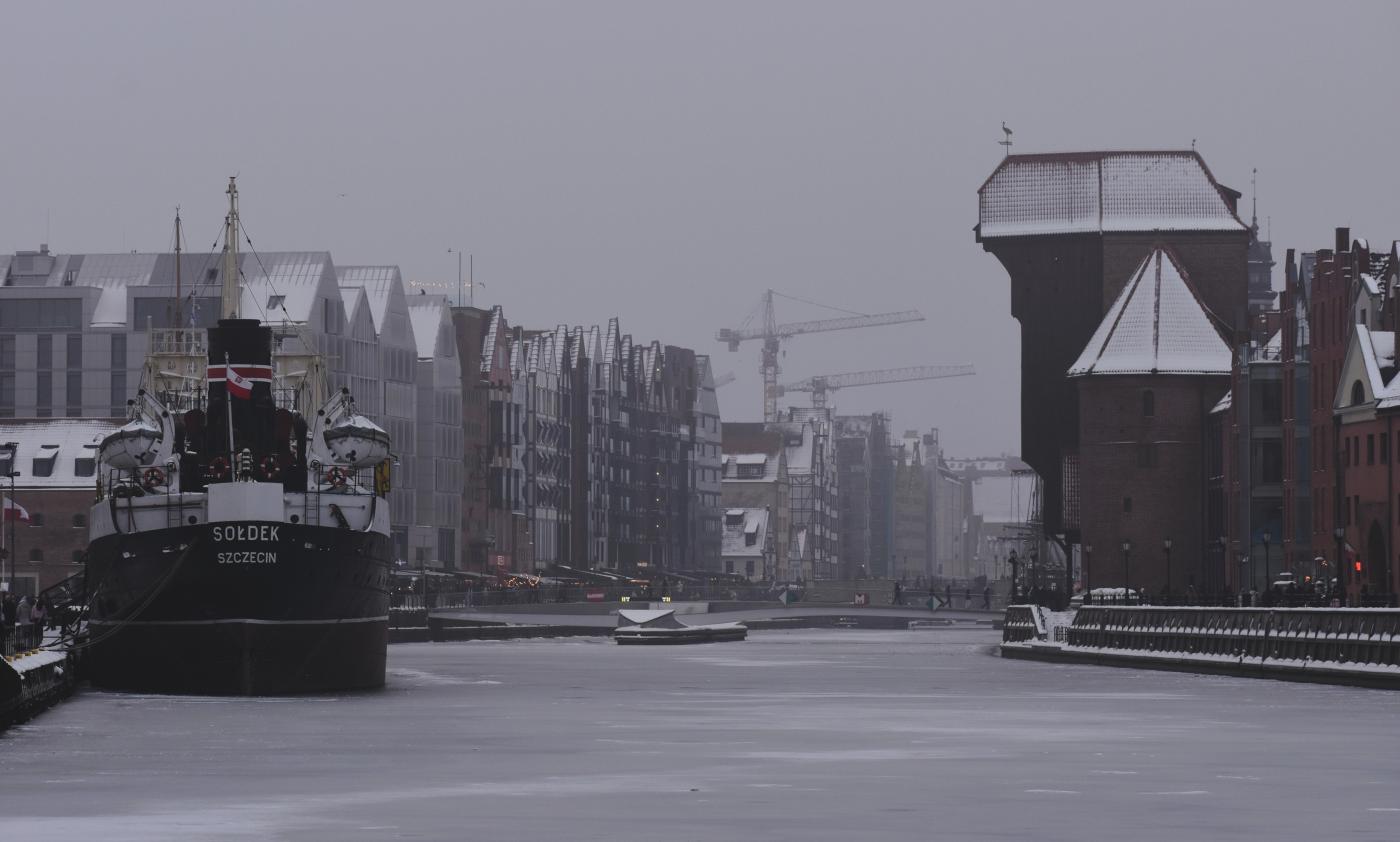
fot. Kamil Kusier / Gazeta Morska
Dangerous incident on the Motława River
Recently, the Motława River in Gdańsk was the scene of a serious accident. A 36-year-old woman, intoxicated at the time, fell from the Stągiewny Bridge onto the frozen river. Although she landed on the ice instead of plunging directly into the water, the impact caused injuries requiring hospitalization.
Police emphasize that both falling onto fragile ice and falling into icy water are extremely dangerous. Even a seemingly safe surface can conceal weak spots or cracks. The incident demonstrates how quickly carelessness near frozen bodies of water can escalate into life-threatening situations.
How to check if the ice is safe
Experts from the police and fire department stress that ice is never completely safe, and its thickness and strength vary significantly. Snow-covered ice is especially deceptive, as praholes or thin areas can be hidden beneath the surface. Key safety guidelines include:
Children should never go onto ice without adult supervision. Even brief play on a frozen pond, river, or lake can be life-threatening. Adults should first check ice thickness. A minimum of 10 centimeters is recommended for safety, with no visible cracks or open water.
Avoid dangerous areas such as river mouths, canal junctions, bridges, docks, riverbanks, and shaded sections. Ice in these locations is often thinner and more likely to break.
Never go onto ice alone. Ice activities should involve at least two people, maintaining distance but remaining within sight to assist each other if needed.
What to do if the ice breaks
Remaining calm is essential. If you fall into icy water, conserve energy. Self-rescue is extremely difficult due to slippery ice surfaces. Remove boots if possible to reduce weight and improve mobility. After emerging from the water, do not stand up immediately. Crawl to a safe area, and change into dry clothing as soon as possible to prevent hypothermia.
How to assist someone in danger
Never run directly toward a person who has fallen through the ice. The surrounding ice may also be weak. Call emergency services immediately using 998 or 112. If possible, throw a rope, branch, jacket, or any object the person can grab.
Do not give alcohol to someone rescued from icy water. Alcohol dilates blood vessels and accelerates hypothermia. Offer warm drinks and energy-rich snacks such as chocolate. If possible, change the person into dry clothing immediately.
Awareness and responsibility are key
Winter sports and outdoor activities are enjoyable, but ice is not a natural skating rink. The Motława incident illustrates that careless behavior can lead to injuries or hypothermia, which develops rapidly in cold water.
Police urge residents and tourists to use only designated and safe ice rinks. Life and health are the priorities. No photo opportunity, thrill, or moment of recklessness is worth the risk. Awareness, caution, and adherence to safety guidelines can save lives.
see also
Buy us a coffee, and we’ll invest in great maritime journalism! Support Gazeta Morska and help us sail forward – click here!
Kamil Kusier
redaktor naczelny
comments
Add the first comment
see also
Crystal Sails Awards presented. Pomeranian sailing officially concludes the 2025 season
February 2026 brings volatile winter weather to Poland and the Baltic Sea
Connecting Poland with Sweden for 50 years: Polferries on the Baltic, past, present, and future of shipping
Port of Gdynia surpasses 1 million TEU for the first time in history
Poland’s nuclear project secures landmark financing as PEJ signs first loan agreement with US EXIM
Naval Academy in Gdynia and Ecole Navale join forces. A new phase of international military cooperation
Shipbuilding industry is awesome. Stability. When shifting mass takes control away
ORP Czernicki strengthens logistical capabilities of NATO’s SNMCMG1 at sea
Ellerman City Liners launches BALTEX service, positioning Port of Gdynia at the heart of the Baltic network
Port of Gdańsk posts strong 2025 performance as liquid fuels dominate and container volumes hit record high
ADVERTISEMENT
ADVERTISEMENT