









Puhas Meri 2026 exercise. Estonia and Finland drill oil spill response in the Baltic.
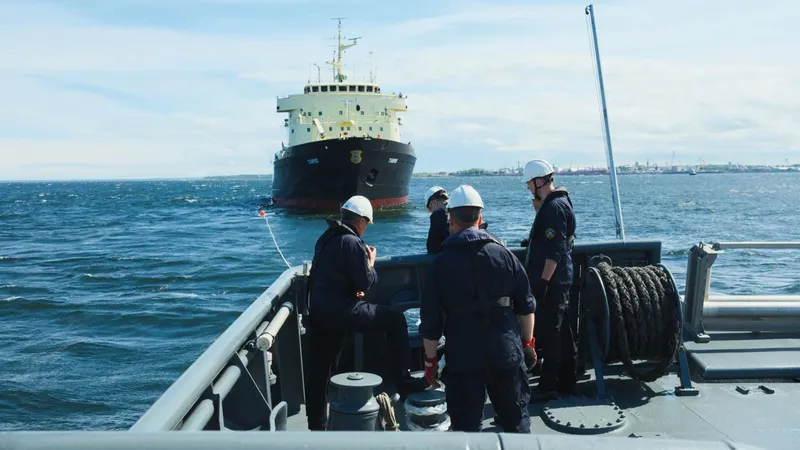
From 9 to 11 June 2026, the international marine pollution response exercise Puhas Meri 2026 (Clean Sea 2026) concluded in the Kopli Bay area off Tallinn. The drill brought together the naval forces of Estonia and Finland, border guard services, maritime administration units and specialised civilian operators.
In brief
The Puhas Meri 2026 marine pollution response exercise, held on 9 to 11 June 2026 in the area of Kopli Bay off the coast of Tallinn, has concluded. The manoeuvres involved 11 vessels of the Estonian and Finnish navies, the Estonian state fleet and the Finnish border guard, while aerial reconnaissance of the oil slick was provided by the air forces of both countries. The scenario assumed a large oil spill in waters with heavy shipping traffic. The command of the Estonian naval forces pointed to the risk of incidents in the Baltic Sea and the Gulf of Finland.
Testing procedures and inter-agency coordination
The exercise scenario assumed a large-scale oil spill in waters with heavy shipping traffic. Its central aim was to test rapid response procedures, inter-agency coordination and the interoperability of military and civilian forces under crisis conditions.
Eleven vessels and air support
A total of 11 vessels took part, representing the navies of Estonia and Finland, the Estonian state fleet and the Finnish border guard. Air support was provided by the air forces of both countries, tasked with reconnaissance and monitoring the spread of the simulated oil slick.
Private sector on the water
The private sector played a significant role. Companies operating in maritime and environmental services joined the containment and clean-up operations, including the recovery of substances from the water surface and their transport ashore using port infrastructure.
The Baltic and the Gulf of Finland – high-risk waters
The Estonian naval command stressed that exercises of this kind are a key element in preparing the Baltic Sea region for large-scale environmental incidents. Particular emphasis was placed on the need for close cooperation between neighbouring states, above all in the Baltic Sea and the Gulf of Finland, where heavy tanker and merchant traffic markedly increases the risk of ecological incidents.
Towards integrated maritime crisis response
Puhas Meri 2026 confirmed the growing importance of integrated maritime crisis response systems, built on rapid information sharing, common operating procedures and the pooling of state and private resources.
Source: Gazeta Morska · Compiled by: Kamil Kusier
Related articles
 Environment The world's largest seahorses move into the Gdynia Aquarium. In this species it is the male that gets pregnant
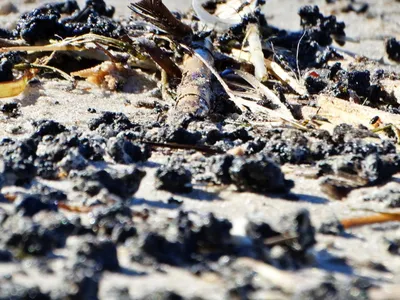 Maritime lifestyle and tourism Fuel oil along 50 km of Polish coast. Ustka beaches closed, illegal discharge suspected
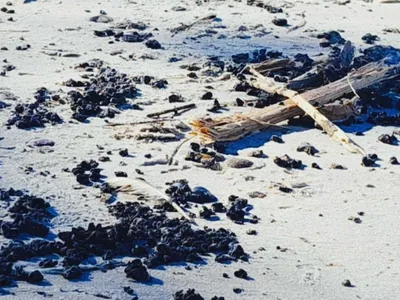 Safety and rescue Fuel oil on the beach in Ustka. The Baltic hands back what nobody wants to collect
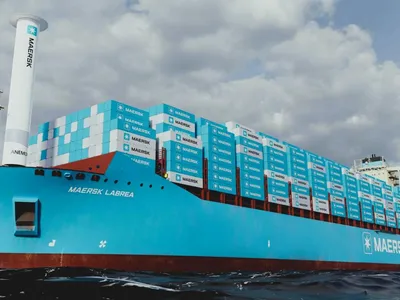 Ports and logistics Maersk to fit a 35 m rotor sail on an 8,700 TEU Lima-class ship in 2027
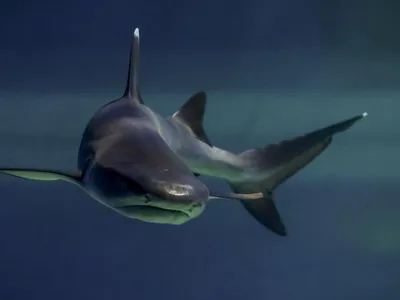 Environment From the UAE to Reda: sharks and rays move into a modernized and secured aquarium
 Maritime economy Will the sharks return to Reda? Locals and tourists have grown used to seeing them through the glass
Comments (0)
The discussion is moderated by the editors: a comment appears after review. Your e-mail address is not published.
Nobody has commented on this article yet.