









Protecting Coastal Dunes: A New Conservation Initiative by the Maritime Office in Gdynia
The Maritime Office in Gdynia signed a contract with the environmental services company STANA to implement protective fencing around vulnerable dune habitats within three key Natura 2000 sites: Białogóra (PLH220003), Mierzeja Sarbska (PLH220018), and the Vistula Lagoon and Spit (PLH280007).
In brief
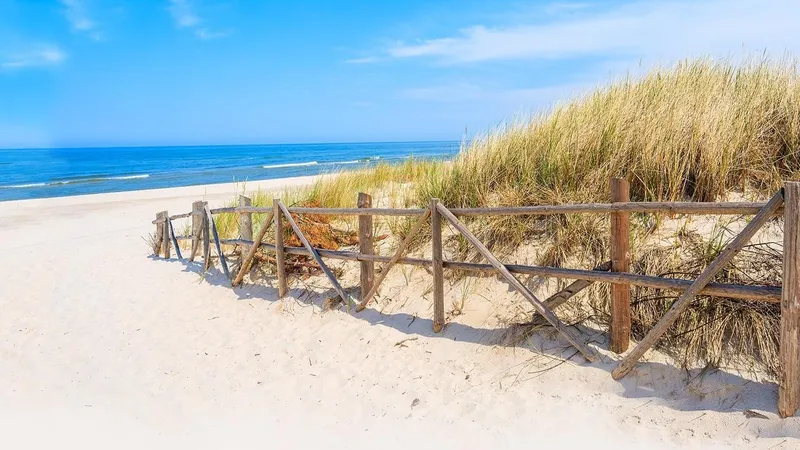
The Maritime Office in Gdynia has signed a contract worth PLN 899,171.25 gross with the company STANA for the construction of protective dune fencing in the Natura 2000 areas Białogóra, Mierzeja Sarbska, and Zalew Wiślany i Mierzeja Wiślana. The scope covers about 33 kilometres of forestry mesh fencing along Mierzeja Wiślana and about 3 kilometres of wooden fencing in the areas of Krynica Morska, Lubiatowo, Ulinia and Łeba. Work on the mesh fencing will last until 31 August 2025, and the wooden fencing is to be completed by 31 October 2025. The project is co-financed by the European Funds for Infrastructure, Climate, Environment 2021-2027.
This project is part of the broader initiative “Protection of Species and Natural Habitats in Areas Managed by the Director of the Maritime Office in Gdynia”, under the framework of FENX.01.05 – Nature Conservation and Green Infrastructure Development. The undertaking is co-financed by the European Union from the European Fund for Infrastructure, Climate and Environment 2021–2027.
The project aims to protect sensitive coastal habitats, specifically white dunes (embryonic and mature stages) and grey dunes, by restricting public access and reducing trampling damage to native dune vegetation. All works are being carried out in alignment with existing conservation plans and protective measures outlined for the respective Natura 2000 areas.
The contract covers two primary types of fencing:
- Wire Mesh Fencing (Vistula Spit)
Approx. 33 km of galvanized steel mesh fencing mounted on wooden posts will be installed along the Vistula Spit, from the border with the Russian Federation to access point No. 60. This type of fencing serves to create physical barriers preventing unauthorized entry into ecologically sensitive dune zones. - Timber Fencing (Białogóra, Mierzeja Sarbska, Vistula Spit)
Roughly 3 km of environmentally-safe timber fencing will be installed along beach access paths in the areas of Krynica Morska, Lubiatowo, Ulinia, and Łeba. Constructed from impregnated pine poles and rails, these fences are intended to channel foot traffic along designated paths to minimize habitat disturbance.
Implementation Timeline
- Wire Mesh Fencing:
- By June 27, 2025: Krynica Morska, Kąty Rybackie, Sztutowo, Piaski
- By August 31, 2025: Remaining locations
- Timber Fencing: By October 31, 2025
The total contract is valued at PLN 899,171.25 gross (approx. €205,000), with unit-based billing (per 100 linear meters) based on actual work completed.
The Ecological Importance of Coastal Dunes
Coastal dunes are dynamic and fragile ecosystems that serve as natural defenses against coastal erosion, storm surges, and wind activity. They are also vital habitats for rare and protected species of plants and animals. Increasing tourism pressure—particularly off-trail foot traffic—has led to escalating degradation of these ecosystems.
Through this project, the Maritime Office in Gdynia aims to:
- Halt the degradation of dune vegetation
- Preserve the structural integrity of Natura 2000 habitats
- Improve living conditions for protected species
Environmental Awareness & Contractor Training
Given the ecological sensitivity of the designated work areas, the contractor was required to undergo detailed environmental training conducted by the Maritime Office’s conservation team. The training covered:
- Identifying nesting areas of the Kentish plover (Charadrius alexandrinus)
- Avoiding disturbance of embryonic dune habitats
- Environmentally responsible material transport and site access
- Legal obligations concerning habitat protection during execution
This proactive training program ensures that all work is carried out with maximum care for biodiversity and with minimal environmental impact, under the direct supervision of the Maritime Office in Gdynia.
A Model for Nature-Aligned Infrastructure
This initiative exemplifies how infrastructure can be developed in harmony with nature. By integrating regulatory conservation frameworks with practical, on-the-ground action, the project contributes to long-term ecological resilience, sustainable tourism, and habitat preservation along Poland’s Baltic coast.
Protecting nature while working with it—not against it—is no longer optional. It is essential.
Source: Gazeta Morska · Compiled by: Kamil Kusier
Related articles
 Environment A disaster warning on Lake Łebsko, a fishing dispute and a CBA arrest. Słowiński National Park's hardest autumn
 Environment The world's largest seahorses move into the Gdynia Aquarium. In this species it is the male that gets pregnant
 Maritime lifestyle and tourism Fuel oil along 50 km of Polish coast. Ustka beaches closed, illegal discharge suspected
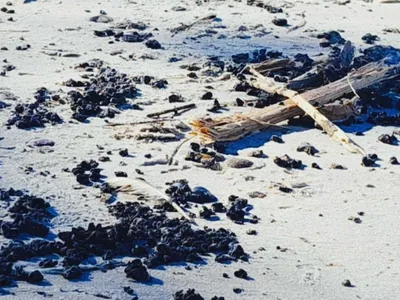 Safety and rescue Fuel oil on the beach in Ustka. The Baltic hands back what nobody wants to collect
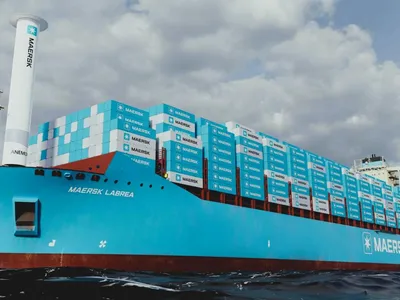 Ports and logistics Maersk to fit a 35 m rotor sail on an 8,700 TEU Lima-class ship in 2027
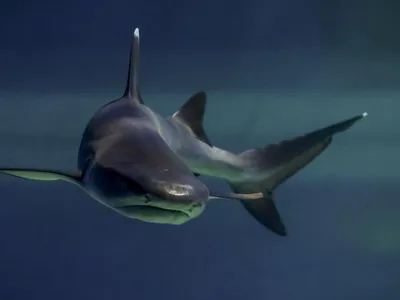 Environment From the UAE to Reda: sharks and rays move into a modernized and secured aquarium
Comments (0)
The discussion is moderated by the editors: a comment appears after review. Your e-mail address is not published.
Nobody has commented on this article yet.