Presidents of Poland and the sea: from Lech Wałęsa to Karol Nawrocki. What’s next for the Polish Navy?
The inauguration of Karol Nawrocki as the new president of the Republic of Poland opens not only a new political chapter but also a potential strategic shift in how Poland approaches its maritime domain and naval power. For over three decades, the Polish Navy has stood at the crossroads between symbolic gestures and systemic neglect. Will President Nawrocki change that trajectory?
navy politics pomerania tricity news06 august 2025 | 07:07 | Source: Gazeta Morska | Prepared by: Kamil Kusier | Print
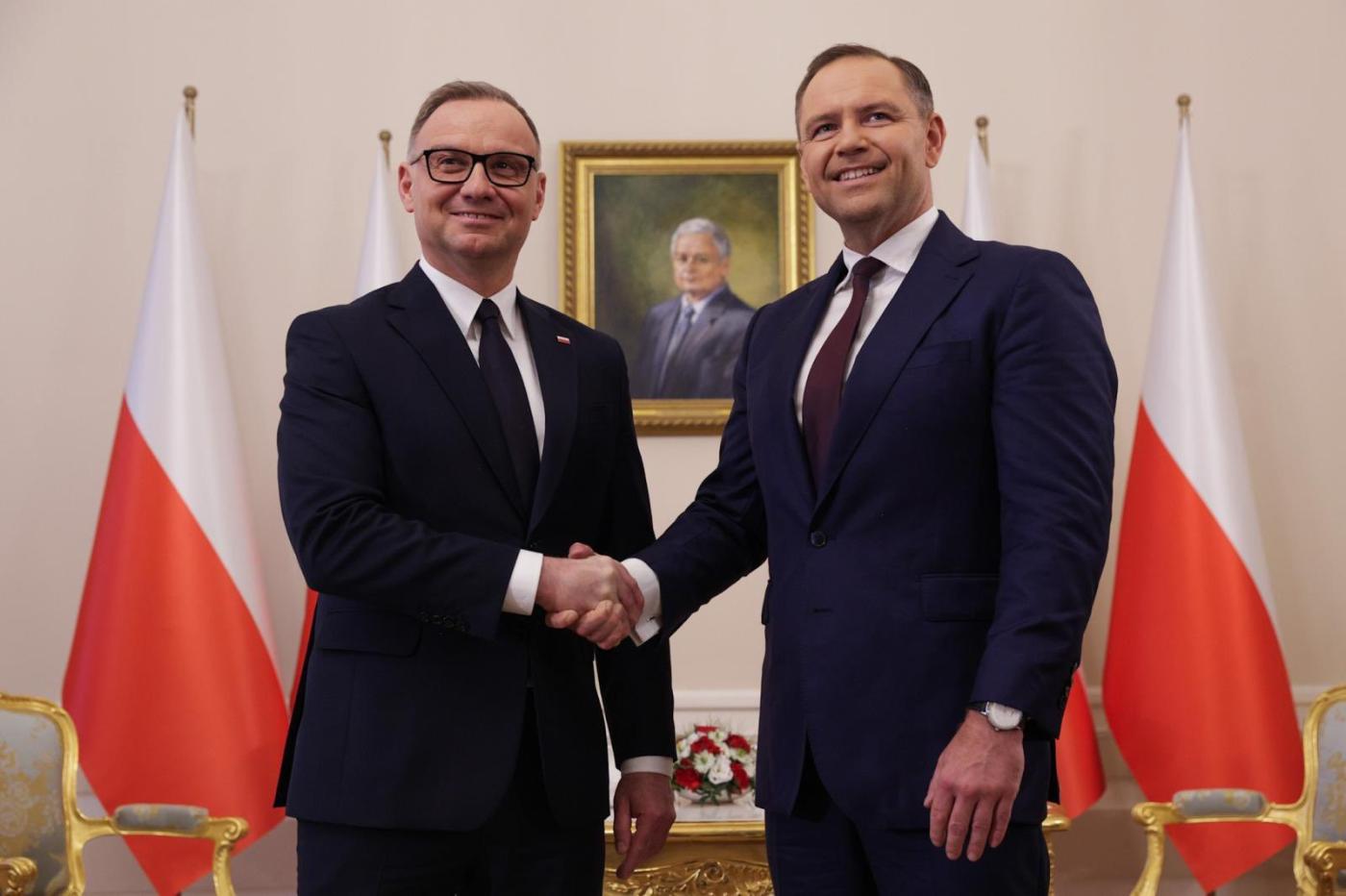
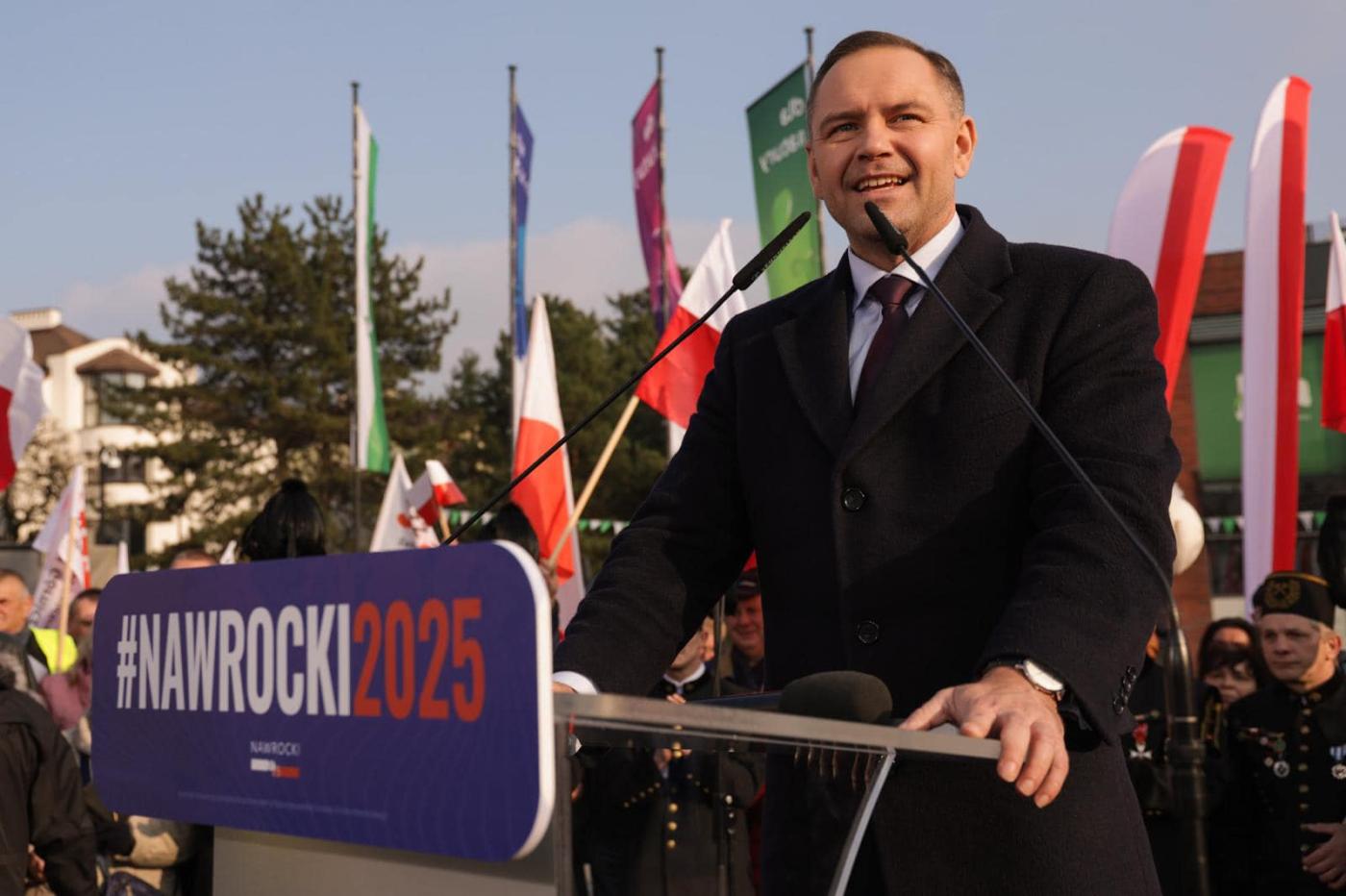
Prezydent RP Andrzej Duda i prezydent-elekt Karol Nawrocki / fot. x.com
Lech Wałęsa: the Baltic shipyard president who didn't rebuild the fleet
Lech Wałęsa – shipyard electrician, leader of Solidarity, and Poland’s first democratically elected post-Communist president (1990–1995) – had strong personal, professional, and symbolic ties to the sea. His political journey began at the Gdańsk Shipyard, a historic center of resistance and labor activism, and maritime imagery frequently appeared in his public rhetoric. However, in terms of real defense policy, the Polish Navy was neglected during his presidency—suffering from chronic underfunding, disorganization, and a lack of strategic direction. The fleet’s survival through the turbulent 1990s was largely thanks to the dedication of naval officers and maritime communities, rather than political will from the presidential office.
Wałęsa’s connection to the sea was also shaped by his military experience. From 1963 to 1965, he completed mandatory military service in the Polish Navy, serving as a communications mechanic within the Navy’s signal corps. He trained at the Non-Commissioned Officers’ School in Świecie and was later stationed in Koszalin. While his role was technical, this period further cemented his ties to naval institutions—though these connections never materialized in meaningful naval investment during his time in office.
One of the most serious internal conflicts of his presidency involved Admiral Piotr Kołodziejczyk, then Minister of National Defens. Kołodziejczyk clashed with Wałęsa over the direction of the armed forces, particularly regarding procurement plans for the Navy, including surface ships. The dispute culminated in the infamous Drawsko Dinner in 1994, where top military commanders openly expressed a lack of confidence in the president’s leadership. Wałęsa ultimately dismissed the admiral, and Kołodziejczyk's plans for modernizing the fleet were abandoned—leaving Poland without a coherent maritime defense strategy in the crucial post-Cold War decade.
Adding further controversy to his legacy, the question of Wałęsa’s past as secret collaborator "Bolek" resurfaced in 2025. Despite his long-standing denials of cooperation with the communist security services, Wałęsa lost a high-profile defamation case against professor Sławomir Cenckiewicz, a historian affiliated with the Institute of National Remembrance (IPN). The court ruled that Cenckiewicz had the right to publish academic findings based on authenticated archival documents. Ironically, it is now Sławomir Cenckiewicz who is set to lead the National Security Bureau (BBN) under President Karol Nawrocki—marking a profound political and historical reversal, as critics of Wałęsa’s legacy gain formal influence over Poland’s current security agenda.
Aleksander Kwaśniewski: NATO and EU without lasting maritime reform
Poland’s accession to NATO in 1999 and the European Union in 2004 under President Aleksander Kwaśniewski raised expectations of a comprehensive transformation of the Polish Armed Forces. While symbolic steps were taken, particularly in terms of allied cooperation, the Polish Navy (Marynarka Wojenna) remained chronically underfunded and strategically neglected.
Some hardware acquisitions did take place. The United States transferred two Oliver Hazard Perry-class frigates to Poland—ORP Generał Kazimierz Pułaski (2000) and ORP Generał Tadeusz Kościuszko (2002). Likewise, Norway provided several Kobben-class submarines, with the first arriving in 2002 and entering service by 2004. These assets helped Poland maintain basic submarine warfare capabilities and interoperability with NATO navies.
However, these were interim solutions, not part of a broader, future-oriented naval modernization program. The vessels were second-hand platforms nearing the end of their service life, acquired more out of necessity than vision. No major national naval rebuilding effort was launched during Kwaśniewski’s two terms. As a result, Poland’s maritime policy remained largely symbolic and reactive, focused on the minimal maintenance of inherited Cold War-era assets.
Behind the scenes, Admiral Ryszard Łukasik played a significant role in shaping maritime and security policy during this period. As Commander of the Navy and later as Chief of the National Security Bureau (BBN), he became one of the most influential military advisors near the end of Kwaśniewski’s presidency. Unusually, he briefly retained this role during the early presidency of Lech Kaczyński, offering a rare continuity between two politically different administrations.
Despite the historic step of joining Western defense structures, the Polish Navy under Kwaśniewski was left adrift—marginalized within broader defense priorities and lacking a clear strategic trajectory.
Lech Kaczyński: a president of national pride and maritime loss
President Lech Kaczyński (2005–2010), deeply rooted in Gdańsk and the Solidarity movement, recognized the strategic importance of the sea and consistently supported the Polish Armed Forces, including the Navy. He frequently visited the presidential seaside residence on the Hel Peninsula, appreciating both its symbolic and operational significance—a location now increasingly discussed in the context of restoring naval capabilities there.
During his presidency, the Polish Naval Academy in Gdynia hosted a high-level briefing for the leadership of the Ministry of National Defence, a meaningful gesture that reflected his engagement with the maritime and military community. After his untimely death, his legacy was honored by naming the Academy’s main library after Lech Kaczyński. A memorial plaque dedicated to him also stands at the site, serving as a lasting tribute.
His presidency was tragically cut short by the 2010 Smolensk air crash, which claimed the lives of not only the President but also Admiral Andrzej Karweta, commander of the Polish Navy, and numerous other senior military leaders. The loss of this leadership cohort was a devastating blow to both morale and institutional continuity, the effects of which were felt across Poland’s defense establishment for years.
Bronisław Komorowski: a presidency silent on the fleet
Though a former defense minister, President Bronisław Komorowski (2010–2015) largely overlooked the Polish Navy during his presidency. Despite a solid understanding of the challenges facing Poland’s armed forces, no key decisions were made to reverse the decline of naval capabilities. The critical Orka submarine program remained stalled, and the Navy operated at the margins of technical and personnel readiness. His term is remembered as one of inertia in maritime defense policy.
It is worth noting that before assuming the presidency, Komorowski served as head of the Maritime and River League (Liga Morska i Rzeczna) – an organization with deep patriotic and maritime traditions. He resigned from this position in 2007, when he became Marshal of the Sejm, and the League’s general assembly held at the Naval Academy in Gdynia underscored his earlier ties to the maritime community – even if these connections did not translate into concrete actions once in office.
Andrzej Duda: the presidency that restarted the fleet
Under President Andrzej Duda (2015–2025), in close alignment with the United Right government, the Navy began to see renewed strategic attention. Several long-delayed projects were finally launched, signaling a shift toward rebuilding naval capabilities. Notably:
- Serial production of Kormoran II-class minehunters began
- The Miecznik coastal defense frigate program was initiated
- The Delfin reconnaissance ship project was advanced
- Designs for the Ratownik rescue vessel and Supply-class auxiliary ship were put in motion
Andrzej Duda frequently stated that “there is no secure Poland without a strong fleet.” While not all objectives were met—especially regarding submarine forces—his presidency marked a meaningful departure from decades of neglect.
Karol Nawrocki: a maritime president for a maritime nation?
President Karol Nawrocki, a historian from Gdańsk and former IPN director, brings a unique background rooted in Poland’s coastal and industrial identity. His early public statements have signaled a strong interest in maritime security and naval modernization.
In a recent interview with Daily Mare, Karol Nawrocki stated:
- The Navy has been the most neglected branch of the armed forces in recent decades. That tide is finally turning. The fifth Kormoran-class minehunter was just launched, and the sixth is under construction. Once deployed, we will have adequately addressed mine countermeasure needs.
He also expressed deep concern over delays in the Orka submarine program:
- I am increasingly alarmed by the lack of a signed contract for Orka. We risk a total loss of submarine capability and training continuity. I expect swift action—ideally bundled with a bridging solution.
Karol Nawrocki further emphasized the strategic role of Poland’s shipbuilding sector:
- PGZ Naval Shipyard, Remontowa NAUTA, and others represent immense industrial potential. As president, I will support their development and advocate for strengthening the Navy as a pillar of national defense.
From symbolism to strategy: a moment of decision
From Lech Wałęsa to Karol Nawrocki, Poland’s presidents have walked a line between maritime symbolism and concrete action. Too often, naval investment came late, half-hearted, or not at all. Today, however, Poland faces a decisive moment—one where building a capable 21st-century fleet could secure national interests in the Baltic, protect offshore energy infrastructure, and bolster deterrence in a volatile regional environment.
President Nawrocki’s inauguration could mark the beginning of a new maritime doctrine—one rooted not in speeches, but in strategy, industry, and readiness.
see also
Buy us a coffee, and we’ll invest in great maritime journalism! Support Gazeta Morska and help us sail forward – click here!
Kamil Kusier
redaktor naczelny
gallery









comments
Add the first comment
see also
Polish Naval Academy and Institute of Fluid-Flow Machinery establish research partnership
NATO’s persistent naval presence in the Arctic and the northern Atlantic strengthens sea lane security
Poland launches second DELFIN SIGINT ship ORP Henryk Zygalski in Gdańsk
ORP Henryk Zygalski launched at Remontowa Shipbuilding under Saab Kockums program
ORP Drużno returns to service following intermediate dock repair
Gdynia honors top athletes of 2025 and century-old sports legends
COBI & Naval Museum in Gdynia launch strategic partnership — WWII naval history at the heart of new product line
Ustka a NATO opportunity? What a port on the border of two regions could change
Polish Naval Academy students advance unmanned maritime systems
Medical evacuation from offshore installation in the Baltic Sea. First naval SAR mission of 2026
ADVERTISEMENT
ADVERTISEMENT