Polish government reshuffle: two mega ministries, new faces in energy and assets, continuity in infrastructure and
On 23 July 2025, Prime Minister Donald Tusk announced a long-anticipated cabinet reshuffle aimed at improving decision-making efficiency and reducing bureaucratic fragmentation. The number of constitutional ministers was cut from 26 to 21, making the Polish Council of Ministers one of the smallest in the EU by structure. The changes reflect both consolidation and a strategic reorientation — particularly in finance, energy, and state-owned assets — while maintaining continuity in key technical ministries such as infrastructure, climate, and defence.
business power engineering maritime economy politics news23 july 2025 | 14:20 | Source: Gazeta Morska | Prepared by: Kamil Kusier | Print
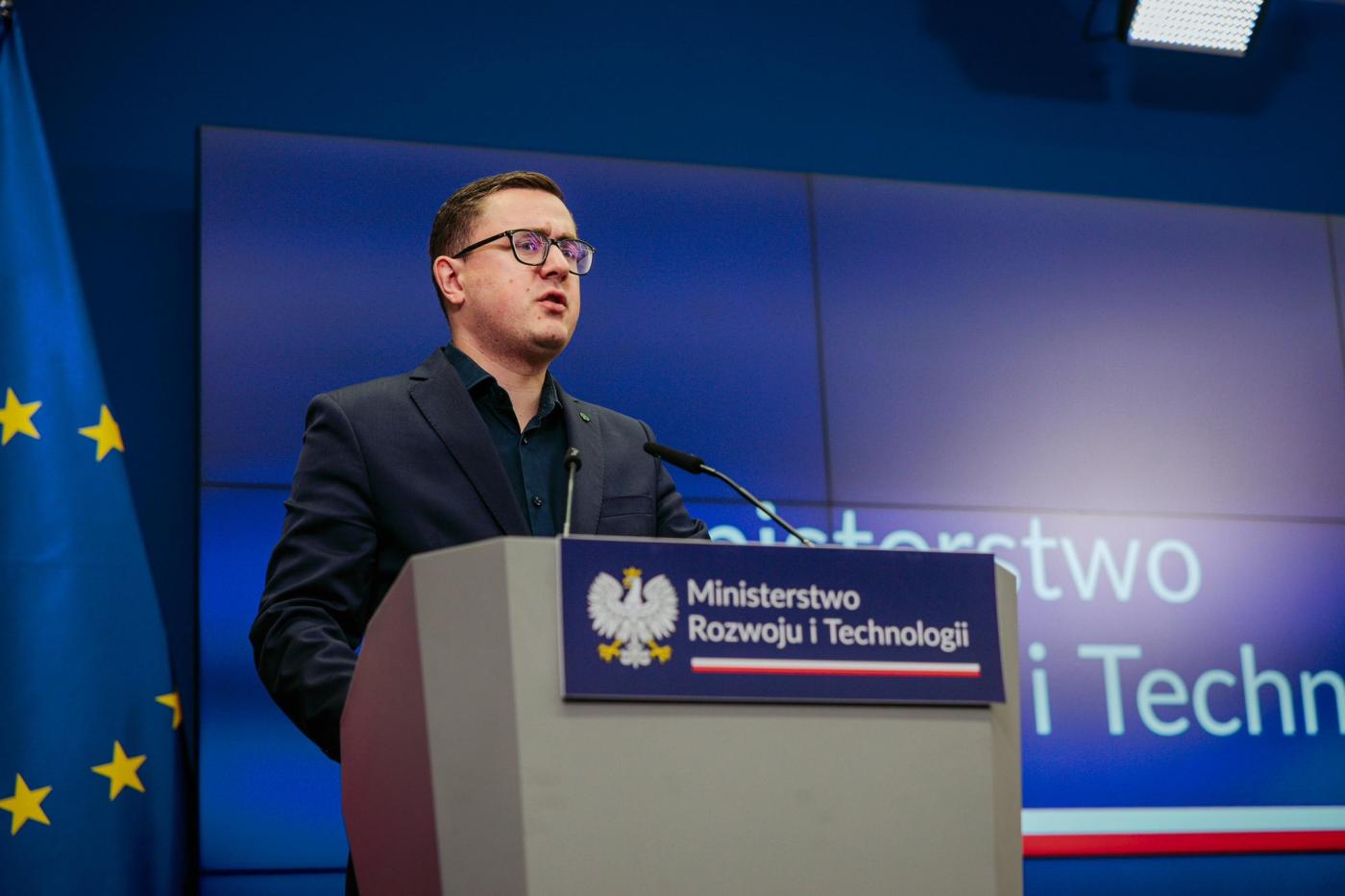
Miłosz Motyka minister energii w rządzie Donalda Tuska / fot. Facebook
Finance and economy under one roof
A new ministry of finance and economy will be led by current finance minister Andrzej Domański. The new mega-resort combines fiscal policy, public investment strategy, and macroeconomic coordination. According to Prime Minister Tusk, “there will be no back channels — only one transparent decision centre responsible for Poland’s entire financial and economic strategy.” The change also entails the liquidation of the Ministry of Development and Technology, previously headed by Krzysztof Paszyk.
Energy policy gets its own seat at the table
A separate ministry of energy has been created and will be headed by Miłosz Motyka, previously deputy minister at the Ministry of Climate and Environment, responsible for renewables and electricity markets. The new ministry absorbs functions from the now-dissolved Ministry of Industry and aims to centralise energy policy — including Poland’s nascent nuclear programme — as well as state coordination of renewables, grid development, and strategic reserves.
Tusk stressed that Motyka’s ministry would work closely with Wojciech Wrochny, the government’s plenipotentiary for strategic energy infrastructure, and key state-owned utilities. The consolidation is expected to streamline oversight, unlock investment in offshore wind and energy storage, and accelerate Poland’s energy transition while ensuring supply security.
New leadership in assets and agriculture
The Ministry of State Assets (MAP) will now be headed by Wojciech Balczun, current CEO of the Industrial Development Agency (ARP), replacing Jakub Jaworowski. According to Tusk, Balczun’s role is not to maximise profits, but “to maximise the well-being of Polish citizens.” The appointment signals a shift toward public-value management in state-owned enterprises, particularly in sectors like energy, rail, and port logistics.
At the Ministry of Agriculture, long-serving Czesław Siekierski is stepping down, with Stefan Krajewski — a current deputy minister — taking the helm. Krajewski has experience in climate adaptation for agriculture and public aid coordination. His elevation is seen as an attempt to energise the ministry and deepen its alignment with EU green policy goals.
No change in defence or infrastructure
Key technical ministries remain untouched — a sign of confidence in their current leadership and direction. At the Ministry of National Defence, Deputy Prime Minister Władysław Kosiniak-Kamysz retains his post, ensuring continuity in defence modernisation, NATO cooperation, and eastern flank readiness amid ongoing regional instability.
The Ministry of Infrastructure, led by Dariusz Klimczak, also remains unchanged. For Poland’s transport and maritime sectors, this stability is crucial for the uninterrupted advancement of large-scale projects: rail corridor upgrades, port expansion, and coordination of TEN-T and CEF-funded investments.
Kierwiński returns to MSWiA, Siemoniak focuses on security services
A notable personnel shift occurred at the Ministry of the Interior and Administration (MSWiA). Marcin Kierwiński returns as minister after a brief hiatus, while Tomasz Siemoniak continues as coordinator of special services. The move is seen as a response to heightened border tensions with Belarus and the need for stronger civilian crisis management and inter-agency coordination.
A slimmer, more cohesive cabinet
The overarching goal of the reshuffle is a more agile government, with better internal coordination and faster execution. As Tusk put it, “We won’t have one of Europe’s largest governments, but one of the most efficient.” The new ministers are set to be sworn in on Thursday, followed by the first cabinet meeting in the updated format on Friday.
For maritime, energy, and infrastructure stakeholders, the message is clear: strategic continuity where needed, and consolidation where overdue — all underlined by a push for operational discipline.
see also
Buy us a coffee, and we’ll invest in great maritime journalism! Support Gazeta Morska and help us sail forward – click here!
Kamil Kusier
redaktor naczelny
comments
Add the first comment
see also
Austal partners with Damen for local construction of LST 100 for Australian Army
The submarine contract of the decade? Canada weighs South Korea against Germany
Bechtel signs contract with Doraco for Poland’s first nuclear power plant
When two powers clash, Poland must be ready to act. Military security must be the priority
MON, Arka Gdynia and AMW sign letter of intent supporting "Green Industrial District - Kashubia" project
Mine countermeasure vessel Jaskółka begins sea acceptance trials
PEJ relocates headquarters to Pomerania. A strategic step in Poland’s nuclear power development
Radmor hosts delegation from the Republic of Turkey. Advancing maritime security cooperation
3D-printed catamaran: robotic manufacturing sets course for the future of small craft
Navantia and Fincantieri deepen cooperation on the european patrol corvette programme
ADVERTISEMENT
ADVERTISEMENT