









Part of Russian air defense system on Klaipėda beach - coincidence or warning sign?
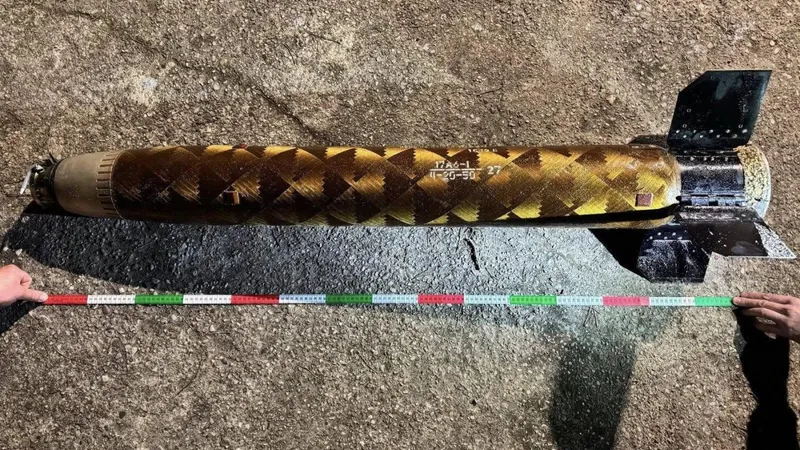
Lithuanian beaches, usually known for their scenic landscapes and relaxation, have recently become the site of an unusual discovery. In Melnragė, a coastal district of Klaipėda, authorities found an object that raised serious security concerns. According to initial reports, it appears to be a fragment of the Russian Pantsir S-1 air defense system. How did it end up on the Lithuanian coast, and what does this mean for regional security?
In brief
An object resembling a missile, probably a fragment of a Russian Pantsir S-1 air defence system, was found on the beach in Melnragė, a coastal district of Klaipėda. At 19:22 a team of clearance divers from the Lithuanian Naval Force arrived at the scene, secured the item and transported it to a safe location. Expert analysis indicated that the component served to stabilise the missile immediately after launch. Lithuanian authorities are urging caution and asking that suspicious finds be reported to the services.
Mysterious military debris on the Lithuanian shore
On Tuesday evening, beachgoers in Melnragė spotted an object resembling a missile. At 19:22, a Lithuanian naval bomb disposal team arrived to secure and transport it to a safe location. Military experts later identified it as a stabilizing component from the Pantsir S-1 system, used to ensure missile stability right after launch.
How did the Pantsir S-1 fragment get to Klaipėda?
Experts are considering various scenarios—was the missile fragment washed ashore by the waves after military activity, or did it reach the beach by other means? With rising tensions in the Baltic region, questions about the origin of this debris and its potential implications are growing.
Lithuanian authorities are urging caution and asking the public to report any suspicious objects found along the coast. The discovery raises broader security concerns as NATO members in the region closely monitor potential threats.
Source: Gazeta Morska · Compiled by: Kamil Kusier
Related articles
 Maritime economy Poland’s constitutional crisis is also a maritime story
 Navy and defence Norwegian submarine Utstein completes NATO patrol guarding offshore oil and undersea infrastructure
 Safety and rescue Polish SAR’s new rescue vessel Mistral launched at Kewatec in Finland
 Safety and rescue Icelandic Coast Guard and police delegation visits Polish Border Guard’s Maritime Division
 Safety and rescue Polish Navy helicopter evacuates man from Baltic platform 100 km off Władysławowo
 Navy and defence SNMG2 joins Allied warships in PASSEX as Italy's Mare Aperto 2026 gets under way
Comments (0)
The discussion is moderated by the editors: a comment appears after review. Your e-mail address is not published.
Nobody has commented on this article yet.