









NATO ships arrive at Port Gdańsk for Baltic Sentry mission. Alliance enhances security in the Baltic Sea region
A task force of 11 NATO ships from seven nations, including units from the Standing NATO Mine Countermeasures Group 1 (SNMCMG1), arrived at Gdańsk Port for a working visit. This stopover, aimed at resupplying and resting crews, supports ongoing missions in the Baltic Sea to protect critical underwater infrastructure vital for energy and telecommunications sectors.

In brief
Eleven NATO warships from seven nations moored at the Obrońców Westerplatte Quay in the Port of Gdańsk for a working visit to resupply and rest crews. The vessels fly the flags of Lithuania, Latvia, Estonia, Germany, Sweden, the Netherlands and Belgium, led by the German replenishment ship FGS Mosel (A512), 100 metres long. NATO units engaged in Baltic MCM exercises and Operation Baltic Sentry protect undersea cables and energy installations in the Baltic Sea. The ships can be viewed until Monday 7 April.
The warships, flying flags of Lithuania, Latvia, Estonia, Germany, Sweden, the Netherlands, and Belgium, are led by the German FGS Mosel (A512). Currently engaged in Baltic MCM exercises, these NATO ships underscore the Alliance’s commitment to maritime security. Their presence ensures a safe environment for Baltic Sea transport and trade, reinforcing solidarity among member states.
Moored at the Obrońców Westerplatte Quay in Gdańsk Port, the 11 vessels were greeted by Lt. Daniel Drewniak of Poland’s 8th Coast Defense Flotilla. Visitors can view the ships until Monday, April 7. The FGS Mosel, an Elbe-class replenishment vessel, is the largest at 100 meters long, 16 meters wide, and a 4-meter draft. It supports naval autonomy by delivering fuel, provisions, ammunition, and medical services. Other ships, like the Swedish minehunter HSwMS Ulvön (47 meters), are part of SNMCMG1.
Operation Baltic Sentry: NATO’s Baltic Sea Strategy
Launched in January 2025 during the Baltic Sea States Summit in Helsinki, Operation Baltic Sentry enhances NATO’s presence in this strategic region. “NATO is prepared to defend Baltic Sea underwater infrastructure,” the Alliance stated, deploying SNMG1 and SNMCMG1 units, reconnaissance aircraft, and maritime drones. This operation boosts deterrence and response capabilities against threats like sabotage, often linked to Russia’s “shadow fleet.” A notable incident—last year’s damage to a Helsinki-Rostock cable—underscored the need for this initiative. Rotational patrols target areas near undersea cables and energy installations.
Poland’s Operation Gulf: Protecting Baltic Assets
Since 2023, the Polish Navy’s Operation “Zatoka” (Gulf) has monitored Poland’s territorial waters and exclusive economic zone. Focused on safeguarding underwater infrastructure—gas pipelines, telecommunications cables, and oil terminals—this mission counters rising sabotage risks in the Baltic Sea. Triggered by events like the Nord Stream incident, Polish ships maintain constant vigilance over critical maritime assets.
Source: Port Gdańsk / Gazeta Morska · Compiled by: Kamil Kusier
Related articles
 Maritime economy Poland’s constitutional crisis is also a maritime story
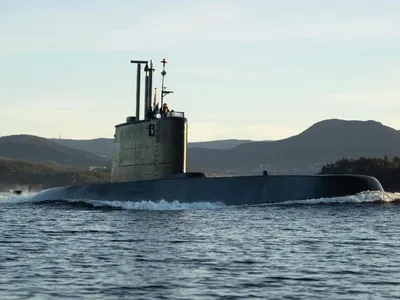 Navy and defence Norwegian submarine Utstein completes NATO patrol guarding offshore oil and undersea infrastructure
 Safety and rescue Polish SAR’s new rescue vessel Mistral launched at Kewatec in Finland
 Safety and rescue Icelandic Coast Guard and police delegation visits Polish Border Guard’s Maritime Division
 Safety and rescue Polish Navy helicopter evacuates man from Baltic platform 100 km off Władysławowo
 Navy and defence SNMG2 joins Allied warships in PASSEX as Italy's Mare Aperto 2026 gets under way
Comments (0)
The discussion is moderated by the editors: a comment appears after review. Your e-mail address is not published.
Nobody has commented on this article yet.