Sea in the campaign: who truly has a plan for the Baltic - Karol Nawrocki or Rafał Trzaskowski?
As Poland approaches the second round of the 2025 presidential election, the maritime sector is paying close attention to the candidates' approaches to key issues concerning the Baltic Sea, the Navy, ports, and offshore energy. Two frontrunners – Rafał Trzaskowski of the Civic Coalition and Karol Nawrocki, president of the Institute of National Remembrance – offer distinctly different maritime policy visions. What do they promise to the coastal communities, seafarers, fishermen, and the maritime economy at large?
politics news28 may 2025 | 10:49 | Source: Gazeta Morska | Prepared by: Kamil Kusier | Print
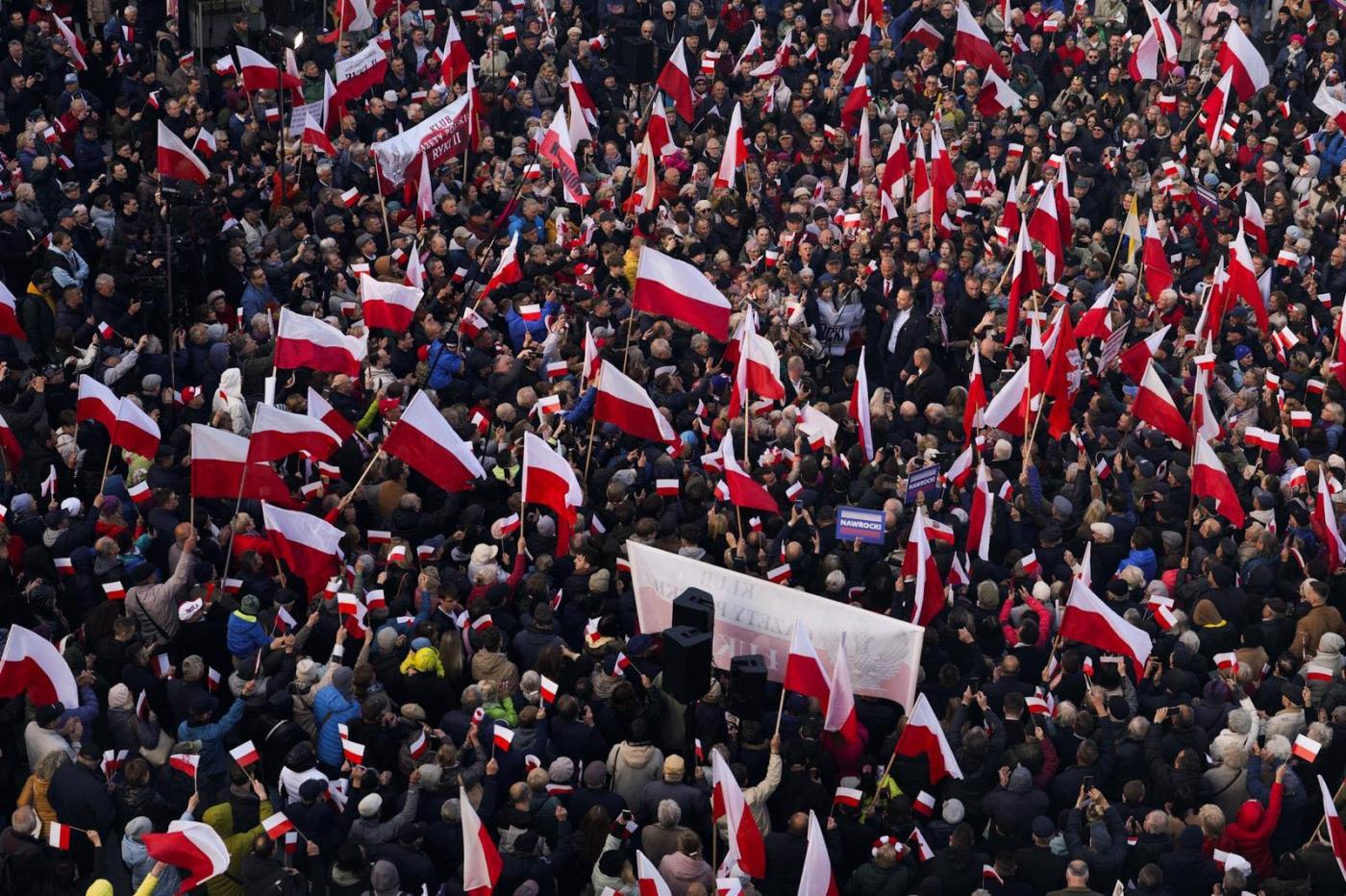
fot. materiały prasowe
Rafał Trzaskowski: ports, logistics and green transition
Rafał Trzaskowski, currently mayor of Warsaw, emphasizes the importance of infrastructure investment and EU climate goals. In a March 2025 interview with PAP, he highlighted the strategic role of the Port of Gdańsk in Poland's economic and energy security, especially in light of the war in Ukraine.
- Port Gdańsk is key to Poland’s security and economic development, said Rafał Trzaskowski.
He also supports a restructured version of the Central Communication Port (CPK) project, originally focused on air travel, but now with potential to integrate maritime logistics. This could improve supply chains and boost competitiveness of the Gdańsk, Gdynia, and Szczecin-Świnoujście ports. Still, Trzaskowski has previously opposed the original CPK concept, favouring instead Warsaw's existing airport infrastructure.
Trzaskowski has voiced strong support for the EU "Fit for 55" climate package and the green transition, which suggests openness to offshore renewable energy investment – especially Baltic wind farms. With Poland planning to activate several gigawatts of offshore wind capacity by 2040, a Trzaskowski presidency may facilitate access to EU funds. This is significant, particularly given recent experience showing that access to funds is politically influenced rather than tied to rule-of-law concerns.
However, Trzaskowski has not directly addressed modernization of the Polish Navy or enhancing the Border Guard, raising questions about his priorities in maritime security. Despite multiple inquiries from Gazeta Morska, he has not responded to questions on military investments, SAR operations, or fisheries policy.
Karol Nawrocki: security, sovereignty and maritime investment
Karol Nawrocki, backed by conservative circles, places maritime policy at the core of his presidential vision. In an interview with Gazeta Morska, he emphasized the Baltic Sea as both an economic and strategic asset.
- A well-utilized Baltic guarantees the state's stability and growth, including financial stability, said Karol Nawrocki.
Nawrocki cites ports in Gdańsk, Gdynia, Szczecin, and Świnoście as economic engines generating close to 60 billion PLN annually for the state. He pledges to expand infrastructure investments across these hubs.
Naval defense and border protection
Nawrocki outlines concrete plans for naval modernization, including continued development of the Miecznik (frigates) and Orka (submarines) programs. He calls for revitalizing the shipbuilding and defense sectors.
- If we want to be a credible NATO member, we need an operational Navy, said Karol Nawrocki.
He also advocates increased funding for the Maritime Border Guard. While he welcomed the launch of SG-301, a new patrol vessel, he noted that this is only a starting point.
Maritime rescue and SAR reform
Regarding the Maritime Search and Rescue Service (SAR), Nawrocki proposes better employment conditions by aligning SAR benefits with other uniformed services. He notes that SAR faces financial and staffing challenges, exacerbated by competition from the private sector.
- SAR is not just about equipment. It's about people. We must retain them and provide the best working conditions, said Karol Nawrocki.
Ports and logistics: common ground
Both candidates acknowledge the strategic role of infrastructure in maritime growth. Each supports the CPK concept – though with different emphases. Trzaskowski focuses on EU integration and sustainable development. Nawrocki emphasizes regional impact, e.g. the Bydgoszcz-Gdynia rail modernization or northern high-speed links.
The Nawrocki campaign also supports the original CPK concept without route exclusions. Notably, Prime Minister Donald Tusk recently excluded areas like Zamość and Ukraine connections from the fast rail network.
Green transition vs energy sovereignty
The candidates differ sharply on climate policy. Trzaskowski backs the EU Green Deal, opening Poland to offshore wind development and related EU funding. Nawrocki calls for a national referendum on the Green Deal, citing its impact on industry and living costs.
Implications for the maritime sector: between security and transition
Poland’s maritime economy faces crucial challenges: Navy modernization, border security, port development, SAR system upgrades, and offshore wind growth. The next president will influence how these priorities unfold – not through direct authority, but via alignment with the government.
Trzaskowski represents a pro-EU vision grounded in climate transition and potential EU financial support. Yet he remains vague on naval and SAR issues, leaving critical questions unanswered.
Nawrocki proposes a comprehensive plan to support naval forces, the Border Guard, and SAR, with emphasis on national security, industrial patriotism, and strategic use of the Baltic. He also sees offshore wind as a chance to revive the shipbuilding sector and stimulate mid-sized ports like Ustka, Łeba and Władysławowo.
- These are ongoing projects that deserve continuity, said Karol Nawrocki.
Baltic in focus – a call to both candidates
The maritime sector is now more than just the economy and security. It is part of broader climate, geopolitical and energy debates. A coherent long-term Baltic strategy must enter the public discourse.
The maritime community urges both candidates to clarify their positions on: Navy modernization, SAR strengthening, port investment, and the future of offshore wind. Regardless of political affiliation, the next president must recognize the Baltic Sea’s strategic role.
Because the Baltic is more than geography. It’s a choice about Poland’s direction. Strong Poland means maritime Poland.
see also
Buy us a coffee, and we’ll invest in great maritime journalism! Support Gazeta Morska and help us sail forward – click here!
Kamil Kusier
redaktor naczelny
comments
Add the first comment
see also
“Army 500” and strategic transformation: Poland sets the course for long-term deterrence and allied readiness
Karol Nawrocki: “The strength of the republic lies in its armed forces”. Security requires national unity
100 years of Gdynia: PGZ Naval Shipyard at the heart of Poland’s Baltic security strategy
Gdynia at 100: ceremonial city council session highlights Poland’s maritime strategy
Poland’s wedding to the sea in Puck: President Karol Nawrocki commemorates 106th anniversary
106 years ago Poland “turned to the sea”. Split celebrations, one goal: a strong maritime Poland
The Maritime Office in Słupsk returns: ministerial plenipotentiary to oversee reestablishment
Poland as Europe’s food hub. Minister Stefan Krajewski on export, security, and global competition
The Polish flag: twenty years of drift and a belated change of course. More than just the white-and-red
Poland’s security in focus. President meets with ministers and heads of special services
ADVERTISEMENT
ADVERTISEMENT