









Marina Szafarnia deploys new PortBin through joint business-GOS initiative
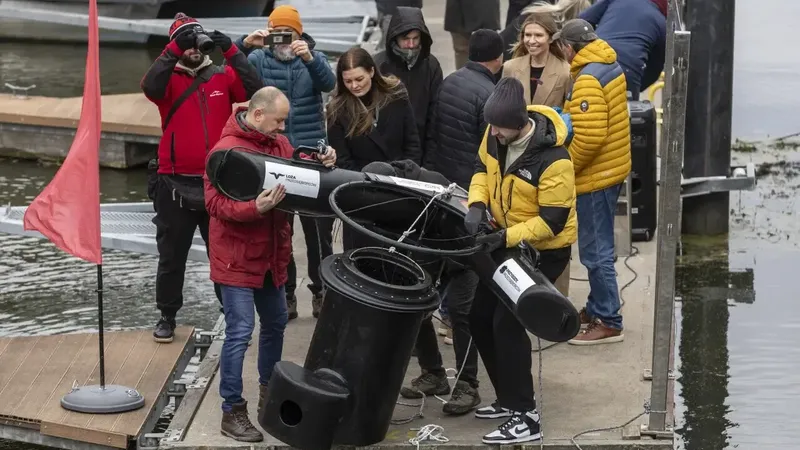
Szafarnia Marina in Gdańsk received a valuable new asset in its efforts to protect local waters. The Ewesa Foundation and the Entrepreneurs’ Lodge donated a PortBin unit to the Gdańsk Sports Centre (GOS), strengthening ongoing work to reduce pollution in one of the city’s busiest recreational waterways.
In brief
Marina Szafarnia in Gdańsk has received a floating PortBin waste collector, donated to Gdański Ośrodek Sportu by Fundacja Ewesa and Loża Przedsiębiorców as part of the Fala dobra campaign. The PortBin device collects plastic, polystyrene, bottle caps and micro-litter from the water surface, capturing an average of 1 to 1.5 kilograms of waste per day. The PortBin at Marina Szafarnia is the seventh such device in marinas managed by Gdański Ośrodek Sportu. According to HELCOM data, plastic accounts for 70 percent of the waste found in the Baltic Sea.
PortBin – a discreet but effective water-cleaning system
The PortBin functions as a floating water vacuum, continuously collecting plastic, styrofoam, bottle caps, and other small debris from the water’s surface and subsurface layers. The device traps an average of 1–1.5 kilograms of waste per day—material that would otherwise flow into the Motława River and the Baltic Sea.
- We don’t install PortBins where they simply look good. We install them where they are truly needed—where the water is already calling for help, noted Karolina Olszanowicz, president of the Ewesa Foundation.
Given the high level of traffic at Szafarnia—both from tourists and recreational vessels—the new device plays an important role in maintaining water cleanliness in a highly visible part of historic Gdańsk.
Voices from the maritime community
Among the guests present was world-renowned sailor and yacht captain Roman Paszke, who has close personal ties to the area.
- Gdańsk is the most beautiful place in the world for me, especially since I was born just two streets from here. The marina is stunning today, and I’m glad that technology like this helps keep it clean. The PortBin works quietly but efficiently—and impressively, he said.
The director of the Gdańsk Sports Centre, Kamil Koniuszewski, emphasised the significance of the donation. It is another PortBin added to the GOS-managed network of water-cleaning devices, funded not by a single corporation but by a group of mid-sized businesses.
- Receiving this PortBin is a sign of trust in the work done by GOS. The funds come not from one big ‘whale’ company, but from an entire school of medium-sized private enterprises. These organisations typically watch every złoty carefully, so we feel genuinely appreciated that this PortBin will operate right here, in the Szafarnia Marina, he stressed.
Plastic in the Baltic – a growing threat
According to HELCOM, as much as 70% of waste found in the Baltic Sea is plastic. Though it disperses in water, it does not disappear—breaking down into micro-particles that enter fish, birds, marine mammals, and ultimately humans.
Anita Żebrowska, deputy director for infrastructure and water policy, highlighted the broader importance of such initiatives:
- This device helps remove waste from the surface, improving the cleanliness of the Gdańsk marinas. The project combines ecological education with modern solutions and aligns with Gdańsk’s sustainable development strategy, supporting sport, tourism, and the maritime economy with future generations in mind.
“Fala dobra” – a wave of responsibility
The installation of the PortBin is part of “Fala dobra” (“Wave of Good”), an initiative of the Ewesa Foundation and the Entrepreneurs’ Lodge aimed at funding and deploying PortBins to protect Baltic waters. Thanks to the combined support of local businesses and nationwide partners, PortBins have already been installed in marinas in Gdańsk and Szczecin.
Key contributors to the Szafarnia unit include Ewesa Brand & Customer Experience Agency, Riverdi, Unisystem, Sports-Med, Wojciech Plona Consulting, and dozens of entrepreneurs from across Poland.
- This proves that business can be a space of real shared responsibility. Today we are creating something that truly leaves a mark—a positive one, said Adrian Gorzycki, leader of the Entrepreneurs’ Lodge.
The initiative’s creator, Ewelina Sasin, emphasized how collective engagement turned an idea into action.
- It started with an idea, a few people, and one goal: to clean the water—symbolically and literally. ‘Fala dobra’ has shown the incredible power of a community that believes in the purpose of its actions.
A growing network of water-cleaning devices in Gdańsk
The new PortBin in Marina Szafarnia is the seventh device of its kind operating in Gdańsk’s marinas managed by GOS. The current network includes:
- Marina Gdańsk – Seabin and PortBin
- Nadwiślańska – PortBin
- Górki Zachodnie – PortBin
- Żabi Kruk – Seabin
- Sienna Grobla – PortBin
- Marina Szafarnia – newly deployed PortBin
Each unit provides a small yet crucial contribution to reducing waste accumulation and preventing plastics from entering the wider Baltic ecosystem.
Real impact for the Motława and the Baltic Sea
The PortBin at Szafarnia represents more than just a piece of equipment—it is a practical outcome of cooperation between business, local authorities, and NGOs. Every kilogram of waste collected is waste that will not break down into microplastics or continue its journey downstream.
The “Fala dobra” initiative demonstrates that collective responsibility and modern entrepreneurship can directly influence the health of marine environments—proving that meaningful change often begins with community effort and sustained commitment.
Source: Gazeta Morska · Compiled by: Kamil Kusier
Related articles
 Environment The world's largest seahorses move into the Gdynia Aquarium. In this species it is the male that gets pregnant
 Maritime lifestyle and tourism Fuel oil along 50 km of Polish coast. Ustka beaches closed, illegal discharge suspected
 Safety and rescue Fuel oil on the beach in Ustka. The Baltic hands back what nobody wants to collect
 Ports and logistics Maersk to fit a 35 m rotor sail on an 8,700 TEU Lima-class ship in 2027
 Environment From the UAE to Reda: sharks and rays move into a modernized and secured aquarium
 Maritime economy Will the sharks return to Reda? Locals and tourists have grown used to seeing them through the glass
Comments (0)
The discussion is moderated by the editors: a comment appears after review. Your e-mail address is not published.
Nobody has commented on this article yet.