









Maldives to resume shark fishing in november
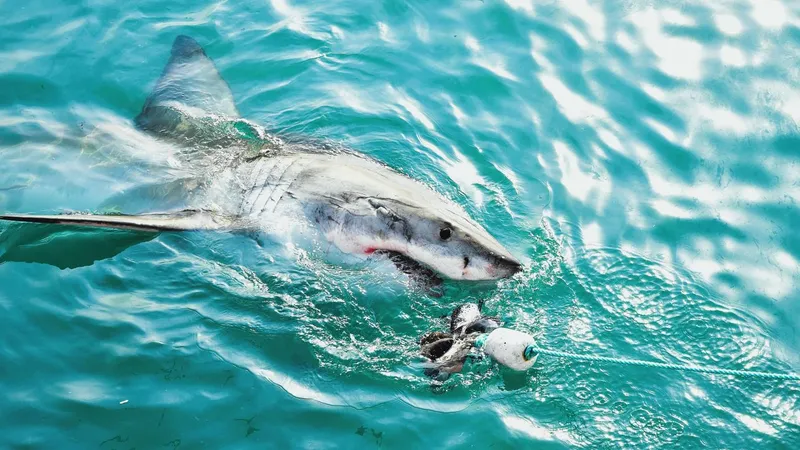
The government of the Maldives has announced that the nationwide ban on shark fishing, in place since 2010, will be lifted this November. President Mohamed Muizzu confirmed that fisheries targeting the porbeagle shark will be reopened, describing the sector as “an important source of revenue.”
In brief
The Maldives will lift from November this year a ban on shark fishing in force since 2010. President Mohamed Muizzu announced that the decision concerns in particular the fishing of porbeagle shark and that its aim is to increase state budget revenues. Shark liver oil remains one of the archipelago's key export commodities, alongside tuna and tourism. The British organisation Shark Guardian warned that short-term gains could threaten the stability of the entire economy of the Maldives, made up of more than 1,190 islands.
Shark liver oil has historically been one of the country’s key export commodities, alongside tuna fishing and tourism, which remain the backbone of the island nation’s economy. Prior to the 2010 ban, shark fisheries ranked second only to tuna as a source of income for the archipelago’s population of just over half a million.
The original moratorium was introduced to protect shark populations and support the rapid growth of tourism, particularly the lucrative diving sector. Today, the Maldives are best known internationally for their luxury resorts and coral reef attractions.
The policy shift has triggered concern among conservation groups. UK-based NGO Shark Guardian warned that short-term economic benefits could undermine the long-term stability of the Maldivian economy.
- Sharks are keystone species for marine ecosystems, and overfishing them risks damaging both biodiversity and the country’s tourism appeal, the group stated.
Comprising more than 1,190 islands stretching across 800 kilometers southwest of India, the Maldives are already on the frontline of climate change, threatened by rising sea levels in the Indian Ocean. Experts note that further pressure on marine ecosystems could heighten the country’s environmental vulnerability and economic risks.
Source: Gazeta Morska / PAP · Compiled by: Kamil Kusier
Related articles
 Environment The world's largest seahorses move into the Gdynia Aquarium. In this species it is the male that gets pregnant
 Maritime lifestyle and tourism Fuel oil along 50 km of Polish coast. Ustka beaches closed, illegal discharge suspected
 Safety and rescue Fuel oil on the beach in Ustka. The Baltic hands back what nobody wants to collect
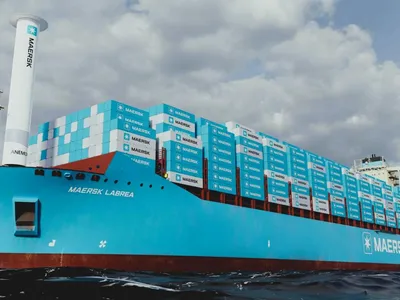 Ports and logistics Maersk to fit a 35 m rotor sail on an 8,700 TEU Lima-class ship in 2027
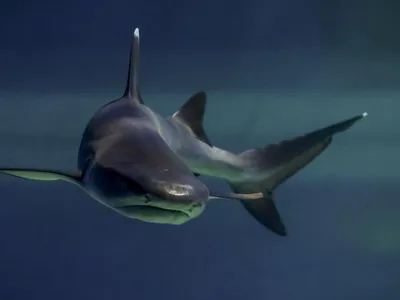 Environment From the UAE to Reda: sharks and rays move into a modernized and secured aquarium
 Maritime economy Will the sharks return to Reda? Locals and tourists have grown used to seeing them through the glass
Comments (0)
The discussion is moderated by the editors: a comment appears after review. Your e-mail address is not published.
Nobody has commented on this article yet.