Indonesia 2025-2030: the maritime pillar of Southeast Asia’s growth
As global supply chains continue to shift and Western economies face a slowdown, the map of world trade flows is moving decisively toward Southeast Asia. In this changing landscape, Indonesia is emerging as a player whose role can no longer be overlooked—whether in the maritime sector, industry, energy, or logistics. The country is entering a decade of strategic opportunity, increasingly visible to investors and companies operating across the broad spectrum of ocean-based business, from shipping to raw-material processing.
maritime economy commerce logistics worldwide opinions and comments ports commentary transport and forwarding news09 december 2025 | 11:18 | Source: Gazeta Morska | Prepared by: Andrzej Jaworski | Print
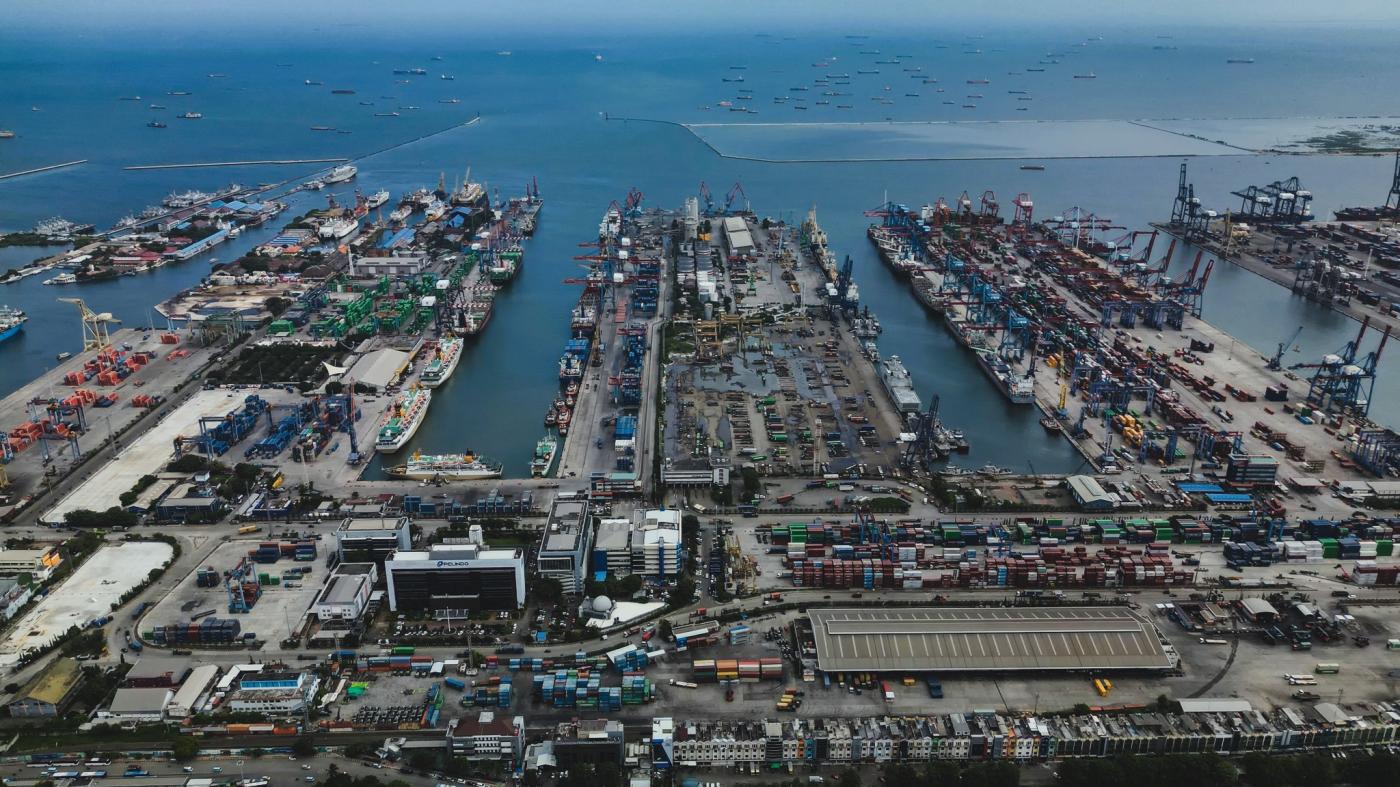
fot. Pelindo Regional 2 Tanjung Priok
An archipelago of potential
With more than 17,000 islands, a population exceeding 270 million, and a position at the crossroads of two oceans, Indonesia is a natural trading bridge between East Asia and the Indian Ocean. Long overshadowed by regional giants, its geography is now becoming one of its strongest assets.
The government continues to modernize its port and industrial infrastructure. In 2024, Indonesia completed the expansion of the Patimban terminal in West Java—a USD 3+ billion project designed to ease pressure on Jakarta’s Tanjung Priok and establish Patimban as a major export hub.
Ports across Sulawesi, Kalimantan and the Moluccas are also being upgraded to support exports of nickel, bauxite, cobalt and agricultural products. These developments form part of the wider Sea Toll Road programme, which aims to integrate the vast island chain into a cohesive economic system.
Stable growth and pro-investment reform
Indonesia is one of the few major economies to have maintained growth of around 5% annually, even during periods of global headwinds. In 2024, its nominal GDP passed USD 1.6 trillion, making it ASEAN’s largest economy and one of the world’s top twenty.
This momentum is reinforced by reforms designed to attract foreign investors. The Online Single Submission (OSS) system has simplified investment procedures, while changes to the Negative Investment List opened numerous sectors—including logistics, e-commerce, energy and transport—to full or majority foreign ownership.
For maritime businesses, this means easier market entry, more space for joint ventures and greater regulatory transparency.
Critical minerals and the maritime industry of the future
Critical minerals—especially nickel, cobalt and bauxite—are central to Indonesia’s industrial transformation. Holding more than 40% of global nickel reserves, the country is shifting from exporting raw ore to producing battery-grade materials and components for the global battery industry.
Industrial parks in Morowali, Halmahera and Weda Bay now host smelters, chemical plants and lithium-cell factories, with exports increasingly focused on processed materials destined for China, South Korea and Japan.
This creates rising demand for specialised terminals, bulk carriers, inter-island logistics and offshore services. Renewable energy is another priority, with investments in geothermal power, hydrogen, wind and solar. The Energy Transition Roadmap 2030 targets a 25% share of renewables by the end of the decade—opening space for port upgrades, LNG terminals and shipyards capable of handling hybrid and low-emission vessels.
Logistics: weak link or major opportunity?
Indonesia’s logistics underdevelopment is paradoxically one of its biggest investment magnets. A nation of thousands of islands needs modern ports, roads, warehouses and a reliable inter-island transport fleet.
The World Bank estimates Indonesia’s logistics costs at 23–25% of GDP—among the highest in Asia. Every efficiency gain directly boosts competitiveness. The government is expanding ports and building out the Tol Laut maritime highway to ensure regular container links between major islands.
These developments offer natural entry points for Polish and other European logistics, port and engineering firms, including in projects financed by the AIIB or JICA.
Tourism and a new blue-economy profile
Beyond heavy industry, Indonesia is investing heavily in tourism, including the “10 New Balis” initiative aimed at developing new regional hubs. Planned projects include marinas, passenger terminals, and yacht and ferry infrastructure in areas such as Flores, Lombok and Labuan Bajo.
Growing tourism also strengthens demand for coastal transport and cold-chain logistics—vital for the export of seafood such as fish, shrimp and tuna.
Business culture and local realities
Indonesia is a high-potential but demanding market. Personal relationships, trust and reputation carry considerable weight, often exceeding the importance of formal contracts. Local partners are typically essential, as regulatory and cultural nuances vary significantly across regions.
Given Indonesia’s decentralised governance, administrative decisions often differ by province. Engaging a local advisor or industry partner early in the process is widely regarded as best practice.
Risks and challenges
Despite broad stability, risks remain: tax changes, environmental-policy disputes and occasional protests against large industrial projects. Investors must monitor regulations closely and maintain strong community engagement for major developments. Currency risk is another factor, with the rupiah sensitive to global interest rates and commodity cycles.
Even so, Indonesia maintains strong macroeconomic fundamentals: low public debt, a stable banking sector and expanding industrial exports.
Indonesia in the “China+1” strategy
Global manufacturers implementing “China+1” diversification increasingly view Indonesia as an attractive destination. The relocation of production and logistics capacities to Jakarta, Surabaya or Batam is driving demand for maritime transport and port infrastructure.
European firms—including those from Poland—can position themselves within the supply chains of these new investors, offering components, logistics or engineering services. Polish expertise in port technology and offshore services, supported by Baltic experience, may be especially valuable.
A maritime-focused future
Indonesia is placing the maritime economy at the centre of its development vision. The new capital, Nusantara, in East Kalimantan, is planned as both an administrative hub and a modern transport–logistics centre with strong maritime foundations.
With a budget exceeding USD 30 billion, the project presents significant opportunities for infrastructure, logistics and port-services providers. For Europe’s maritime sector, it signals that Indonesia is set to become one of Southeast Asia’s key maritime hubs—not only as a transit point but as an industrial and export powerhouse.
A decisive decade
Indonesia stands at a pivotal moment. Ongoing reforms, infrastructure investments and rapid industrialisation could make it a new engine of regional growth. At the same time, the market offers numerous underdeveloped niches—from port operations and inter-island shipping to battery recycling and sustainable tourism.
For companies combining strategic vision with execution discipline, Indonesia between 2025 and 2030 may become one of the defining investment opportunities of the decade. Across its five-thousand-kilometre archipelago lies not only a country of immense potential but a new centre of gravity for global maritime trade.
Those who recognise this moment can become part of Southeast Asia’s next major success story.
Buy us a coffee, and we’ll invest in great maritime journalism! Support Gazeta Morska and help us sail forward – click here!
Redakcja Gazeta Morska
użytkownik
comments
Add the first comment
see also
Port Haller a strategic maritime investment for Poland and the Baltic region
Baltica 2 HDD landfall completed. Offshore wind farm cable route ready for grid connection
PGZ Naval Shipyard and OSI Maritime Systems: towards a new model of naval industry cooperation
Remontowa Shipbuilding delivers hybrid ferry Bjarkøy to Norwegian operator
Baltic Towers and Siemens Gamesa launch strategic cooperation for Baltica 2 offshore wind project
Polish universities and industry join forces to develop dual-use autonomous underwater drone swarms
Ocean Winds’ BC-Wind offshore project wins IJGlobal market impact award
New patrol vessels for the Caribbean. Damen contract for the Dutch Caribbean Coast Guard
Drifting tanker near Malta highlights risks linked to the global “shadow fleet”
How much can you earn in offshore and offshore wind energy in 2026?
ADVERTISEMENT
ADVERTISEMENT