









Hel naval parade showcases Poland’s maritime capabilities
This year’s Armed Forces Day celebrations in Poland took on a distinctly maritime dimension as the coastal town of Hel hosted one of the largest naval parades in recent memory. More than 100 vessels of varying classes and capabilities filled the waters of the Gulf of Gdańsk, while thousands of spectators gathered along the beaches to witness an impressive display of Poland’s naval power, law enforcement presence, and maritime safety services.
In brief
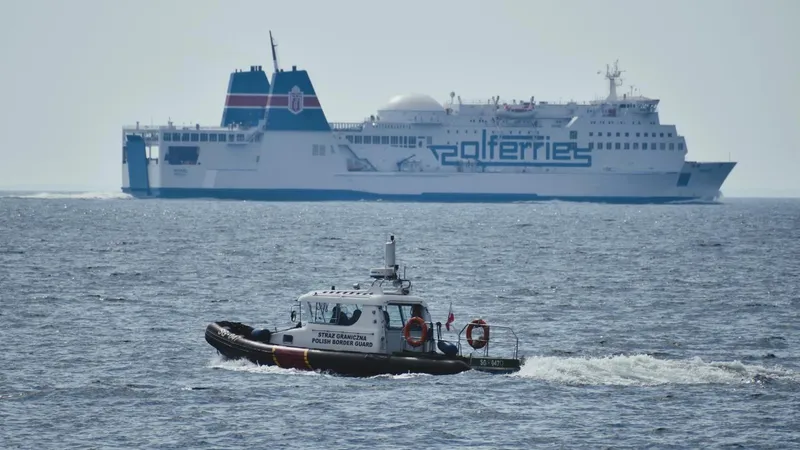
More than one hundred vessels took part in the naval parade in Hel marking Polish Armed Forces Day, and thousands of spectators gathered on the beaches. The parade featured frigates, missile ships, minesweepers, transport and support vessels of the Polish Navy, as well as patrol vessels of the Maritime Unit of the Polish Border Guard and ships of the Polish Maritime Search and Rescue Service. The water police and the Military Gendarmerie were responsible for securing the event. The naval parade in Hel demonstrated the importance of the Baltic Sea for protecting maritime borders, communication routes and critical infrastructure.
The Polish Navy – a cornerstone of maritime defense
At the forefront of the parade were the vessels of the Polish Navy (Marynarka Wojenna RP), underlining the enduring strategic importance of the Baltic Sea for Poland’s national security. The display included frigates, missile corvettes, mine countermeasure vessels, and logistics support ships, as well as smaller patrol and auxiliary craft.
The participation of these units served not only as a symbolic show of force, but also as a reminder of the Navy’s multifaceted role: from defending territorial waters and safeguarding critical infrastructure, to conducting NATO operations, humanitarian missions, and search-and-rescue support.
Border Guard – securing maritime frontiers
Equally visible were the units of the maritime division of the Polish Border Guard, whose role—though less spectacular than that of the Navy—remains essential in everyday maritime security. Their modern patrol craft and fast-response boats demonstrated the capability to enforce border controls, combat smuggling and trafficking, and respond rapidly to irregular migration or asymmetric threats.
Their presence underscored that maritime security is not defined solely by naval operations but also by continuous law enforcement efforts across the nation’s maritime domain.
MSPiR – maritime search and rescue
The Polish Maritime Search and Rescue Service (MSPiR) was also represented, reminding observers that safety at sea encompasses far more than defense. MSPiR’s mission—saving lives, towing distressed vessels, and responding to maritime accidents—remains a critical element of Poland’s maritime security architecture.
Its highly trained crews and specialized SAR units provide a constant safety net for commercial shipping, fishing fleets, and the growing number of leisure users along the Baltic coast. Their presence highlighted the humanitarian side of maritime operations, complementing the defense and law enforcement focus of the parade.
Police and military police – safety and order
The Polish Police’s waterborne units and the military police also took part, focusing on securing the event and ensuring smooth operations across the maritime and coastal zones. While their role may be less visible than the Navy’s or Border Guard’s, their contribution to the safe execution of the parade was indispensable.
A strategic and societal message
Beyond the spectacle, the Hel naval parade carried a clear strategic message: the Baltic Sea is a vital security and economic space for Poland. The coordinated presence of the Navy, Border Guard, MSPiR, Police, and military police illustrated the interdependent nature of maritime security, where defense, law enforcement, and rescue functions are tightly integrated.
For society, the event offered a unique opportunity to engage with uniformed services, strengthen public trust, and inspire the next generation of recruits. The enthusiastic crowds lining the beaches of Hel demonstrated that Poles remain deeply invested in their maritime forces—not only as symbols of sovereignty but as essential guardians of national safety and resilience.
Source: Gazeta Morska · Compiled by: Kamil Kusier
Related articles
 Maritime economy Poland’s constitutional crisis is also a maritime story
 Navy and defence Norwegian submarine Utstein completes NATO patrol guarding offshore oil and undersea infrastructure
 Safety and rescue Polish SAR’s new rescue vessel Mistral launched at Kewatec in Finland
 Safety and rescue Icelandic Coast Guard and police delegation visits Polish Border Guard’s Maritime Division
 Safety and rescue Polish Navy helicopter evacuates man from Baltic platform 100 km off Władysławowo
 Navy and defence SNMG2 joins Allied warships in PASSEX as Italy's Mare Aperto 2026 gets under way
Comments (0)
The discussion is moderated by the editors: a comment appears after review. Your e-mail address is not published.
Nobody has commented on this article yet.