









ESA: ocean surface warming accelerating faster than expected
The European Space Agency (ESA) has reported that satellite data indicates ocean surface temperatures are rising more rapidly than previously estimated by experts.

In brief
The sea surface is warming 4.5 times faster than in the 1980s, according to satellite data presented by the European Space Agency. In 1985-1989 the warming rate was 0.06 degrees Celsius per decade, and in 2019-2023 it reached 0.27 degrees Celsius per decade. The study published in Environmental Research Letters used data from the ERS-1, ERS-2, Envisat and Copernicus Sentinel-3 satellites. Lead author Chris Merchant of Reading University pointed to the need for continuous monitoring and improvement of climate data.
Between 1985 and 1989, ocean surfaces warmed at a rate of 0.06°C per decade. However, in the period from 2019 to 2023, this rate surged to 0.27°C per decade—an increase that is 4.5 times faster than in the 1980s.
The findings, published in Environmental Research Letters, stem from a study conducted under ESA’s Climate Change Initiative (CCI). The analysis utilized satellite data from a variety of missions, including ERS-1, ERS-2, Envisat, and Copernicus Sentinel-3.
Scientists attribute the accelerating temperature rise to increasing concentrations of greenhouse gases in the atmosphere.
- This energy imbalance, driven by greenhouse gas emissions, is propelling climate change, said lead author Chris Merchant of the University of Reading. - Given the accelerating ocean warming and shifting climate dynamics, continuous monitoring and data refinement are critical to ensure our climate models can accurately project future temperature trends.
The study also found that while phenomena such as volcanic eruptions and El Niño events do influence ocean temperatures, their effects are short-lived.
- Our research clearly shows that the increasing accumulation of energy on the planet is the primary driver of long-term ocean surface warming, noted co-author Owen Embury. - Short-term fluctuations due to El Niño, volcanic activity, or solar variability introduce noise into the system, but they do not alter the underlying accelerating trend.
These results will inform ESA’s MOTECUSOMA project, which investigates Earth’s energy imbalance and its role in driving climate change.
- Tackling these challenges requires precise climate forecasting, ESA emphasized. - As oceans absorb more heat, we see intensification of extreme weather events, disruption of marine ecosystems, and accelerated sea level rise-making sustained observation and ongoing refinement of climate models absolutely essential.
Source: PAP / Gazeta Morska · Compiled by: Kamil Kusier
Related articles
 Environment The world's largest seahorses move into the Gdynia Aquarium. In this species it is the male that gets pregnant
 Maritime lifestyle and tourism Fuel oil along 50 km of Polish coast. Ustka beaches closed, illegal discharge suspected
 Safety and rescue Fuel oil on the beach in Ustka. The Baltic hands back what nobody wants to collect
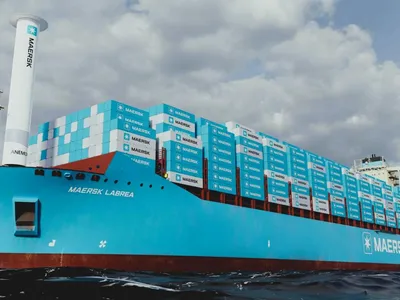 Ports and logistics Maersk to fit a 35 m rotor sail on an 8,700 TEU Lima-class ship in 2027
 Environment From the UAE to Reda: sharks and rays move into a modernized and secured aquarium
 Maritime economy Will the sharks return to Reda? Locals and tourists have grown used to seeing them through the glass
Comments (0)
The discussion is moderated by the editors: a comment appears after review. Your e-mail address is not published.
Nobody has commented on this article yet.