Ekofisk investments strengthen ORLEN’s position on the Norwegian Continental Shelf
ORLEN Group continues to expand its upstream footprint on the Norwegian Continental Shelf (NCS), executing another set of acquisitions in one of Europe’s most important offshore hydrocarbon provinces. ORLEN Upstream Norway has completed the acquisition of equity stakes in the Albuskjell and Vest Ekofisk fields in the North Sea and, together with its partners, has taken a final investment decision (FID) on the development of these resources. The project will also include the Tommeliten Gamma field, forming a single, integrated development tied back to the existing Ekofisk infrastructure.
business power engineering investments worldwide news23 december 2025 | 13:07 | Source: Gazeta Morska | Prepared by: Kamil Kusier | Print
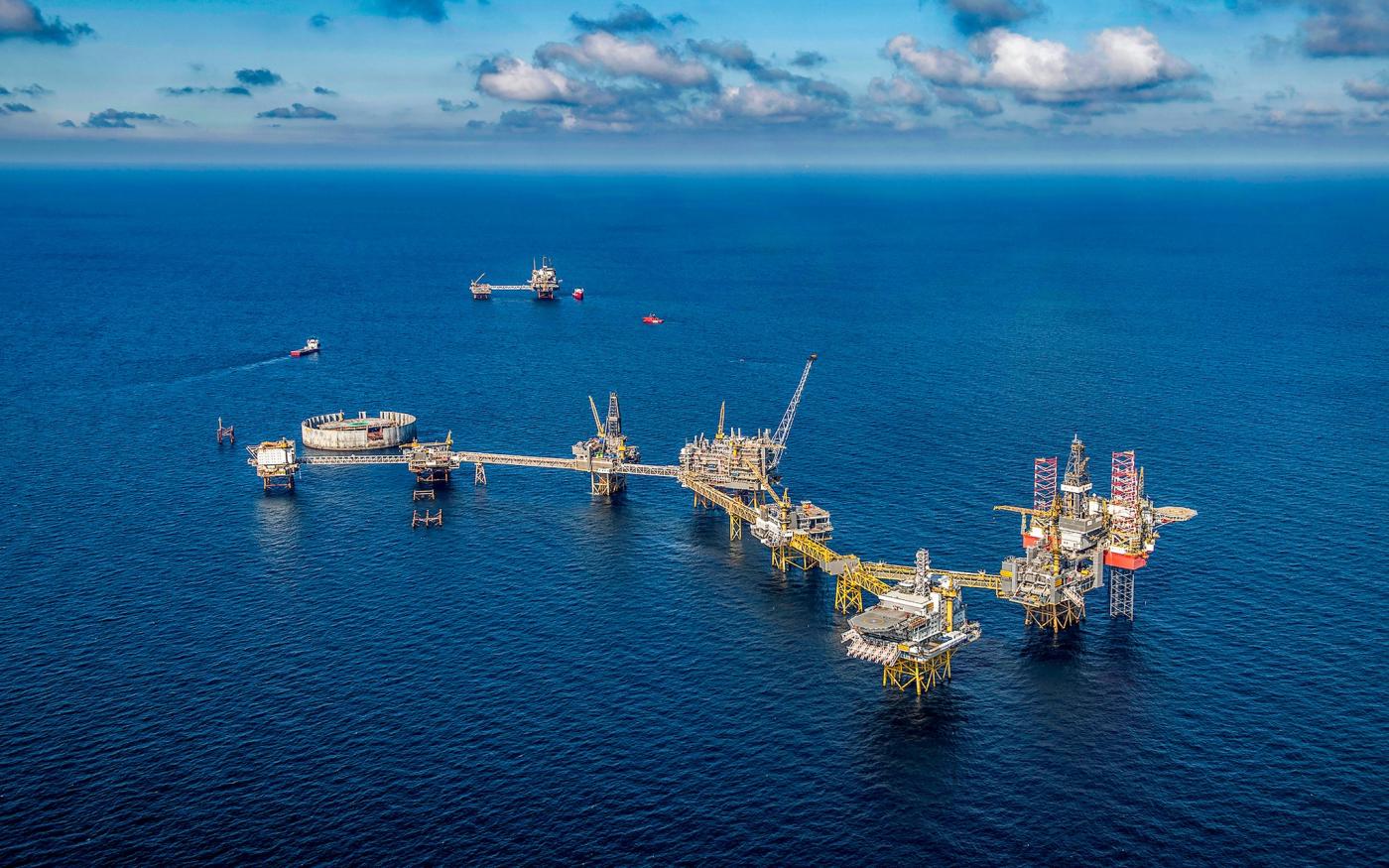
fot. Conoco Phillips
- We are closing the year with good news from the Norwegian Continental Shelf. By acquiring interests in two fields, we are strengthening our position in the Ekofisk area, which is the cradle of Norway’s oil industry, said Ireneusz Fąfara, President of the ORLEN Management Board. He emphasised that ORLEN’s own production on the NCS, combined with domestic output and LNG supplies, constitutes a cornerstone of gas supply for Polish power generation, industry and households. - These are also the foundations on which we aim to build energy security for Central and Eastern Europe.
The transaction increases ORLEN’s resource base by approximately 8 million barrels of oil equivalent (boe). Across the combined Albuskjell, Vest Ekofisk and Tommeliten Gamma project, total resources attributable to ORLEN amount to 25 million boe, including more than 3 billion cubic metres of natural gas. At peak production, ORLEN’s share is expected to reach around 3.4 million boe per year, including over 400 million cubic metres of gas, making the project a material contributor to the region’s energy balance.
Ekofisk: a mature basin with enduring strategic value
The Ekofisk area occupies a unique place in the history and present-day reality of Norwegian offshore operations. Discovered in 1969, Ekofisk marked the beginning of commercial oil production on the NCS and laid the foundations for Norway’s offshore energy industry. Over decades of operation, a dense network of platforms, pipelines and logistics infrastructure has been developed around the field.
For companies such as ORLEN, this translates into access to a mature yet highly attractive production hub. Albuskjell and Vest Ekofisk are classified as near-field developments, enabling new production wells to be tied back to existing facilities. This development model significantly reduces capital expenditure, shortens project timelines and lowers technical risk compared with greenfield offshore projects.
A year of acquisitions and operational synergies
The acquisition of 7.6% interests in both Albuskjell and Vest Ekofisk from DNO marks ORLEN’s latest transaction in the Ekofisk area this year. In October, ORLEN Upstream Norway acquired an additional 20.23% stake in the Tommeliten Gamma field from TotalEnergies EP Norge, increasing its total interest in that asset to 62.61%. In December, licence partners agreed to jointly develop all three fields as a single project.
- Total resources from Albuskjell, Vest Ekofisk and Tommeliten Gamma attributable to ORLEN amount to 25 million barrels of oil equivalent, including more than 3 billion cubic metres of gas. These fields will soon be developed as one integrated project, said Wiesław Prugar, Vice President of the ORLEN Management Board responsible for Upstream operations. - Holding interests in all three assets generates both financial and operational synergies. In this way, we are delivering on the objectives of ORLEN’s 2035 Strategy, supplying gas to the domestic economy while, more broadly, supporting the entire region.
The integrated approach enables optimisation of drilling schedules, more efficient use of Ekofisk infrastructure and lower unit production costs. The operator of the fields is ConocoPhillips Skandinavia AS, with ORLEN Upstream Norway partnering alongside Vår Energi ASA and Petoro AS (the latter in Albuskjell and Vest Ekofisk).
The development plan includes drilling 11 production wells, all of which will be tied back to the existing Ekofisk facilities. Start-up is scheduled for the fourth quarter of 2028, in line with typical offshore project timelines.
North Sea gas as a pillar of energy security
While project volumes are often expressed in barrels of oil equivalent, natural gas is the strategic commodity from ORLEN’s perspective. Gas output from Albuskjell, Vest Ekofisk and Tommeliten Gamma—exceeding 400 million cubic metres per year at plateau—will provide a meaningful contribution to supplies delivered via the Baltic Pipe system.
- We are executing this project in a cost-efficient manner, maximising the positive impact of the upstream segment on ORLEN’s financial performance, Prugar noted, highlighting the role of stable offshore assets in supporting long-term cash flow.
Since 2022, Norwegian gas has become one of Europe’s most reliable and politically stable supply sources. ORLEN’s own production on the NCS, combined with domestic output and LNG imports, allows the group to build a diversified and resilient supply portfolio, less exposed to spot market volatility and geopolitical shocks.
Offshore as a long-term investment
Norway’s offshore sector remains one of the most stable and transparent globally. While operating in mature basins such as Ekofisk involves technical challenges and ageing infrastructure, the regulatory and fiscal framework continues to incentivise new developments. At the same time, increasingly stringent emissions requirements favour highly efficient, low-carbon projects—an area where tie-back developments offer a clear competitive advantage.
For ORLEN, the Albuskjell–Vest Ekofisk–Tommeliten Gamma project is not only about expanding reserves, but also about strengthening the upstream segment’s contribution to group performance and reinforcing its role as a significant player in the European offshore energy market.
Towards a regional energy hub
The new North Sea investments align with ORLEN’s broader 2035 Strategy, under which energy security for Poland and Central and Eastern Europe is a key priority. Ownership of upstream assets on the Norwegian Continental Shelf, integrated with transport infrastructure and trading capabilities, enhances the group’s strategic resilience in an increasingly complex energy landscape.
With production scheduled to begin in 2028, the project represents the next chapter in ORLEN’s long-term engagement in Norwegian offshore operations. It also serves as a reminder that the North Sea remains not only a symbol of industrial transformation, but a tangible pillar of regional energy security—arguably more important today than ever before.
Buy us a coffee, and we’ll invest in great maritime journalism! Support Gazeta Morska and help us sail forward – click here!
Kamil Kusier
redaktor naczelny
comments
Add the first comment
see also
StartupHack 3.0 at GPNT: Space and maritime technologies at the core of innovation
Polish technology powers zero-emission public transport. AREX secures largest municipal contract
Defence.Hub strengthens capabilities in technologies supporting maritime infrastructure security
Hanseatic Global Terminals takes full ownership of Florida International Terminal
Aleksandra Kosiorek: The sea has always been a space of openness for us, and that will not change
Gdańsk to launch Baltic Sea monitoring center
Türkiye advances indigenous GNSS ambitions: what FGN-100-D3 means for the maritime sector
Lithium at the core. TKMS and E3 Lithium align on Canada’s submarine ambitions
Błażej Konkol appointed vice president for infrastructure at the Port of Gdańsk Authority
WB Group expands into Romania, strengthening presence in the Black Sea region
ADVERTISEMENT
ADVERTISEMENT