









Coral bleaching hits record 84% of global reefs
A staggering 84 percent of the world’s coral reefs are now affected by mass bleaching, posing a dire threat to ecosystems critical for marine biodiversity and the livelihoods of hundreds of millions of people, according to the latest report from the U.S. National Oceanic and Atmospheric Administration (NOAA).

In brief
Heat stress causing coral bleaching affected 83.7 percent of the planet's reefs between 1 January 2023 and 20 April 2025, the US National Oceanic and Atmospheric Administration reported. The phenomenon, ongoing for two years in the Atlantic, Pacific and Indian Oceans, is the fourth global bleaching event since 1998. About a billion people live within 100 kilometres of reefs and benefit from their existence. With warming of 1.5 degrees C, 70 to 90 percent of corals could die, and according to the UN the climate could warm by 3.1 degrees by the end of the century.
Corals are highly sensitive to rising sea temperatures, which have remained at record highs since 2023 due to global warming. This ongoing thermal stress, compounded by ocean acidification caused by human-generated greenhouse gas emissions, has triggered a global coral bleaching event across the Atlantic, Pacific, and Indian Oceans. It is the fourth such event recorded since 1998.
- From January 1, 2023, to April 20, 2025, heat stress linked to bleaching has affected 83.7 percent of coral reefs globally, NOAA stated.
Bleaching occurs when corals expel the symbiotic algae—zooxanthellae—that provide them with nutrients and vibrant coloration, as a response to elevated sea temperatures. If temperatures remain high for extended periods, corals may die completely.
While coral reefs can recover if temperatures drop and stressors such as pollution or overfishing decrease, sustained high temperatures in certain regions are now severe enough to “cause extinction of some species or even entire reef systems,” NOAA warned.
An estimated one billion people live within 100 kilometers of coral reefs and rely on them directly or indirectly for food security, income, and coastal protection. Reefs support millions of fishers, attract tourism, and act as natural barriers against storm surges.
Scientists warn that if global temperatures rise by 1.5°C above pre-industrial levels by the early 2030s, 70–90% of coral reefs could perish. However, current national commitments to reduce carbon emissions fall far short. Projections by the United Nations suggest the planet could warm by as much as 3.1°C by the end of the century under existing policies.
- The link between fossil fuel emissions and coral mortality is direct and indisputable, emphasized Dr. Alex Sen Gupta of the University of New South Wales.
2024 marked the hottest year on record for both land and ocean surface temperatures. Since 2005, ocean warming has accelerated nearly twofold, with oceans absorbing over 90 percent of excess heat trapped in the climate system since 1970, according to climate scientists.
Source: PAP / Gazeta Morska · Compiled by: Kamil Kusier
Related articles
 Environment Two tonnes of oil and sand collected by sieve. Rowy to Ustka clean, two stretches still need work
 Environment A disaster warning on Lake Łebsko, a fishing dispute and a CBA arrest. Słowiński National Park's hardest autumn
 Environment The world's largest seahorses move into the Gdynia Aquarium. In this species it is the male that gets pregnant
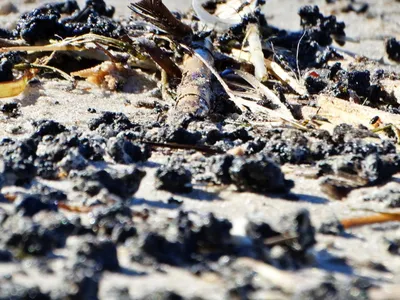 Maritime lifestyle and tourism Fuel oil along 50 km of Polish coast. Ustka beaches closed, illegal discharge suspected
 Safety and rescue Fuel oil on the beach in Ustka. The Baltic hands back what nobody wants to collect
 Ports and logistics Maersk to fit a 35 m rotor sail on an 8,700 TEU Lima-class ship in 2027
Comments (0)
The discussion is moderated by the editors: a comment appears after review. Your e-mail address is not published.
Nobody has commented on this article yet.