









Continuation of unexploded ordnance neutralization in the Gulf of Gdańsk. Water entry ban from Stogi to Sobieszewo
From March 19 to 21, a large-scale operation to neutralize unexploded ordnance (UXO) lying on the seabed of the Gulf of Gdańsk will take place. Due to the operation, a temporary ban on entering the water has been imposed on Gdańsk's beaches, covering the stretch from entrance No. 26 (Stogi) to entrance No. 11 (Orle) on Sobieszewo Island.
In brief
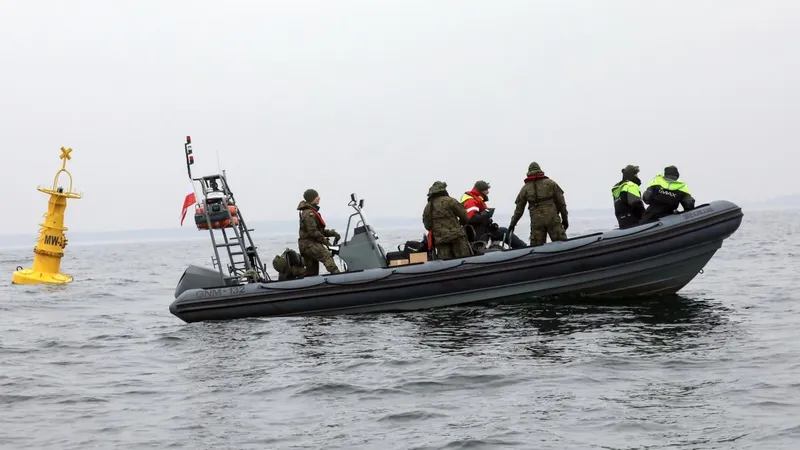
From 19 to 21 March, about 100 artillery shells and one aerial bomb, totalling almost 1,200 kilograms of explosives lying on the bottom of the Gulf of Gdańsk, are being neutralised. A ban on entering the water applies on Gdańsk beaches from entrance number 26 in Stogi to entrance number 11 in Orle on Sobieszewo Island. The operation is conducted by mine clearance divers from the 13th Minesweeper Squadron, and the controlled detonation takes place at a depth of about 20 metres, about 5 kilometres from the shore. The operation continues activities from 11 to 14 March 2025 that were interrupted by the weather.
UXO in the Gulf of Gdańsk – Scale of the threat and the need for clearance
A significant number of unexploded ordnance, remnants of military operations from World War II, remain on the seabed of the Gulf of Gdańsk. This phase of the operation will neutralize approximately 100 artillery shells and one aerial bomb, totaling nearly 1,200 kg of explosive materials. These objects pose a threat not only to navigation and fisheries but also to the marine environment.
This operation is a continuation of actions initially conducted from March 11 to 14, 2025, which had to be suspended due to unfavorable weather conditions in the Gulf of Gdańsk.
How is UXO neutralization conducted at sea?
The neutralization will be carried out by combat divers from the 13th Minesweeper Squadron, named after Fleet Admiral Andrzej Karweta. The operation involves transporting the UXO to a controlled detonation site located at a depth of approximately 20 meters, about 5 km offshore. Residents and visitors may experience noticeable tremors and hear explosions during the operation.
To ensure public safety, from 9:00 AM to 4:00 PM, the area will be patrolled by officers from the Police, Municipal Guard, and Territorial Defense Forces. Information boards warning about the water entry ban will also be placed on the beaches.
Impact of UXO detonations on the marine environment and economy
Underwater detonations can temporarily disrupt the marine ecosystem. Experts are closely monitoring the impact on flora and fauna and are taking measures to minimize potential adverse effects. The operation is also crucial for maritime economy—removing these hazardous objects will enhance navigation safety and allow for further development of port infrastructure.
Important information and recommendations for residents and tourists
Local authorities and emergency services urge the public to comply with the restrictions and refrain from entering the water in the designated area. It is also recommended to follow updates from local authorities and media outlets.
The UXO neutralization operation is another step toward improving the safety of Polish territorial waters. Although such activities are complex and require extensive expertise, their results contribute significantly to the security of maritime operations and coastal recreational areas.
Source: Gazeta Morska · Compiled by: Kamil Kusier
Related articles
 Maritime economy Poland’s constitutional crisis is also a maritime story
 Navy and defence Norwegian submarine Utstein completes NATO patrol guarding offshore oil and undersea infrastructure
 Safety and rescue Polish SAR’s new rescue vessel Mistral launched at Kewatec in Finland
 Safety and rescue Icelandic Coast Guard and police delegation visits Polish Border Guard’s Maritime Division
 Safety and rescue Polish Navy helicopter evacuates man from Baltic platform 100 km off Władysławowo
 Navy and defence SNMG2 joins Allied warships in PASSEX as Italy's Mare Aperto 2026 gets under way
Comments (0)
The discussion is moderated by the editors: a comment appears after review. Your e-mail address is not published.
Nobody has commented on this article yet.