









China will construct the world's largest hydropower dam in Tibet
In late December, China announced that it had approved the construction of the world's largest hydropower dam on the Tibetan plateau, a huge step forward in its renewable energy ambitions.
In brief
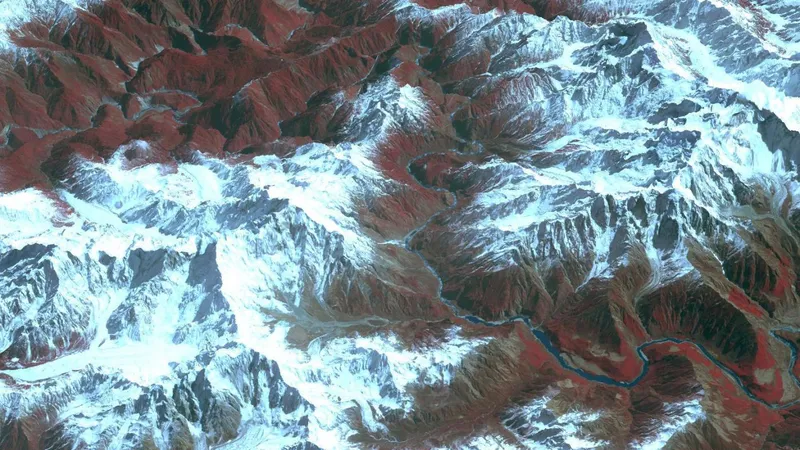
China approved in December the construction of the world's largest hydroelectric dam on the lower reaches of the Yarlung Zangbo river, on the eastern edge of the Tibetan plateau. The dam is to generate 300 billion kilowatt-hours of energy per year, far above the 88.2 billion kWh of the Three Gorges Dam, and the project's cost is likely to exceed the 254.2 billion yuan spent on the Three Gorges Dam. The river drops by 2,000 metres over a stretch of 50 kilometres. India and Bangladesh fear the impact of the investment on water flow and ecosystems downstream on the Brahmaputra river.
China has approved the construction of the world's largest hydropower dam on the eastern rim of the Tibetan plateau. The dam, which will be constructed on the lower levels of the Yarlung Zangbo River, is estimated to generate 300 billion kilowatt-hours of energy annually. This output would greatly exceed the Three Gorges Dam's capacity of 88.2 billion kWh, which is now the world's largest.
According to the official Xinhua news agency, the initiative is a significant step towards China's carbon neutrality ambitions, bolstering industries such as engineering and creating jobs in Tibet. The dam's position provides excellent hydropower potential, as the river drops 2,000 meters over a 50-kilometer stretch. However, this poses considerable engineering hurdles. The project's cost, including engineering fees, is likely to exceed that of the Three Gorges Dam, which cost 254.2 billion yuan ($34.83 billion).
Although authorities have not stated how many people will be displaced or the project's entire environmental impact, Chinese officials assert that hydropower operations in Tibet will have no substantial impact on the ecosystem or downstream water supply. The region's rivers hold more than one-third of China's hydropower potential, making it a critical resource for the country's renewable energy goals.
Despite these guarantees, India and Bangladesh have raised concerns. The Yarlung Zangbo flows as the Brahmaputra River through India's Arunachal Pradesh and Assam before reaching Bangladesh, where it is an important supply of water. Both governments are concerned that the project may affect water flow and local ecosystems downstream.
China has already initiated hydropower development in the upper reaches of the Yarlung Zangbo and plans to expand upstream.
Source: Reuters / Gazeta Morska · Compiled by: Bartosz Piątek
Related articles
 Environment The world's largest seahorses move into the Gdynia Aquarium. In this species it is the male that gets pregnant
 Maritime lifestyle and tourism Fuel oil along 50 km of Polish coast. Ustka beaches closed, illegal discharge suspected
 Safety and rescue Fuel oil on the beach in Ustka. The Baltic hands back what nobody wants to collect
 Ports and logistics Maersk to fit a 35 m rotor sail on an 8,700 TEU Lima-class ship in 2027
 Environment From the UAE to Reda: sharks and rays move into a modernized and secured aquarium
 Maritime economy Will the sharks return to Reda? Locals and tourists have grown used to seeing them through the glass
Comments (0)
The discussion is moderated by the editors: a comment appears after review. Your e-mail address is not published.
Nobody has commented on this article yet.