









Baltic defense shield: Navy and Border Guard cooperation is the key to maritime security
From March 10-14, advanced maneuvers took place in the waters of the Baltic Sea, involving the Polish Navy and the Maritime Border Guard Unit. The primary objective of the exercise was to enhance the training of vessel crews and improve cooperation between the forces responsible for securing Polish maritime areas.
In brief
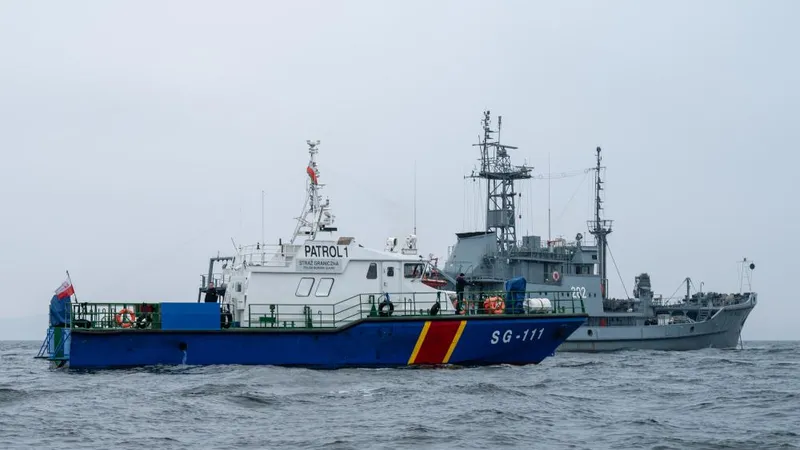
The Polish Navy and the Maritime Unit of the Polish Border Guard held joint manoeuvres in the Baltic Sea from 10 to 14 March, covering anti-sabotage defence, monitoring of critical infrastructure and situational firing. The Patrol 1 vessel with hull number SG-111 took part in the ASSYMEX training, and the patrol boat SG-301 carried out a SAREX exercise with a Polish Navy helicopter. ORP Kaszub played the role of an inspected civilian vessel, which was stopped and searched. Maritime Unit of the Polish Border Guard spokesperson Junior Warrant Officer Katarzyna Przybysz noted that the manoeuvres build crisis response procedures.
Key objectives of the joint maneuvers
The joint operations of the Polish Navy and the Maritime Border Guard Unit included:
- Anti-sabotage defense of vessels in port and at anchorages,
- Monitoring of critical infrastructure,
- Situational live-fire exercises from vessel decks,
- Training for Border Guard control teams and Navy Task Force Groups.
The ASSYMEX training
One of the key elements of the exercise was the ASSYMEX training, involving the patrol vessel SG-111 (Patrol 1).
- The aim of this episode was to perfect defense against sabotage activities and conduct an onboard inspection of a vessel suspected of destabilizing actions, explained Junior Warrant Officer Katarzyna Przybysz, spokesperson for the Maritime Border Guard Unit.
The SAREX exercise
In the next phase of the maneuvers, the crew of patrol vessel SG-301 participated in the SAREX exercise, cooperating with a Navy helicopter. The scenario involved approaching the vessel, establishing communication, and executing maneuvers that allowed a rescue worker to be lowered onto the deck. The training also included live-fire exercises from onboard weapons – both during the day and at night – in a line formation targeting surface objects.
Civilian vessel control simulation
Another day of the exercises featured a simulated control operation against a civilian vessel, played by ORP Kaszub.
- Due to the lack of communication with the vessel, a disabled AIS receiver, and unusual maneuvers, the decision was made to detain the vessel and board it, reported Junior Warrant Officer Katarzyna Przybysz.
During this operation, the Border Guard crew conducted a documentation check, identification of the crew, and a search of the vessel for illegal substances, weapons, and other materials that could pose a threat.
Firefighting simulation
The final stage of the exercise was a simulation of extinguishing a fire on a Navy vessel using water cannons and fire curtains from SG-301’s deck.
- Such interagency maneuvers are invaluable in building response procedures for both military and non-military crisis threats. The synchronization of actions and cooperation enhance the effectiveness of critical infrastructure protection and improve national security and defense, concluded Junior Warrant Officer Katarzyna Przybysz.
Source: Gazeta Morska · Compiled by: Kamil Kusier
Related articles
 Maritime economy Poland’s constitutional crisis is also a maritime story
 Navy and defence Norwegian submarine Utstein completes NATO patrol guarding offshore oil and undersea infrastructure
 Safety and rescue Polish SAR’s new rescue vessel Mistral launched at Kewatec in Finland
 Safety and rescue Icelandic Coast Guard and police delegation visits Polish Border Guard’s Maritime Division
 Safety and rescue Polish Navy helicopter evacuates man from Baltic platform 100 km off Władysławowo
 Navy and defence SNMG2 joins Allied warships in PASSEX as Italy's Mare Aperto 2026 gets under way
Comments (0)
The discussion is moderated by the editors: a comment appears after review. Your e-mail address is not published.
Nobody has commented on this article yet.