Arctic route breakthrough: first container vessel reaches Gdańsk via northern sea corridor
On 18 October 2024, the container vessel Istanbul Bridge, operated by Sea Legend, arrived at the Port of Gdańsk after completing a pioneering voyage from Asia to Europe via the Northern Sea Route. The next day, the vessel was discharged at Baltic Hub, and at 23:00 it departed the terminal to continue its scheduled rotation.
business logistics worldwide ports transport and forwarding tricity news20 october 2025 | 20:54 | Source: Gazeta Morska | Prepared by: Kamil Kusier | Print
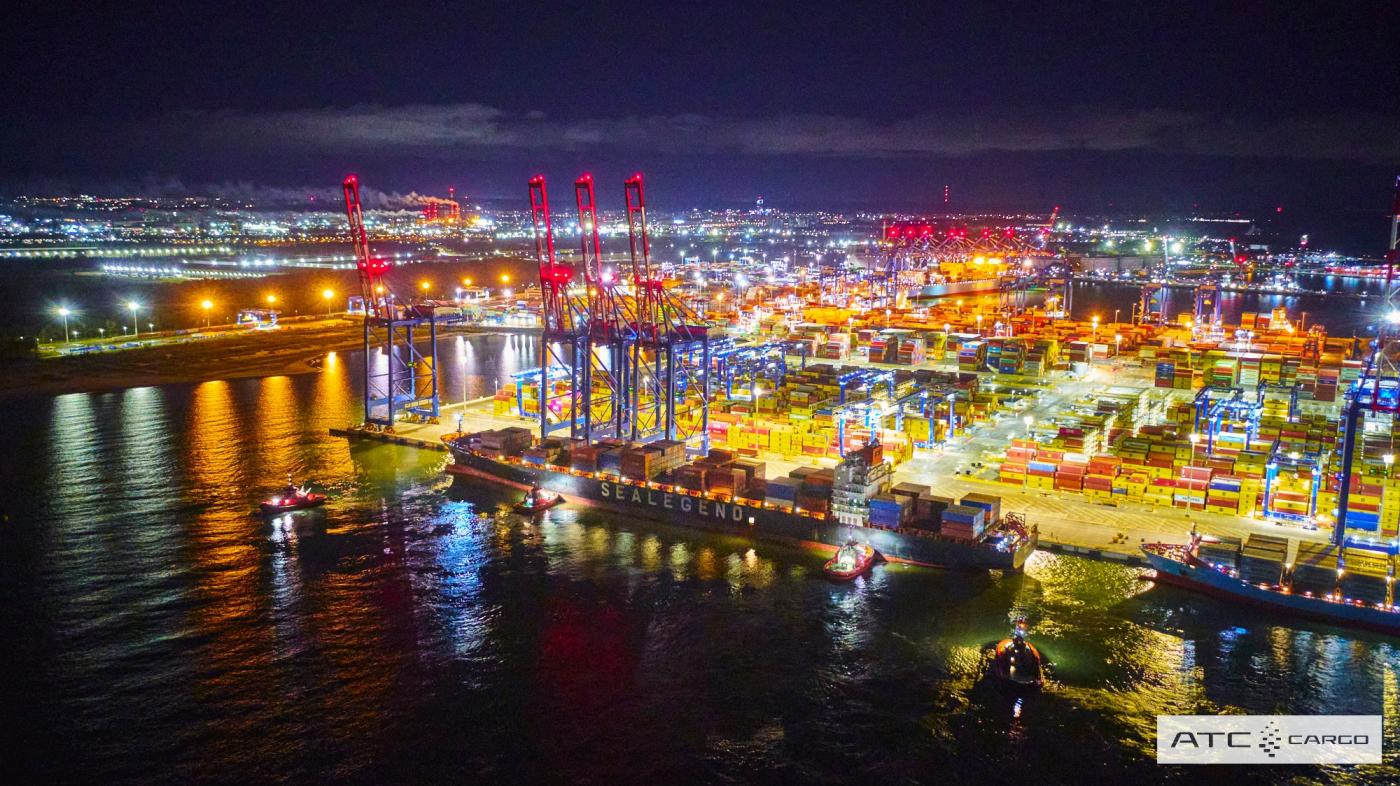
fot. ATC Cargo
While the operation itself may appear routine at first glance, industry observers describe this moment as strategically significant — marking what could become a turning point for European maritime logistics and the role of the Baltic in global supply chains.
Northern Sea Route – from strategic concept to operational reality
By bypassing the Suez Canal and the Cape of Good Hope, the Arctic passage reduced the transit time from Asia to Europe to around 20 days, compared to approximately 50 days via traditional routes. The implications are substantial: shorter transit times, reduced fuel consumption and lower operational risk exposure in conflict-prone maritime regions.
Growing geopolitical tensions near the Suez Canal and increased security threats in the Red Sea have accelerated interest in alternative shipping corridors. As a result, the Northern Sea Route is evolving from a theoretical contingency route into a viable and commercially relevant maritime corridor.
Port of Gdańsk emerges as a strategic Baltic hub
The inclusion of Gdańsk among the four European ports selected by the Singapore-based carrier for this pilot service signals a fundamental shift in how the Baltic region is perceived by global shipping lines. According to Polish Deputy Minister Marek Marchewka, this development represents a strengthening of the port’s international brand and a decisive step in consolidating Poland’s position within global logistics networks.
No longer viewed merely as a regional gateway, Gdańsk is increasingly positioned alongside the major North European hubs serving intercontinental trade flows.
Polish logistics players take an active role
The operation was supported in Poland by ATC Cargo, acting as the primary representative of Sea Legend. In an official statement, the company emphasized that this is the first stage of a broader initiative that could redefine how the industry approaches Asia–Europe maritime transport.
The involvement of Polish logistics operators highlights a wider trend: the local TSL sector is not only adapting to global shifts but actively participating in shaping new market standards.
Strategic implications for European container logistics
The Arctic trial service opens a new chapter with several potential outcomes for the market:
- Diversification of Asia–Europe trade lanes beyond traditional chokepoints.
- Realignment of container flows between North Sea ports and emerging Baltic hubs.
- New investment priorities for intermodal terminals, distribution centers and inland logistics corridors.
- Acceleration of just-in-time inventory models, supported by faster and more predictable transit times.
Operational challenges remain – but the window is opening
Experts caution that Arctic navigation still presents operational constraints, including ice-class vessel requirements, coordination with Arctic authorities and advanced navigational systems. However, longer ice-free navigation periods and rapid advancements in maritime technology are steadily reducing these barriers.
A northern orientation for Polish maritime strategy
Should subsequent voyages confirm operational and economic viability, Gdańsk is well positioned to become a key Baltic entry point for Asia–Europe container flows. This could strengthen Poland’s role not only as a gateway port but as a central logistics platform within Northern Europe.
A new course has been set. For the Polish maritime sector and the wider European logistics network, this is more than a symbolic voyage — it is an opening signal for a new era of Arctic-enabled trade.
Buy us a coffee, and we’ll invest in great maritime journalism! Support Gazeta Morska and help us sail forward – click here!
Kamil Kusier
redaktor naczelny
comments
Add the first comment
see also
Austal partners with Damen for local construction of LST 100 for Australian Army
The submarine contract of the decade? Canada weighs South Korea against Germany
Bechtel signs contract with Doraco for Poland’s first nuclear power plant
When two powers clash, Poland must be ready to act. Military security must be the priority
MON, Arka Gdynia and AMW sign letter of intent supporting "Green Industrial District - Kashubia" project
Mine countermeasure vessel Jaskółka begins sea acceptance trials
PEJ relocates headquarters to Pomerania. A strategic step in Poland’s nuclear power development
Radmor hosts delegation from the Republic of Turkey. Advancing maritime security cooperation
3D-printed catamaran: robotic manufacturing sets course for the future of small craft
Navantia and Fincantieri deepen cooperation on the european patrol corvette programme
ADVERTISEMENT
ADVERTISEMENT