September 17, 1939 daring escape of Polish submarine ORP Orzeł from Tallinn
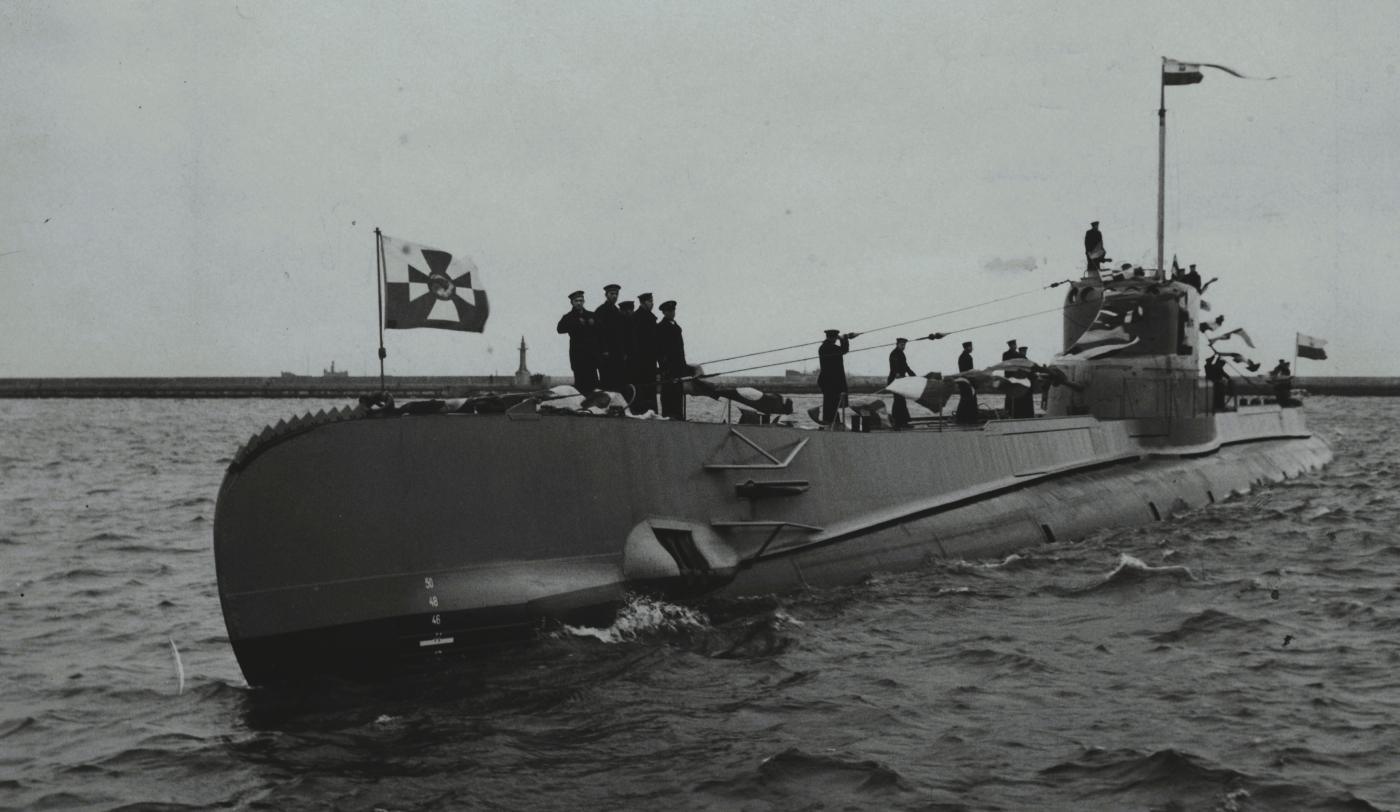
A crippled Polish submarine, a stricken commander, and a desperate gamble for freedom. In the early weeks of World War II, the submarine ORP Orzeł carried out one of the most audacious naval escapes of the conflict — slipping from under the noses of Estonian guards and dodging gunfire to return to the fight.
history navy worldwide news17 september 2025 | 15:00 | Source: Gazeta Morska | Prepared by: Kamil Kusier | Print
fot. Narodowe Archiwum Cyfrowe / NAC
A stricken commander, a neutral port
On 14 September 1939, less than two weeks after Germany’s invasion of Poland, the submarine ORP Orzeł surfaced off the coast of Estonia. Her commander, Commander Henryk Kłoczkowski, had fallen gravely ill, and the vessel’s engines were failing. Seeking medical aid, the Poles entered the neutral harbour of Tallinn under full lights and the red-and-white naval flag.
Kłoczkowski was taken to hospital the following day, leaving command in the hands of his capable and determined executive officer, Lieutenant Commander Jan Grudziński.
Interned in “neutral” Estonia
Estonia, squeezed between Nazi Germany and the Soviet Union, bowed to diplomatic pressure. The Polish submarine was formally interned: torpedoes unloaded, weapons dismantled, and navigation equipment seized. Guards were placed on board, while crews worked to strip the vessel.
But the Poles were not prepared to give up their ship. Deliberately slowing down the dismantling process, cutting mooring ropes, and secretly scouting escape routes, the sailors plotted their way out.
The great escape
On the night of 17–18 September 1939, Grudziński gave the order to act. Guards were overpowered, telephone cables cut, and the diesel engines roared into life. Searchlights lit the harbour, coastal batteries opened fire, but Orzeł slipped out under the cover of night.
To evade pursuit, the submarine dived to the bottom of the Gulf of Finland, lying motionless until darkness fell. Then she surfaced and steered westward — into hostile seas.
No charts, no safety net
The escape came at a terrible cost: Estonian authorities had confiscated all maps and much of the navigation gear. Grudziński and his men were forced to rely on memory, makeshift sketches, and the stars to guide them.
Yet, against the odds, Orzeł crossed the Baltic and the North Sea. After weeks of peril, she reached the safety of Britain, joining the Polish destroyers ORP Burza, Błyskawica, and Grom — the core of Poland’s exiled navy.
Heroism and tragedy
Under British command, Orzeł soon returned to combat. In April 1940, Grudziński struck a blow against the Germans, sinking the transport ship Rio de Janeiro — a vessel secretly carrying troops for Hitler’s invasion of Norway.
But just weeks later, in June 1940, the submarine vanished on patrol. Whether lost to a mine or mistaken friendly fire, Orzeł never returned. Her 60-man crew — young, loyal, and fiercely brave — perished with their ship.
Grudziński, only 33 years old, entered legend as the commander who refused to accept captivity and led his men to freedom.
Legacy of the “Orzeł”
The escape from Tallinn became one of the great naval stories of the Second World War — a symbol of Polish resilience at sea even as the homeland fell under occupation. For the men of Orzeł, it was proof that courage and determination could snatch victory from hopeless odds.
Today, the memory of Orzeł and her crew lives on not only in history books but also in culture. In 2020, Poland’s Institute of National Remembrance released a board game, ORP Orzeł, allowing players to relive the submarine’s dangerous journey across the Baltic, hunted by the Kriegsmarine.
For Poles, the submarine remains more than a warship — it is a legend, a testament to a navy that fought on when the country itself had been carved up by its enemies.
see also
Buy us a coffee, and we’ll invest in great maritime journalism! Support Gazeta Morska and help us sail forward – click here!
Kamil Kusier
redaktor naczelny
comments
Add the first comment
see also
137 years since the Apia cyclone in Samoa: a lesson for modern shipping
Polish Navy retires prototype minesweeper ORP Gopło after 44 years of service
Commander Maciej Janiak award. Honouring those who build maritime Poland
55 Years of the 3rd Ship Flotilla. A pillar of the Polish Navy
March 1: Remembering the “cursed soldiers”. A legacy that also resonates with today’s navy
Gdynia at 100: ceremonial city council session highlights Poland’s maritime strategy
Poland’s wedding to the sea in Puck: President Karol Nawrocki commemorates 106th anniversary
Gdynia at 100: A Strategic port city celebrates its maritime identity
A city designed from the sea. one hundred years of Gdynia as a project ahead of its time
106 years ago Poland “turned to the sea”. Split celebrations, one goal: a strong maritime Poland
ADVERTISEMENT
ADVERTISEMENT