Polish court rejects environmental appeals over Świnoujście container terminal
The Provincial Administrative Court (WSA) in Warsaw has dismissed appeals filed by environmental groups against the environmental permit for the planned deep-water container terminal in Świnoujście. The court ruled that the General Director for Environmental Protection (GDOŚ) complied fully with all legal procedures. The ruling is not final and may be appealed to the Supreme Administrative Court (NSA).
business maritime economy investments logistics west pomerania ports transport and forwarding news04 august 2025 | 17:07 | Source: Gazeta Morska / PAP | Prepared by: Kamil Kusier | Print
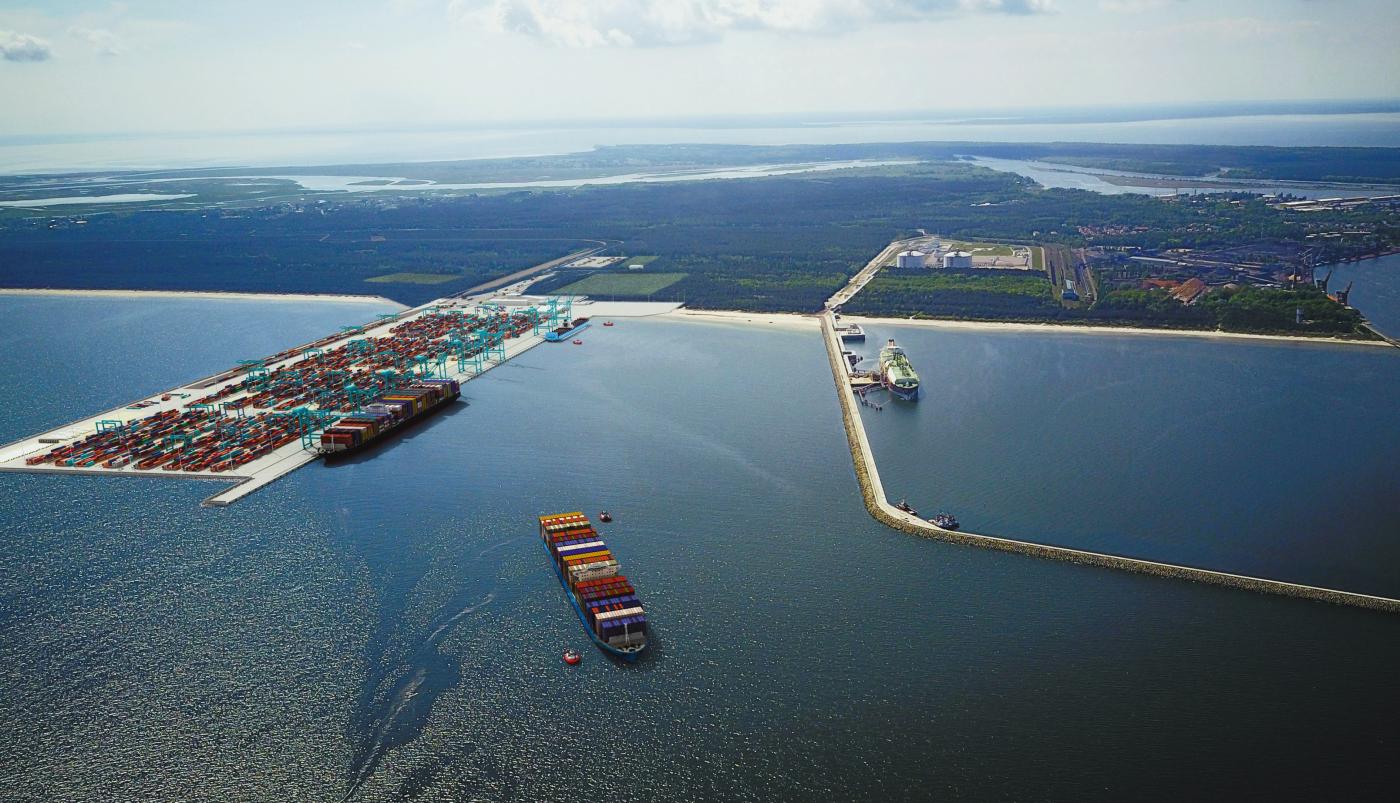
Wizualizacja terminala kontenerowego w Świnoujściu / fot. Ministerstwo Infrastruktury
The appeals were lodged by two organizations: Bürgerinitiative Lebensraum Vorpommern, a German NGO from the island of Usedom, and Zielone Wyspy Świnoujście, a Polish ecological group. Their objections focused on potential impacts on protected areas of the Baltic Sea, as well as risks from unexploded ordnance and chemical munitions dating back to World War II.
However, the court found no procedural violations or grounds to annul the decision.
- The GDOŚ conducted all required consultations, including cross-border processes, obtained the necessary expert opinions, and thoroughly addressed all objections raised in the appeals, said presiding judge Anita Wielopolska in the ruling's justification.
She also noted that the investor – the Szczecin and Świnoujście Seaports Authority (ZMPSiŚ) – had supplemented the Environmental Impact Assessment (EIA) as requested, and the German NGO’s input was reflected in the final documentation.
Strategic project for the Baltic region
The container terminal in Świnoujście, part of the planned external port, is one of Poland’s largest maritime infrastructure projects. Scheduled for completion in 2029, it will be capable of handling transoceanic container vessels up to 400 meters long, positioning Świnoujście as a key logistics hub on the Baltic Sea.
Project highlights include:
- A 65-kilometre approach fairway dredged to 17 meters, developed by the Maritime Office in Szczecin,
- Berths capable of simultaneously accommodating two large container ships,
- Full supporting infrastructure, including rail, road, and utility links.
The investment, coordinated by the Polish Ministry of Infrastructure, is valued at approx. PLN 12.5 billion (€2.9 billion), with the terminal itself costing PLN 2.5 billion and the maritime infrastructure approximately PLN 10 billion. Construction is to be undertaken by a Qatari-Belgian consortium.
Legal proceedings continue
The February 2025 environmental decision issued by GDOŚ follows a complex administrative path. An earlier permit issued by the regional directorate (RDOŚ Szczecin) was overturned in 2023 following legal challenges. GDOŚ then took over the appeal process and required a revised and extended environmental report from the investor.
In parallel, the city of Świnoujście in 2024 filed a separate appeal against the terminal’s location permit issued by the West Pomeranian voivode. Moreover, Bürgerinitiative Lebensraum Vorpommern requested suspension of the environmental permit's enforcement. On July 21, the court temporarily granted this suspension, but the investor has appealed the decision.
Despite ongoing proceedings, the port authority remains committed to the project.
- This is an important milestone. The project will continue as planned. Construction will move forward, said ZMPSiŚ president Jarosław Siergiej following the hearing.
Government downplays safety concerns
Poland’s deputy infrastructure minister Arkadiusz Marchewka responded to claims raised by the German NGO regarding seabed hazards, including chemical weapons and munitions from WWII.
- The site has been fully surveyed. Should any ordnance be found, the Polish Navy will handle it professionally. The objections raised are, in our view, exaggerated and lack substantive basis, he said.
The Świnoujście deep-water container terminal is set to become a strategic gateway for transoceanic trade in the Baltic region. With the Warsaw court’s rejection of environmental appeals, the project has taken a significant step toward realization—bolstering Poland’s ambitions as a maritime logistics leader in Northern Europe.
see also
Buy us a coffee, and we’ll invest in great maritime journalism! Support Gazeta Morska and help us sail forward – click here!
Kamil Kusier
redaktor naczelny
comments
Add the first comment
see also
Navantia and Fincantieri deepen cooperation on the european patrol corvette programme
Galeon Yachts and Meyer Shank Racing: merging luxury yachts with motorsport expertise
Unmanned systems and naval firepower modules. WB Group showcases integrated capabilities at Enforce Tac 2026
Swedish ports record lowest ship calls in 18 years. Implications for the maritime sector
February in Szczecin’s shiprepair sector. Ice, overhauls and North Sea expansion
Advanced ROV trials conducted at CTO to validate subsea technologies for offshore applications
University of Gdańsk and PGZ Naval Shipyard join forces for innovation and security
Stadt Naval to deliver electric propulsion system for Polish rescue vessel Ratownik
Gdańsk port’s Basen Górniczy to gain modern port infrastructure
First month of Jantar Unity operations. Polsca ferry paves the way for Batory program units
ADVERTISEMENT
ADVERTISEMENT