Medical Forces to launch in September. With a strong maritime dimension?
Poland’s Minister of National Defence and Deputy Prime Minister Władysław Kosiniak-Kamysz — a medical doctor by training — announced that a new branch of the armed forces, the Medical Forces, will begin operations in September 2025. The move responds to the demands of contemporary conflicts and to capability gaps identified within Poland’s healthcare and defence ecosystems.
navy nato shipbuilding industry news19 august 2025 | 07:29 | Source: Gazeta Morska | Prepared by: Kamil Kusier | Print
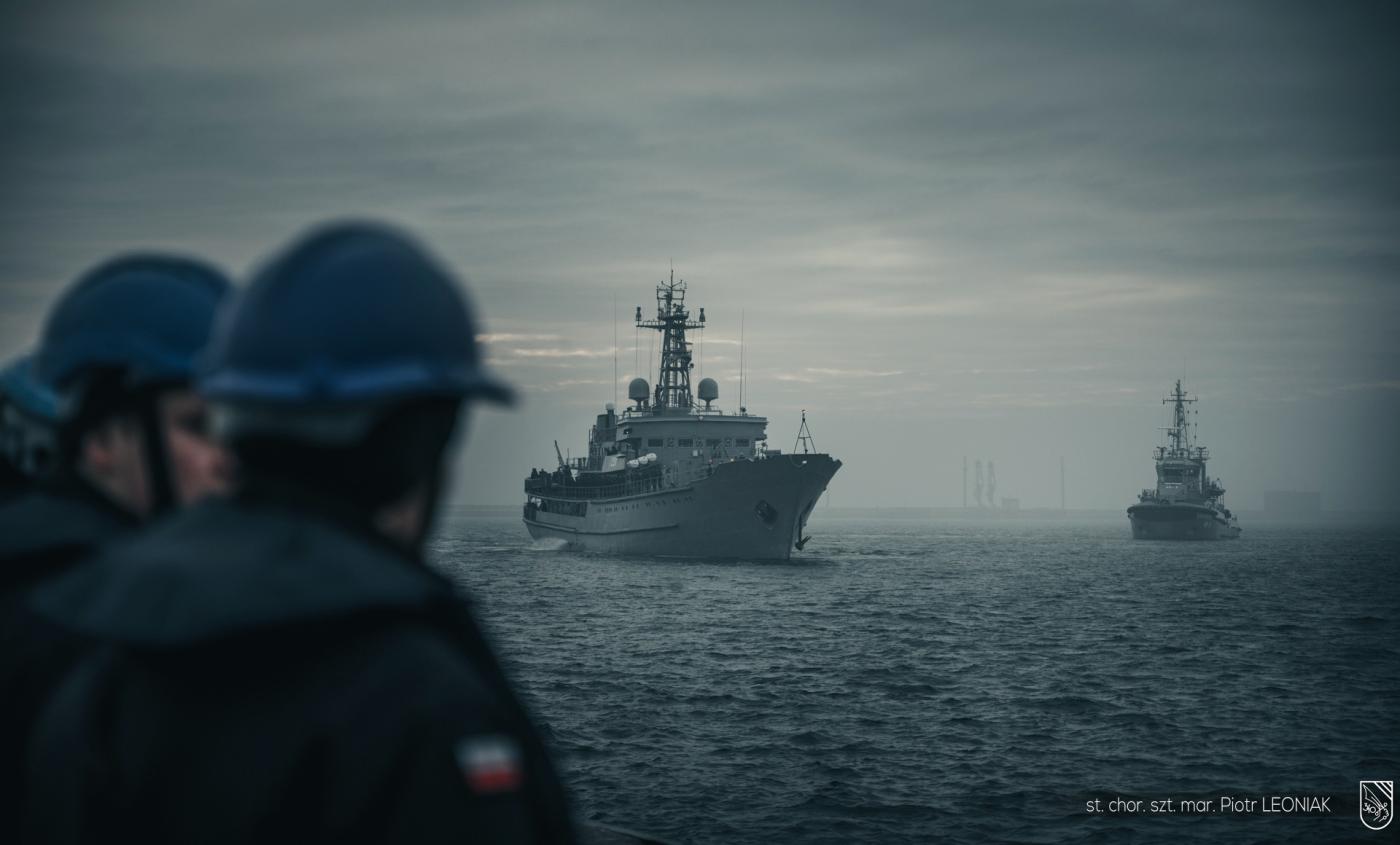
fot. st. chor. szt. mar. Piotr Leoniak / 3 FO / MW RP
The decision follows several years of conceptual work and analysis at the Ministry of National Defence (MoND). According to the minister, the formation process has run from day one of his tenure, incorporating the input of both military and civilian experts. “We have a complete concept ready; it will be approved this week, and the Medical Forces will start operating in September,” he said.
Structure and mission
Until now, Poland’s military healthcare has been fragmented across three pillars:
- MoND’s Department of Military Healthcare, responsible, among other things, for medical institutes;
- Military Healthcare Directorate at the General Command, which oversees medics serving in operational units;
- Armed Forces Support Inspectorate, handling logistics, procurement of medical equipment and consumables.
The new branch will consolidate these competencies under a Medical Forces Command, providing clear chains of command, unified planning and faster decision cycles.
A key aim is to embed lessons learned from the war in Ukraine — notably in combat casualty care, tactical evacuation, and medical logistics — which differ substantially from experiences in Iraq and Afghanistan.
Gulf War lessons — ORP Wodnik
Poland’s naval medical heritage provides valuable precedent. During the First Gulf War, the Polish Navy deployed ORP Wodnik as a hospital-evacuation ship, delivering afloat medical support to coalition operations in the Persian Gulf. It was the Navy’s first major post-WWII expeditionary medical commitment and underscored the operational value of maritime medical capability: casualty reception at sea, afloat stabilisation, and medical evacuation from forward areas.
Today’s role of ORP Wodnik and naval training
Today, ORP Wodnik is assigned to the 3rd Flotilla of Ships (Support Ships Squadron) in Gdynia. Beyond support duties, the ship serves as a training platform for cadets of the Polish Naval Academy, who refine their seamanship on board after completing sail-training phases aboard the tall ship ORP Iskra.
Medical Legion — civilian expertise on call
Complementing the Medical Forces, the ministry will establish a Medical Legion — a structured pool of civilian doctors, paramedics, nurses and medical specialists prepared to support the armed forces in emergencies. Modelled on the Cyber Legion concept, it enables civilian experts to train and integrate with the military without entering active service.
Institutes and the science base
The Medical Forces will be backed by MoND’s research institutes:
- Military Institute of Medicine – National Research Institute (WIM-NRI),
- Military Institute of Aviation Medicine,
- Military Institute of Hygiene and Epidemiology.
Each operates a Scientific Council of experts in medicine, law, economics and related fields. These bodies shape research agendas, advise commanders and support academic advancement — a critical foundation for doctrine, training and technology adoption.
Health status report on soldiers
The defence ministry also plans to publish a comprehensive health status report of Polish soldiers based on 2024 data. The report will benchmark the current state and set priorities for prevention, treatment and force health protection.
Industry outlook — opportunities for Poland’s defence & maritime sectors
The stand-up of the Medical Forces opens tangible opportunities for Poland’s defence industrial base — including the maritime cluster:
- Afloat medical capability: scope for modernising or developing hospital/evacuation modules for support ships and auxiliaries; options for containerised medical facilities deployable at sea and ashore.
- Medical mobility and evacuation: advanced MEDEVAC kits, protected ambulances, casualty evacuation systems, and ship-to-shore transfer solutions.
- Medical logistics & telemedicine: deployable Role 1–3 infrastructure, cold-chain management, and secure telemedicine for contested environments.
- Training & simulation: high-fidelity trauma simulation, naval damage-control medicine, and integrated exercises combining Navy, Air Force and Land Forces.
For shipyards, marine equipment suppliers and logistics companies, this translates into potential programmes in design, integration and lifecycle support — with export prospects where NATO standards are met.
A New Pillar of Security — Also at Sea
The Medical Forces and the Medical Legion form part of a broader modernisation effort to enhance national resilience. By consolidating structures, tapping external expertise and drawing on the Navy’s operational legacy — from ORP Wodnik in the Gulf to today’s 3rd Flotilla training mission — Poland is building a medical defence capability that strengthens both land and maritime security architectures.
see also
Buy us a coffee, and we’ll invest in great maritime journalism! Support Gazeta Morska and help us sail forward – click here!
Kamil Kusier
redaktor naczelny
comments
Add the first comment
see also
Strait of Hormuz at a strategic crossroads: sinking of IRIS Dena and implications for maritime transport
Austal partners with Damen for local construction of LST 100 for Australian Army
The submarine contract of the decade? Canada weighs South Korea against Germany
When two powers clash, Poland must be ready to act. Military security must be the priority
Commodore Przemysław Karaś appointed deputy commander of the Maritime Operations Centre - Naval Component Command
Mine countermeasure vessel Jaskółka begins sea acceptance trials
March 1: Remembering the “cursed soldiers”. A legacy that also resonates with today’s navy
Naval Academy cadets take military oath in Gdynia
French Navy expands global operations from the Pacific to the Red Sea
Navantia and Fincantieri deepen cooperation on the european patrol corvette programme
ADVERTISEMENT
ADVERTISEMENT