









Venice could be underwater by 2150. Polish cities like Gdańsk also at risk
Venice and the surrounding lagoon could face regular flooding by the year 2150 due to a combination of sea level rise, land subsidence, and extreme storm surges. This alarming forecast comes from researchers at Italy’s National Institute of Geophysics and Volcanology (INGV), whose recent study was published in Remote Sensing.
In brief
Researchers at Italy's National Institute of Geophysics and Volcanology (INGV) warned in Remote Sensing that Venice and its lagoon could face regular flooding by 2150, with sea levels temporarily rising up to 3.5 meters above current tidal averages. The MoSE barrier, built for tides up to 3 meters, could be overwhelmed by 2100, submerging up to 65% of the lagoon, about 139 square kilometers. Professor Jacek Piskozub of the Institute of Oceanology at the Polish Academy of Sciences expects Poland to see over 90% of the global average rise, with about 1 meter by 2100 and Gdańsk sinking up to 10 cm per century.
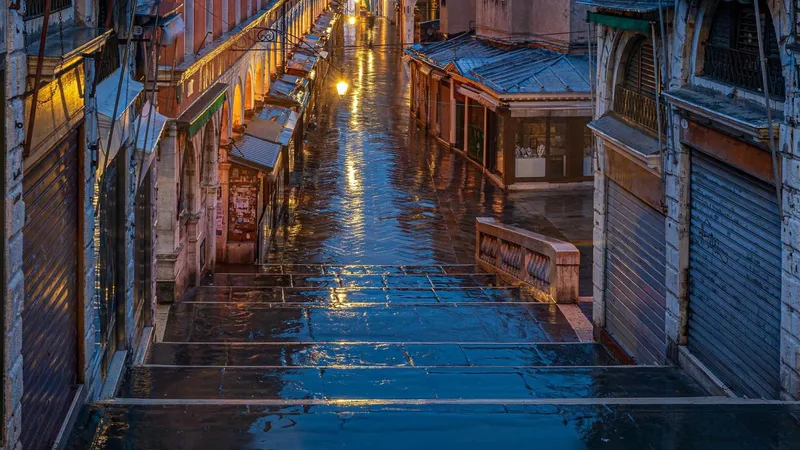
Wenecja | fot. Pixabay
The city’s MoSE flood barrier system, designed to protect Venice from tides up to 3 meters above sea level, may be overwhelmed by 2100 under high-emission scenarios. Scientists warn that in such a case, up to 65% of the lagoon – approximately 139 square kilometers – could be submerged during extreme tide events.
High-emission scenarios could submerge half of the lagoon
The study factored in three climate models from the IPCC’s Sixth Assessment Report (low, medium, and high emissions), while also including two previously overlooked factors: land subsidence (1–3 mm per year, up to 7 mm in some areas) and storm surge scenarios like the infamous Acqua Alta, driven by sirocco winds and low atmospheric pressure.
In the worst-case scenario, sea levels in Venice could temporarily rise by as much as 3.5 meters above current tidal averages. This would exceed the operational limits of the MoSE system and put vast areas of the city and surrounding region at risk.
Poland's coastal regions face similar risks
According to Prof. Jacek Piskozub of the Institute of Oceanology at the Polish Academy of Sciences, these findings have direct implications for Poland. Areas like the Vistula Delta (Żuławy), which lie below sea level and are gradually sinking, are particularly vulnerable.
– We can expect that Poland will experience over 90% of the global average sea level rise. The flood levees currently in place across Żuławy will certainly be too low by the end of the century – said Prof. Piskozub.
He warned that, with sea levels expected to rise by about 1 meter by 2100, and with the additional threat of storm surges and coastal backflow, Żuławy could face annual winter flooding unless major upgrades to flood protection are made.
Gdańsk and Gdynia landmarks could end up underwater
Data from Climate Central, a nonprofit climate research organization, suggests that in high-emission scenarios, even historic sites in Gdańsk—such as St. Mary's Basilica and Długa Street—as well as parts of central Gdynia and areas near Dębki, could be permanently submerged.
– If we continue burning fossil fuels for the next few decades, sea level rise in the next century could reach 3 meters. That would mean almost every port city in the world would be underwater – said Piskozub.
Gdańsk is particularly at risk due to local subsidence—up to 10 cm per century.
Experts urge immediate investment in flood infrastructure
Piskozub stressed the need for proactive investment in storm gates and levee systems along the Polish coast.
– This is a huge infrastructure project that we should start planning now. Unfortunately, I fear that in Poland we’ll only act after the first major coastal flood hits Gdańsk or the Żuławy region. That’s when we’ll finally create a national program to save coastal towns.
He also noted that despite the clear long-term risks, residential development continues in areas projected to be flooded in the coming decades.
– If we fail to reach emissions neutrality within the next 100 years, and the polar ice caps keep melting, some cities—and even entire countries—could disappear.
Source: PAP / Gazeta Morska · Compiled by: Joanna Morga
Related articles
 Education From Newton's prism to a microplate reader. A Science Evening in Charzykowy on light and matter
 Energy and offshore Offshore wind enters the classroom in Świnoujście. ORLEN Neptun to teach logistics and navigation students
 Education Drones at the Naval Academy, Dar Młodzieży in Gdynia, a sports hall at UG. Coastal universities open the year
 Sailing and water sports Poland argues over where Dar Młodzieży should retire, while its successor still does not exist
 Education Dar Młodzieży is back in Gdynia after five months, two Atlantic crossings and three intakes of cadets
 Navy and defence Polish Naval Academy swears in 114 cadets as an intake of 185 begins officer training
Comments (0)
The discussion is moderated by the editors: a comment appears after review. Your e-mail address is not published.
Nobody has commented on this article yet.